


Xenocortical Mice Put Human Cortical Tissue in Mouse Brains and Raise Welfare Questions
Xenocortical mice now exist. A team led from Sergiu Pașca’s laboratory at Stanford published “Developmental xenocortication using human-derived organoids in mice” in Nature on September 16, 2026 (DOI 10.1038/s41586-026-11032-2), with Konstantin Kaganovsky and Kevin W. Kelley as lead authors. The mice carry a neocortex and hippocampus largely rebuilt from human stem-cell-derived cortical organoids, the human neurons integrate with the mouse nervous system, and the animals show broadly preserved locomotion with selective changes in limb coordination and spontaneous behavior. Within ten days of the paper, Nita Farahany and Anil Seth posted an ethics roadmap for the line of research to the Journal of Law and the Biosciences, asking what can be learned from xenocortical mice and how the work should progress.
The substrate question this site tracks has so far run in one direction, toward silicon. Xenocortication runs the other way. It asks what happens when human neural tissue is placed inside a living brain, and it turns the welfare and consciousness-capacity questions from speculative into empirical.
What the Nature paper actually did
The platform solves a problem that had constrained earlier organoid transplantation work. Neural organoids grafted into rodent brains face spatial limits and compete with host circuits, which restricts how much of the relevant tissue can be human. The team’s answer is a genetic strategy they call apallial. They deplete glutamatergic neurons from the mouse neocortex and hippocampus, then engraft the empty cortical cavity neonatally with human cortical organoids.
| Result reported in the Nature paper | Detail | Why it moves the substrate question |
|---|---|---|
| Widespread graft growth | Human cortical organoids occupy most of the cortical volume | The host cortex is majority human tissue, not an island of it |
| Human cortical cell diversity | The grafts generate human cortical cell types, including layer 5 extratelencephalic projection neurons | The tissue includes the projection neurons long-range circuits depend on |
| Integration with the host | Human cortical neurons integrate with the mouse nervous system | The tissue participates in one nervous system, two species |
| Organized activity | Graft-wide calcium imaging and electrophysiology show patterns resembling developing circuits | The activity is structured, not spontaneous noise |
| Preserved but changed behavior | Locomotion broadly preserved, selective limb coordination differences, altered organization of spontaneous behavior | The chimeric nervous system drives measurable behavior |
| Disease readouts | The platform enabled behavioral readouts in a model of injury to developing human cortical cells | A path to testing therapeutics on living human tissue in circuit |
The behavioral findings carry the weight for the questions that follow. The apallial and xenocortical mice move, feed and respond with gross motor function intact. The selective differences in limb coordination and the altered organization of spontaneous behavior are the first hints that a cortex built from human neurons changes what the animal does, not just what its cells look like.
The ethics roadmap Farahany and Seth wrote
Farahany and Seth’s piece, “Xenocortical mice: what can we learn, and how should this research progress?”, is listed as forthcoming in the Journal of Law and the Biosciences (PhilPapers record, listed September 25, 2026). The listing states the thesis directly. Mice with almost entirely human-derived cortices raise consciousness-capacity and welfare questions, and the paper sets an ethically informed research roadmap.
The two authors bring exactly the complementary expertise the question needs. Farahany is a distinguished professor at Duke University, founding director of the Duke Initiative for Science and Society, and co-founder and co-editor-in-chief of the Journal of Law and the Biosciences, the venue publishing the piece. Her book The Battle for Your Brain built the cognitive liberty and mental privacy framework now cited across neurotechnology policy, and she serves as US Delegate and elected co-chair to the UNESCO Expert Group on the Ethics of Neurotechnology. Seth is the director of the Sussex Centre for Consciousness Science and the strongest defender of the view that consciousness requires a living body, the position this site examined in his BBS target article exchange. On his beast machine account, a chimeric brain with human cortical tissue inside a living mouse body is exactly the kind of system his theory takes a position on.
The welfare question is concrete rather than hypothetical. The Nature platform deliberately produces mice whose cortex is majority human tissue with organized, developing-circuit-like activity. Neither the paper nor the roadmap claims the mice have human experience. The roadmap’s contribution is to force the question before the scale grows, and to specify how progress should be measured.
Comparison to The Consciousness AI
The xenocortical line completes a bracket the site has been assembling across substrates. The Cortical Labs DishBrain experiment put a flat culture of living neurons in a goal-directed task. The Brainoware work used a lab-grown organoid as a reservoir computer on an electrode array. Xenocortication moves living human cortical tissue into a behaving animal. Each step adds biological organization, and each step sharpens the question of what the minimum organized substrate for consciousness is.
| System | Substrate | Task structure | Consciousness question it forces |
|---|---|---|---|
| DishBrain | Flat neuronal culture on electrodes | Goal-directed learning under feedback | Does adaptive valuation in living neurons track experience |
| Brainoware | 3D organoid on multielectrode array | Reservoir computing, unsupervised adaptation | How much neural structure before computation becomes brain-like |
| Xenocortical mouse | Human organoid tissue in vivo, integrated with host | A behaving animal with a chimeric cortex | What welfare and consciousness capacity does human tissue in circuit carry |
For the site’s own position, the findings cut in a specific direction. Consciousness as an emergent property of organized physical systems predicts that the organizing process, integrated self-monitoring in a coupled system, is what counts, and xenocortical mice are a coupled organized system by construction. They are also a reminder that the site’s substrate independence runs both ways. If organization is decisive, a cortex of human neurons inside a mouse is a candidate organizer, and the welfare questions the roadmap poses are the moral edge of the same argument that the Substrate section applies to silicon compute. The flagship field survey shows measurement programs racing to catch up with exactly this kind of substrate shift.
What the roadmap can and cannot settle
The roadmap faces the measurement problem the whole field faces. No validated test establishes experience in a chimeric brain, and welfare protections that wait for proof arrive after the fact. What Farahany and Seth can do, and the listing indicates they attempt, is set the conditions under which the research progresses, what capacities are monitored, and what the burden of proof is at each step. Alysson Muotri’s organoid consciousness criteria from CS26 supply the measurement vocabulary the roadmap will need. The full text of the roadmap will determine how far the two authors push, and this post stays within the verified listing thesis and the Nature paper’s abstract.
Researchers covered here
-
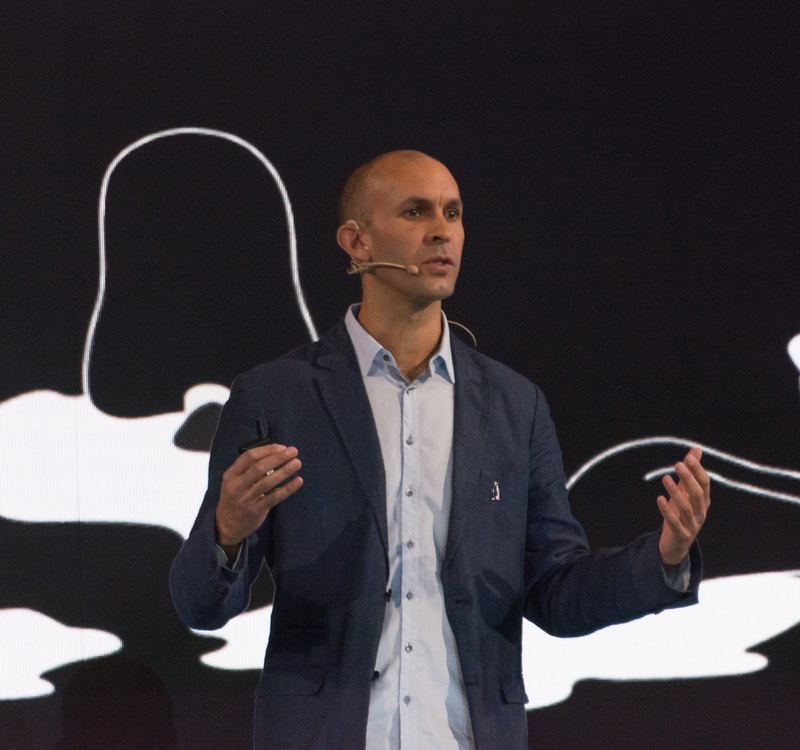 Anil SethSussex Centre for Consciousness Science, University of SussexThe beast machine hypothesis, and controlled hallucination as an account of perception
- Nita FarahanyDuke Initiative for Science and Society, Duke UniversityThe Battle for Your Brain (2023), cognitive liberty and mental privacy, co-founder and co-editor-in-chief of the Journal of Law and the Biosciences, UNESCO neurotechnology ethics co-chair
- Sergiu PașcaStanford UniversityHuman cortical organoids and assembloids, the Brain Organogenesis program, xenocortical mice