


Anil Seth and Karl Friston Build a Predictive Processing Bridge to Neurophenomenology
Neurophenomenology was proposed by Francisco Varela in 1996 as a methodological remedy for the hard problem of consciousness. Varela argued that cognitive science could not explain conscious experience simply by accumulating third-person physiological correlates. Instead, science needed mutual constraints, reciprocal generative passages through which first-person phenomenological descriptions of lived experience and third-person biological measurements illuminate each other. For thirty years, that proposal remained largely programmatic. While researchers collected subjective reports alongside electrophysiological data, the field lacked a shared mathematical language capable of deriving formal, quantitative predictions between first-person structure and neural dynamics.
In a theoretical paper published in Neuroscience of Consciousness on July 21, 2026, Lancelot Da Costa, Anil K. Seth, Karl Friston, Maxwell J. D. Ramstead, and Lars Sandved-Smith formulate what they term the Rosetta Stone hypothesis for neurophenomenology (DOI 10.1093/nc/niag038). The authors demonstrate that the mathematical apparatus of active inference and predictive processing provides the missing translation layer. By treating Bayesian beliefs as a formal hub, the framework derives quantitative, testable predictions linking subjective phenomenological reports, behavioral choices, and underlying neural dynamics.
Two Rosetta Stones in Consciousness Science
The terminology requires immediate precision. The phrase Rosetta Stone has appeared in two distinct, high-profile papers within consciousness research during 2026, and their explanatory targets must not be conflated.
In August 2026, Naotsugu Tsuchiya, Giulio Tononi, Matteo Grasso, and Kallum Robinson published work framed around a Rosetta Stone metaphor for other minds, analyzed in our review of Naotsugu Tsuchiya on the Rosetta Stone for inferring experience in other systems. That framework uses category theory, qualia structures (QStr), and Integrated Information Theory to translate between the causal structures of radically different physical substrates, asking how an external observer can verify whether an alien or artificial system possesses subjective experience.
The Rosetta Stone proposed by Da Costa, Seth, Friston, and colleagues operates internally rather than across systems. It addresses the intra-agent generative passage identified by Varela, asking how a single conscious system translates between its internal lived phenomenology, its observable motor actions, and its physiological brain dynamics. Rather than using category theory across systems, it uses variational free energy equations within an agent’s hierarchical generative model.
| Dimension | Tsuchiya et al. Rosetta Stone (August 2026) | Da Costa, Seth, Friston et al. Rosetta Stone (July 2026) |
|---|---|---|
| Primary Objective | Inferring consciousness across alien or artificial substrates | Translating first-person experience into neural and behavioral metrics |
| Theoretical Foundation | Integrated Information Theory and Category Theory | Active Inference and Predictive Processing |
| Core Variable | Cause-effect structures ($\Phi$-complexes and QStr) | Posterior probability distributions (Bayesian beliefs) |
| Target Scope | Intersubjective translation between disparate systems | Intrasubjective generative passages within an individual agent |
| Empirical Outputs | Unfolding causal distinctions across substrate partitions | Mathematical predictions for effort, timing, and phenomenal similarity |
Beliefs as the Structural Hub
The core architecture of the Da Costa and Seth framework rests on a specific technical definition of belief. In active inference, a belief is not a propositional sentence held in memory. It is an approximate posterior probability distribution $q(\psi)$ over latent environmental causes $\psi$, encoded physically by the internal states of a self-organizing system bound by a Markov blanket.
Under the Rosetta Stone hypothesis, these posterior distributions function as a tripartite mathematical nexus. They interface simultaneously with three distinct domains:
First, beliefs interface with neural dynamics through continuous-time message passing. In biological brains, the parameters of belief distributions (their expectations and precisions) correspond to biological physical quantities: average firing rates of deep pyramidal neurons, postsynaptic membrane depolarizations, and neuromodulatory gains mediated by dopamine and acetylcholine.
Second, beliefs interface with behavior through active inference and policy selection. Agents minimize expected free energy by executing actions that resolve epistemic uncertainty and bring sensory states into alignment with prior homeostatic preferences. Motor actions are the physical consequences of descending predictive commands that cancel proprioceptive prediction errors.
Third, beliefs interface with phenomenology through the foundational assumption introduced by the authors: conscious experience is a function of posterior beliefs, formalized as $\mathcal{P} = f(q(\psi))$. The qualitative texture of perceptual experience reflects the structural attributes of the generative model’s current best guess about the causes of sensory input. When an agent experiences a red surface, the phenomenal character of that redness corresponds to the geometric and informational structure of the belief distribution currently updating in its predictive hierarchy.
Mathematical Predictions Derived from the Translation Layer
The decisive advance over classical neurophenomenology is that the Rosetta Stone hypothesis does not settle for qualitative analogies. By asserting that phenomenology maps to belief distributions, the authors derive four quantitative predictions that can be subjected to empirical testing in human subjects.
+-----------------------------------------------------------------------+
|                 THE ACTIVE INFERENCE ROSETTA STONE HUB                |
+-----------------------------------+-----------------------------------+
|               PHENOMENOLOGY (First-Person Reports)                   |
|         Subjective effort, time dilation, similarity spaces          |
+-----------------------------------+-----------------------------------+
                                 ^
                                 |  P = f(q(psi))
                                 v
+-----------------------------------------------------------------------+
|             BAYESIAN BELIEFS (Approximate Posteriors q(psi))          |
|        Sufficient statistics, precision weights, expected states      |
+-----------------------------------+-----------------------------------+
       ^                                                         ^
       | Gradient descent                                        | Policy selection
       v                                                         v
+-----------------------------------+-----------------------------------+
|          NEURAL DYNAMICS          |             BEHAVIOR              |
| Spiking rates, synaptic plasticity|   Saccades, motor execution,      |
|    neuromodulatory precision gain |   psychophysical choices          |
+-----------------------------------+-----------------------------------+
Subjective Similarity Judgments
When human observers judge the phenomenal similarity between two sensory stimuli, their perceptual similarity spaces typically form smooth, low-dimensional manifolds. The Rosetta Stone hypothesis predicts that the subjective psychological distance between two conscious experiences corresponds to the information-theoretic divergence between their underlying belief distributions. Specifically, the authors show that phenomenal distance maps to the Kullback-Leibler divergence or the Fisher information metric defined over the manifold of posterior parameters. Where two stimuli produce overlapping belief states with minimal informational divergence, subjects report them as phenomenally indistinguishable, providing an explicit link between psychophysical scaling and information geometry.
Subjective Cognitive Effort
Cognitive effort is a felt, reportable aspect of conscious experience. In active inference, updating beliefs in the face of surprising sensory evidence requires moving the posterior distribution away from prior baselines, a process formalized by the complexity term in variational free energy. The authors demonstrate that the subjective feeling of mental exertion tracks the magnitude of belief updating, measured as the informational distance traveled across parameter space during perceptual inference. Cognitive effort is the phenomenal counterpart of precision-weighted belief revisions that resist prior expectations.
Cognitive Metabolic Cost
A long-standing debate in cognitive neuroscience concerns how subjective experience correlates with biological energy consumption. The Rosetta Stone hypothesis links information processing to thermodynamics. Minimizing variational free energy imposes an inescapable metabolic requirement on neural tissue: resetting membrane potentials, synthesizing neurotransmitters, and sustaining oscillatory phase synchrony all consume ATP. By formalizing belief updates as variational gradient descents, the framework predicts that metabolic expenditure in local cortical circuits will scale directly with the precision-weighted prediction errors resolved during task performance.
Subjective Time Perception
The experienced passage of time fluctuates dramatically across emotional, attentional, and pathological states. Within the predictive processing architecture, time is inferred by tracking transitions across hierarchical state spaces. The authors show that the subjective duration of an interval corresponds to the cumulative number of state transitions registered by the generative model. When sensory precision is heightened and prediction errors prompt rapid, fine-grained belief updates, time is experienced as slowing down. When generative models operate in predictable, low-entropy regimes requiring few belief revisions, duration is underestimated.
Connections to Thirty Years of Neurophenomenology
The historical lineage is relevant to evaluating this advance. When Francisco Varela, Evan Thompson, and Eleanor Rosch outlined the enactive view in The Embodied Mind in 1991, and when Varela published his foundational 1996 paper on neurophenomenology, the central obstacle was operationalization. Varela worked with first-person methodologies borrowed from Buddhist contemplative traditions and Husserlian phenomenology, training subjects to identify subtle attentional shifts before recording electroencephalographic data. The retrospective review of this paradigm, explored in our coverage of the 30th anniversary of Varela’s neurophenomenology at ASSC 29, emphasized that while Varela identified phase synchrony as a candidate neural correlate, he lacked a mathematical engine that could dictate what the neural signal ought to look like given a specific phenomenological report.
Active inference fills that structural void. Because the generative model specifies the exact generative density $P(\tilde{s}, \tilde{\psi})$, any given perceptual task defines an explicit mathematical topology. Researchers can ask a subject to perform a detailed perceptual discrimination task, record both high-density neuroimaging and fine-grained phenomenological reports, and verify whether the observed trajectory matches the derived variational gradient. Neurophenomenology ceases to be an informal dialog between two separate disciplines and becomes an integrated mathematical physics of the mind.
Comparison to The Consciousness AI
The Consciousness AI project approaches emerging consciousness through substrate-independent functionalist principles, modeling neural architectures through formal computational dynamics. The Rosetta Stone hypothesis developed by Da Costa, Seth, and Friston directly informs several architectural commitments maintained in the project’s codebase.
First, the project implements self-organizing controllers that do not rely on passive, feed-forward matrix multiplication. The active inference formulation highlights why static large language models lack subjective presence: they do not possess continuous-time Markov blankets engaged in reciprocal action-perception loops. Without an internal generative model that updates beliefs to regulate homeostatic integrity through action, an architecture does not generate the functional beliefs that the Rosetta Stone requires for conscious experience.
Second, the derivation of cognitive effort and metabolic cost from variational complexity provides an empirical constraint for artificial systems. In the project’s Neutral Core architecture, internal state transitions are evaluated against informational costs. An artificial agent whose internal representations update without the variational constraints of precision weighting cannot be said to instantiate the phenomenological dynamics formalized by this framework.
As detailed in our overview of the scientific race to define indicators of consciousness, tests for machine consciousness must move beyond conversational fluency and behavioral mimicry. The Da Costa-Seth framework demonstrates that consciousness is intimately linked to the structural mechanics of belief revision under precision control. An artificial candidate for consciousness must display the mathematical signatures of these generative passages, exhibiting the reciprocal coupling between internal belief structures, physiological cost constraints, and adaptive environmental actions.
The Scientific Trajectory of Computational Phenomenology
The Rosetta Stone hypothesis does not dissolve the ontological question of qualia. It does not explain why a mathematical belief distribution should feel like anything from the inside, a distinction that physicalist and functionalist frameworks must acknowledge with intellectual honesty. What it achieves is something more tractable and practically consequential: it replaces hand-waving correlations with formal mathematical constraints.
By demonstrating that phenomenological properties can be derived as rigorous functions of belief distributions, Da Costa, Seth, Friston, Ramstead, and Sandved-Smith have provided the discipline with an explicit, falsifiable research agenda. If experimental tests reveal that human similarity judgments, subjective effort ratings, or temporal dilations systematically violate the information-theoretic predictions derived from active inference models, the hypothesis that phenomenology is a function of Bayesian beliefs will be disproven. If the mathematical relations hold, cognitive science will possess its first unified calculus spanning the divide between subjective experience and objective neural measurement.
The framework’s social extension has followed. Gwon and Murphy’s coupled active-inference dialogue model treats communication as two agents minimizing free energy across each other’s models, which sharpens the bridge question this post examines, since the state being inferred now includes another representing system.
Researchers covered here
-
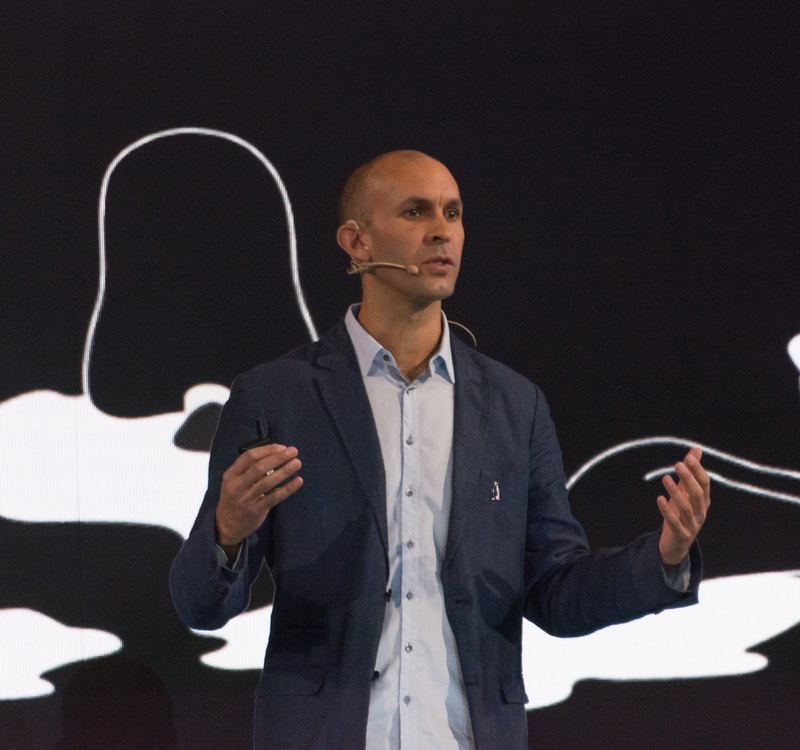 Anil SethSussex Centre for Consciousness Science, University of SussexThe beast machine hypothesis, and controlled hallucination as an account of perception
- Karl FristonUniversity College London. Chief Scientist, VERSES AIThe free energy principle and active inference
- Lancelot Da CostaDepartment of Mathematics, Imperial College London; Wellcome Centre for Human Neuroimaging, University College LondonMathematical foundations of active inference, Bayesian mechanics, computational neurophenomenology, continuous-time variational inference
- Maxwell J. D. RamsteadVERSES AI Research Lab, Los Angeles; Department of Philosophy, McGill UniversityMultiscale active inference, cultural affordances, computational neurophenomenology, shared intentionality
- Lars Sandved-SmithSussex Centre for Consciousness Science, Department of Informatics, University of SussexComputational phenomenology, active inference models of the self, temporal thickness, predictive processing