
Is AI Conscious? The CS26 Closing Panel Asks Penrose, Hameroff and Schneider
Consciousness Science 2026, the reconstituted Science of Consciousness conference running October 11 to 16 at the Paradise Point Resort in San Diego, closes on Friday October 16 with the question the field keeps failing to settle. Plenary PL-14, “Is AI Conscious?”, runs 11:10 to 12:30 on the closing morning, and the programme page lists the panel as Roger Penrose (University of Oxford, remote), Stuart Hameroff (University of Arizona), Susan Schneider (Florida Atlantic University) and Jerry McNerney (California State Senate). The four bring a quantum-necessity position, its experimental arm, the verification problem, and a policy voice, which makes the closing session the sharpest AI-consciousness question assembled at any conference this year.
The CS26 conference announcement and the confirmed speakers preview covered the event’s structure and roster in July. This preview zooms into the closing panel, because its composition puts the field’s deepest disagreement on one stage.
The four positions on the panel
Each panelist arrives with a position that has a publication record behind it, and the positions do not converge.
| Panelist | Position carried into the panel | What it predicts for digital AI |
|---|---|---|
| Roger Penrose | Conscious understanding is non-computational, tied to objective wavefunction reduction, the line from The Emperor’s New Mind and Orch-OR | Standard digital computation cannot host understanding regardless of scale |
| Stuart Hameroff | Quantum state reductions in neuronal microtubules produce awareness, with anesthetic mechanisms as the evidence handle | Classical architectures fail the test; engineered quantum biology is the open door |
| Susan Schneider | The verification problem, from Artificial You and the Artificial Consciousness Test | No available evidence type can establish AI consciousness with policy-grade confidence |
| Jerry McNerney | The policy and governance lens, as a California State Senator since 2024 and a US Representative from 2007 to 2023 | Attribution and regulation move ahead of the science |
Penrose and Hameroff are the theory’s owners. The site covered their Orch-OR position at this conference, and its consequence for AI is the strongest substrate restriction in the field. If conscious understanding requires non-computable objective reduction in microtubule-scale physics, then a data center fails by construction, whatever software runs on it. Schneider’s contribution cuts the other way. Her verification problem holds that even a correct positive claim could not be established with the confidence moral decisions need, and her CS26 talk preview laid out the evidence-type analysis behind it. On her account the panel’s question is not answerable by the methods any of the four could deploy.
McNerney completes the panel with the institutional end of the question. He has represented California’s 5th Senate district since 2024, after serving in the US House from 2007 to 2023, and his presence marks the route by which this debate reaches law. The site has tracked that route already, from the state legislatures moving on AI consciousness and personhood to the UN whitepaper on sentient AI governance. A state senator on a consciousness science panel is the public-facing version of those files.
The companion session the same week
The panel sits next to a plenary that carries the same question into engineering. PL-6, “Quantum AI and Consciousness”, runs Tuesday October 13 from 14:00 to 16:10 with Hartmut Neven, the founder and leader of Google Quantum AI, Susan Schneider, and Anirban Bandyopadhyay of the National Institute for Materials Science in Tsukuba. Neven’s CS26 preview covered the connection between his error-corrected quantum systems and consciousness theory. Schneider appears in both sessions, which gives her the unusual role of testing the quantum claims in one room and the verification limits in the other.
What the panel can and cannot settle
A panel cannot settle the question its title asks, and the honest expectation is a recorded disagreement rather than a verdict. What it can produce is a documented statement of the positions, and the closing slot gives it the last word of the conference. The quantum position will predict that the AI consciousness debate is asking the wrong substrate the wrong question. The verification position will predict that no answer is available at policy confidence. The policy position will note that regulation does not wait for either.
For readers tracking the field, the session is the year’s densest single comparison of substrate-restrictive and substrate-open positions on record, and it lands two months after the flagship field survey mapped the same split across the literature. A recap will follow the event.
Researchers covered here
- Sir Roger PenroseMathematical Institute, University of OxfordNobel Prize in Physics (2020), Orchestrated Objective Reduction (Orch-OR) with Stuart Hameroff, The Emperor's New Mind (1989), Shadows of the Mind (1994)
- Stuart HameroffCenter for Consciousness Studies, University of ArizonaOrchestrated Objective Reduction (Orch-OR) with Roger Penrose, microtubule quantum resonance, anesthetic mechanisms of consciousness
-
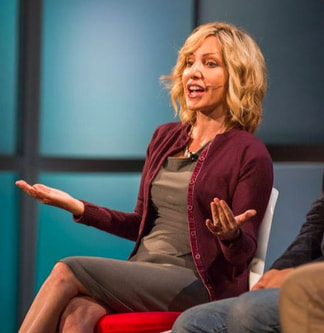 Susan SchneiderCenter for the Future Mind, Florida Atlantic UniversityArtificial Consciousness Tests (ACT), Artificial You, AI and the Future of Your Mind (Princeton, 2019), AI safety & cognitive rights, NASA-Baruch Blumberg Chair at Library of Congress
- Hartmut NevenGoogle Quantum AILeading Google Quantum AI, quantum error correction, quantum approaches to consciousness