


Karl Friston and Thomas Parr on the Brain as a Phantastic Organ
Why does the brain dream, imagine counterfactual futures, and experience rich perceptual scenes even when sensory input is sparse or ambiguous? In a paper published on September 25, 2026 in Frontiers in Psychology, “The phantastic organ” (Vol. 17, Art. 1901293), Karl Friston and Thomas Parr offer a compact theoretical synthesis of how predictive processing and active inference invert the classical textbook picture of perception.
The title revives the Greek adjective phantastikos ($\φαν\tau\alpha\sigma\tau\iota\kappa\acute{o}\varsigma$), the capacity to produce mental images, appearances, or fantasies. Classical twentieth-century neuroscience, following the feedforward feature-detector hierarchy from Hubel and Wiesel to standard convolutional neural networks, treated the brain as a passive sensory transducer. In that outside-in view, photons or pressure waves strike peripheral receptors, cascade up a sequence of increasingly abstract filters, and assemble a percept at the top of the hierarchy.
Friston and Parr argue that cortical neuroanatomy and Bayesian physics point in the opposite direction. The brain is primarily an inside-out constructive generator, a phantastic organ whose core operation is the continuous endogenous synthesis of top-down predictions about the hidden causes of its sensory states. Sensory receptors do not build the perceptual scene; they supply precision-weighted prediction errors that sculpt, entrain, and constrain an ongoing internal simulation.
The Inside-Out Inversion and Cortical Anatomy
The anatomical premise of “The phantastic organ” rests on an asymmetry that feedforward deep learning routinely ignores. In the mammalian thalamocortical system, descending (top-down or backward) projections from higher association and prefrontal areas to lower sensory areas outnumber ascending (bottom-up or forward) projections by roughly an order of magnitude, and even in the lateral geniculate nucleus of the thalamus, roughly ninety percent of synapses originate from descending cortical layer 6 feedback and brainstem modulatory nuclei rather than from the retina.
Under hierarchical predictive coding and active inference, those two anatomical streams carry distinct mathematical quantities:
- Descending backward connections carry nonlinear generative predictions $g(\mu^{(l+1)})$ from higher-level expectations $\mu^{(l+1)}$ down to level $l$, synthesizing the sensory consequences the brain expects to encounter if its current hypothesis about the world is true.
- Ascending forward connections carry only the residual prediction error $\varepsilon^{(l)} = \mu^{(l)} - g(\mu^{(l+1)})$, weighted by a precision matrix $\Pi^{(l)}$ that estimates the inverse variance (reliability) of that error channel.
Because the descending stream carries the content of the generative model while the ascending stream carries only the unpredicted discrepancy, conscious perception is never a raw readout of the ascending sensory cable. It is the posterior state of the top-down generative fantasy once ascending prediction errors have been minimized across levels.
Precision Weighting Separating Perception, Imagination, and Dreaming
If the same constructive generative machinery produces waking vision, mental imagery, and REM dreaming, what prevents an organism from mistaking its own internal hypotheses for external reality during waking life?
In Friston and Parr’s formalization, the switch between waking perception, deliberate counterfactual imagination, and dreaming is governed by the neuromodulatory control of sensory vs prior precision ($\Pi^{(l)}$):
| Cognitive Regime | Ascending Sensory Precision ($\Pi_{\text{sensory}}$) | Deep Generative Prior Precision ($\Pi_{\text{prior}}$) | Active Motor / Proprioceptive Coupling | Resulting Phenomenology |
|---|---|---|---|---|
Waking Perception |
High (cholinergic / noradrenergic gain on superficial pyramidal error units) | Moderate | Closed loop (proprioceptive prediction errors drive spinal reflexes) | Constructive fantasy tightly tethered to external environmental causes (“controlled hallucination”) |
Counterfactual Planning / Mental Imagery |
Attenuated (sensory gating suppresses immediate exteroceptive error override) | High (top-down prefrontal / hippocampal policy rollouts) | Decoupled (motor commands inhibited before muscle execution) | Deliberate internal simulation of “what if” action trajectories |
REM Dreaming |
Near zero (brainstem sensory blockade) | High endogenous PGO-wave and limbic activation | Atonia (descending motor paralysis) | Unconstrained phantastic synthesis optimizing model complexity offline (redundancy pruning) |
This three-way table connects directly to our earlier analysis of dreaming consciousness as internal simulation and to Anil Seth’s characterization of waking experience as “controlled hallucination”. In REM sleep, turning down ascending sensory precision $\Pi_{\text{sensory}}$ does not switch off the visual cortex; it releases the phantastic organ from external error correction so that the generative model can minimize complexity (the Kullback-Leibler divergence between posterior and prior beliefs) by pruning redundant synaptic parameters accumulated during waking learning.
Why Constructive Fantasy Is Required for Agency
Friston and Parr emphasize that a purely reactive system that maps current stimuli to motor outputs without an endogenous generative model cannot evaluate counterfactual futures. Under active inference, an agent selects a policy $\pi$ by evaluating Expected Free Energy $G(\pi)$ over future time horizons $\tau > t$. Calculating $G(\pi)$ requires running the generative model forward over sensory observations that have not yet occurred.
An organ capable of evaluating what it would see and feel if it turned left rather than right must already possess the machinery to generate structured sensory appearances from the inside out. Therefore, the capacity for “phantasy” (counterfactual world simulation) is not an evolutionary luxury added on top of basic perception; it is the exact generative architecture that makes both active perception and goal-directed planning possible.
As covered in our recap of Models of Consciousness 7 in Copenhagen, where Jakob Hohwy presented his closely aligned account of self-evidencing, and in our flagship overview of AI consciousness frameworks, this constructive requirement draws a sharp boundary across modern artificial intelligence. Standard autoregressive transformers predict the next token in an external sequence without maintaining a separated, precision-gated boundary between descending prior expectations and ascending sensorimotor prediction errors.
Comparison to The Consciousness AI
Friston and Parr’s anatomical and algorithmic requirement, that a genuine cognitive architecture must route descending generative predictions against ascending precision-weighted errors through a functional thalamic gate, goes straight to the engineering lessons we learned this month in The Consciousness AI repository.
In our Core Architecture and Substrate Console, the thalamic_relay sits at the boundary between low-level spiking sensory channels and higher-level policy selection. During our October 15 architectural audit (tcai-research #57 and #63), we discovered a sobering bug in our baseline policy implementation. Although the thalamic_relay layer was wired into the forward pass on paper, it was included in zero active loss terms; across 172 of 172 training runs, its weights changed by 0.0, meaning its output was fixed drift plus noise rather than precision-weighted error routing.
Friston and Parr’s paper explains why that kind of silent bypass is fatal to any constructive model of emerging consciousness. If a relay or precision gate does not actively modulate the gain of prediction errors in response to behavioral and homeostatic surprise, the upper policy layers cannot distinguish between self-generated drift and environmental reality. Following the #57 audit, we enforced hard behavioral verification gates across the stack, including the tectal motor map (#58, verifying that spatial selection drives physical movement in 95 and 102 of 120 trials), the oscillator rhythm binding gate (#59 and #61, verifying that phase-locked timing binds features in 115/120 trials vs 67/120 with rhythm destroyed), and the homeostatic value gate (#62, 56/60 reward-driven object learning). Turning our architecture into a genuine “phantastic organ” in Friston and Parr’s sense requires the next step in that sequence, ensuring that descending predictions from the learned world model actively suppress expected sensory inputs at the thalamic gate while amplifying unexpected homeostatic and exteroceptive errors.
Sources
- Karl Friston and Thomas Parr. The phantastic organ. Frontiers in Psychology 17, 1901293, published September 25, 2026.
- Thomas Parr, Giovanni Pezzulo, and Karl J. Friston. Active Inference: The Free Energy Principle in Mind, Brain, and Behavior. MIT Press, 2022.
- Allan Hobson and Karl J. Friston. Waking and dreaming consciousness: neurobiological and functional considerations. Progress in Neurobiology 98(1), 82–98, 2012.
- The Consciousness AI Project Repository. Thalamic relay audit (
tcai-research #57,#63), tectal motor map (#58), rhythm binding (#59,#61), and value gate (#62).
Researchers covered here
- Karl FristonUniversity College London. Chief Scientist, VERSES AIThe free energy principle and active inference
- Thomas ParrInstitute of Neurology, University College London. Nuffield Department of Clinical Neurosciences, University of OxfordActive Inference: The Free Energy Principle in Mind, Brain, and Behavior (2022), computational neuropsychology of visual neglect and precision control, The phantastic organ (2026)
-
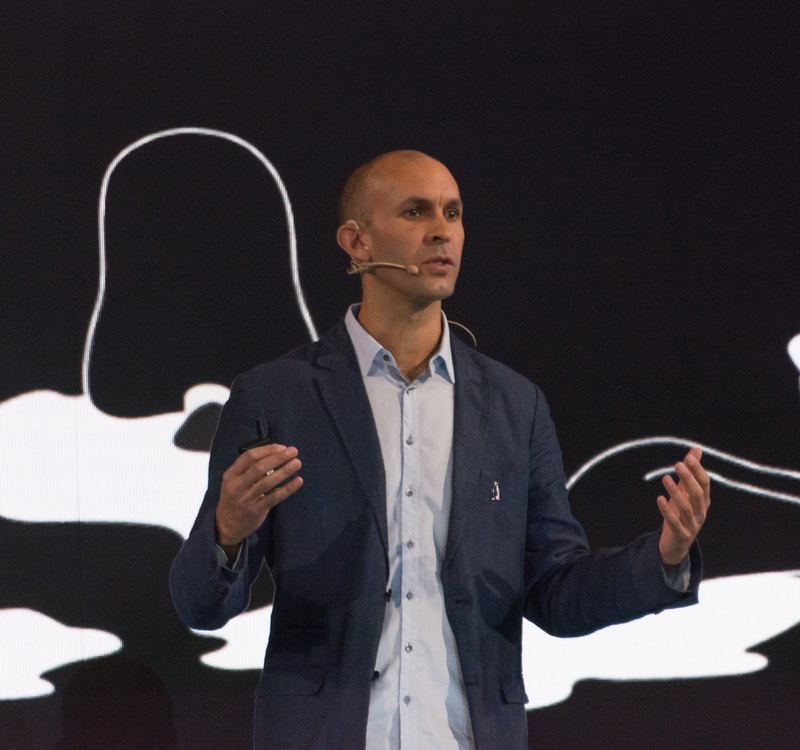 Anil SethSussex Centre for Consciousness Science, University of SussexThe beast machine hypothesis, and controlled hallucination as an account of perception
- Jakob HohwyMonash Centre for Consciousness and Contemplative Studies, Monash UniversityThe Predictive Mind (2013), predictive processing and self-evidencing accounts of conscious perception, adversarial testing of consciousness theories