

I Am My Connectome, Sebastian Seung and the Structural Identity Hypothesis
Connectome
Sebastian Seung's 2012 book Connectome argues identity lives in neural wiring, the structural identity hypothesis, and what a connectome must include.
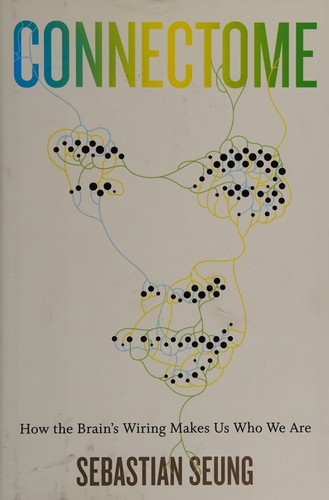
Sebastian Seung published Connectome: How the Brain’s Wiring Makes Us Who We Are with Houghton Mifflin Harcourt in 2012, ISBN 978-0-547-50817-7. The book states one claim in its opening line and defends it for 250 pages. You are your connectome. The wiring pattern of the brain’s roughly 86 billion neurons and their trillions of synapses is the physical substrate of identity, memory and mind. The term connectome itself was coined in 2005 by Olaf Sporns and colleagues, and Seung’s book did more than any other publication to make it common vocabulary.
| Claim | What the book argues |
|---|---|
| Identity | The pattern of connections between neurons is what makes a person an individual |
| Memory | Memories are stored in the connection pattern itself |
| Inheritance | Genes specify potential wiring; experience rewires it |
| Method | Connectomics at synaptic resolution is the necessary next instrument |
The structural identity hypothesis
The book’s philosophical payload is usually called the structural identity hypothesis. If two brains have the same wiring pattern, the same pattern of synaptic connectivity with the same functional states, then they have the same memories and the same mental life. The hypothesis borrows its logic from pattern identity theories of personal identity. It differs from the gene-centered view Seung attacks in his opening chapters. Genes assemble the initial wiring through molecular cues, but experience tunes synaptic weights, prunes connections and adds new ones. On Seung’s account, the brain you were born with is a template, and the brain you are is the record of everything that touched it.
Seung is careful about what the hypothesis requires. The connectome the claim needs includes the functional state of each connection, its strength and sign, because a synapse can be changed by experience. A raw list of anatomical adjacencies alone is too thin to carry it. The wiring pattern he identifies the self with is a dynamic object, restructured during development and modified continuously in adulthood.
What the connectome is and is not
The book arrived before the field’s first large results. The C. elegans wiring diagram from 1986, covered in the mind of a worm post, was still the only complete connectome of any animal. Seung launched EyeWire in 2012, a citizen science game in which thousands of players traced neurons in a mouse retina, to test whether distributed human annotation could scale the mapping effort. The instruments he called for arrived in stages, from whole-brain hydrogel imaging to the petavoxel human cortex reconstruction examined in the one cubic millimeter post.
The hypothesis has standing counters, and the book acknowledges two. Wiring alone may not fix function. The same adjacency pattern supports different dynamics depending on membrane properties and neuromodulation, a limitation demonstrated in the first simulation attempts, covered in the OpenWorm post. And critics of connectome-based identity argue that a wiring diagram is a snapshot, while a person is a process. The strong version of the structural identity hypothesis answers that a sufficiently fine-grained wiring pattern, including synaptic weights, is the process compressed to its information content.
Comparison to The Consciousness AI
The structural identity hypothesis is the strongest form of the substrate independence claim this site develops. If identity is a pattern of connections rather than a material object, then copying the pattern preserves the person, and the destructive scan-and-copy versus gradual replacement debate in whole brain emulation becomes an engineering question rather than a metaphysical one. Seung’s caution cuts in the other direction, and this project tracks it. A connectome is a description, and a running system is a separate requirement. The project’s architecture, documented in the tlcdv/the_consciousness_ai repository, treats structural data as one required input among dynamic parameters, because a static adjacency matrix initializes a silent network. Whether wiring plus dynamics crosses into experience is the open question the emulation section collects on the brain emulation page.
What the Hypothesis Owes the Reader
The book’s lasting contribution is falsifiable rather than rhetorical. If connectomes at synaptic resolution with functional weights can be measured, the structural identity hypothesis becomes testable against memory data, and its failure modes become identifiable. The roadmap framing of that test program is examined in the Sandberg and Bostrom roadmap post. The broader debate about whether pattern preservation of any kind implies preserved experience is reviewed in the flagship overview of AI consciousness research.