

Stanislas Dehaene and the Multilevel Architecture of Global Neuronal Workspace Theory
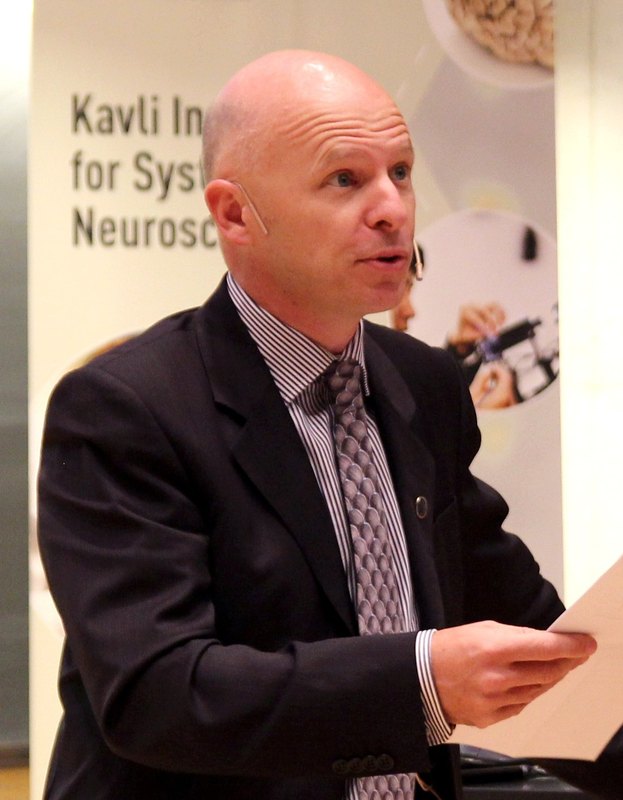
Stanislas Dehaene is a cognitive neuroscientist and professor at the Collège de France, where he directs the Cognitive Neuroimaging Unit. He is one of the architects of Global Neuronal Workspace Theory (GNW), developed with Jean-Pierre Changeux and Lionel Naccache from Bernard Baars’s original Global Workspace Theory. GNW is among the most empirically productive frameworks in consciousness science and is the theoretical foundation for much of the site’s coverage of ignition, broadcast dynamics, and AI architectures.
Despite that prominence, Dehaene has no standalone named-entity page on this site. He appears as a reference in 27 separate posts. This article addresses that gap using two recent publications: a 2025–2026 paper in Neuroscience of Consciousness (DOI: 10.1093/nc/niac010corr1) responding to the Cogitate adversarial collaboration, and a June 2026 commentary in Trends in Cognitive Sciences that explicitly positions GNW as a multilevel biological theory rather than a purely computational one.
That positioning is the key news from these papers. It directly responds to the Cogitate findings, which challenged the theory by producing results inconsistent with some of its predictions, and to the functionalist readings of GNW that dominate AI consciousness discussions.
GNW in brief: what the theory claims
Global Neuronal Workspace Theory proposes that consciousness arises from a specific kind of neural event: the ignition of a long-range network of neurons, primarily in prefrontal and parietal cortex, that broadcasts a mental representation to a wide audience of downstream processors. When a sensory representation crosses a threshold and ignites this workspace, it becomes conscious. When it remains confined to local sensory processing, it does not.
The theory makes concrete predictions. Conscious stimuli should produce late (after ~300 ms), widespread activation patterns that include prefrontal cortex. Unconscious stimuli, processed locally in sensory cortex, should not generate ignition. These predictions have been tested in a large empirical literature using fMRI, MEG, EEG, and intracranial recordings. Bernard Baars, the originator of Global Workspace Theory, and his recent work on ignition thresholds in language models, are covered in the August 2026 post on Baars and LLM ignition.
The Cogitate adversarial collaboration, tested by Lucia Melloni’s consortium and reported at ASSC 29 in Santiago, produced results that challenged GNW on several specific predictions. The Melloni Cogitate Phase 2 post covers those results. Dehaene’s 2025–2026 Neuroscience of Consciousness paper is, in part, a response to what Cogitate found and what it missed.
The multilevel claim: more than computation
The most significant argument in the 2025–2026 papers is that GNW has been misread as a purely computational theory. Dehaene, Naccache, and Changeux argue that this misreading generates false predictions and false criticisms.
GNW does not merely say “any system that broadcasts information globally is conscious.” It says that consciousness arises from a specific biological architecture: long-range cortico-cortical axons with very high conduction velocities, maintained by specific layer-specific projections; glutamatergic ignition events that require specific receptor densities; neuromodulatory systems (noradrenaline, acetylcholine, dopamine) that gate workspace access; and molecular-level mechanisms including NMDA receptor dynamics that determine the stability and duration of ignition.
The Trends in Cognitive Sciences June 2026 commentary makes this explicit by describing GNW as a multilevel theory, operating simultaneously at:
| Level | GNW mechanisms |
|---|---|
| Molecular | NMDA receptor gating, neuromodulator action, receptor density gradients |
| Cellular | Layer-specific cortical projections, long-range pyramidal neuron firing |
| Circuit | Recurrent excitatory loops within prefrontal and parietal cortex |
| Network | Long-range cortico-cortical and thalamo-cortical synchrony |
| Behavioural | Ignition-contingent access to report, working memory, voluntary action |
Dehaene’s point is that when GNW is abstracted to the purely computational level (“a system that broadcasts information globally”), the specific biological predictions disappear. The theory then becomes meat-neutral in exactly the sense that Ned Block criticises. But the actual theory is not meat-neutral. It makes predictions at each level of the table above, and those predictions are testable at each level.
What the Cogitate results showed and what they missed
The Cogitate adversarial collaboration produced a mixed verdict on GNW. Several predicted signatures of conscious processing, including late posterior activity and recurrent dynamics in visual cortex, were found. The predicted late prefrontal ignition, a key GNW marker, was weaker and less consistent across sites than the theory predicted.
Dehaene’s response distinguishes between the methodological design of Cogitate and the theoretical interpretation. He argues that Cogitate’s paradigm used visual stimuli that were processed predominantly in posterior cortex, and that the prefrontal ignition signature is most reliably observed for attended, task-relevant stimuli that engage executive processing. The Cogitate design, which used passively viewed stimuli to avoid contamination by cognitive strategies, may have selectively suppressed exactly the conditions under which GNW’s prefrontal prediction is strongest.
This is a genuine methodological debate, not a post-hoc rationalisation. The question is whether an adversarial test that suppresses attentional engagement has tested GNW’s predictions under the conditions the theory specifies. Dehaene argues it has not. Whether the community finds this response satisfactory will depend on whether future paradigms can test prefrontal ignition under conditions that GNW specifies as necessary for its occurrence.
GNW and AI: the multilevel gap
The multilevel interpretation has direct consequences for AI consciousness. If GNW is a computational theory, then any system with a global broadcasting architecture, including systems with attention heads that route information to downstream processors, could in principle satisfy GNW’s consciousness criterion. Gurnee’s Jacobian lens findings, which identified something resembling a global workspace in Claude (covered in the July 2026 post on global workspace in AI), would then be significant evidence that large language models have GNW-like processing.
If GNW is a multilevel biological theory, the situation changes. Attention heads in a transformer do not implement cortico-cortical long-range axonal projections. They do not have NMDA receptor dynamics. The neuromodulatory gating that controls workspace access in biological brains has no counterpart in a feedforward transformer. A global workspace in an LLM, if it exists at a computational level of description, may be an implementation of something structurally analogous to GNW without sharing any of the mechanisms GNW identifies as constitutive.
Dehaene’s 2025–2026 papers do not take a definitive position on whether AI systems can be conscious under GNW. They are focused on clarifying what GNW actually predicts. But the multilevel clarification has the practical consequence of raising the bar for what it would mean for an AI system to satisfy GNW’s criteria, beyond the functionalist reading that dominates discussions of transformer architectures and global workspace analogies.
Connections to the broader 2026 field
The scientists-race-define-ai-consciousness-2026 overview describes the current disagreement between functionalist and substrate-sensitive approaches. Dehaene’s multilevel reframing places GNW, which has historically been read as functionalist, closer to the substrate-sensitive camp without abandoning its commitment to mechanistic explanation.
The Goldstein and Kirk-Giannini paper, covered in the August 2026 post on GWT and language agents, applies global workspace theory to LLMs and reaches cautiously positive conclusions. Dehaene’s multilevel account provides a framework for evaluating how much those conclusions depend on a computational versus a biological reading of GWT.
GNW remains, alongside IIT and predictive processing, one of the three frameworks with the greatest influence on the field. Dehaene’s 2025-2026 papers are the most important recent clarification of what GNW actually claims, and they carry the most weight precisely because the theory has been so widely adopted and so variously interpreted. The contrast with Singer’s temporal binding account, which places the binding window at 25 ms rather than 300 ms, becomes concrete when you ask what the timing constraints demand of orbital architectures: Wolf Singer’s temporal binding and the latency floor for a mind in orbit works through those arithmetic consequences.