


Adam Frank and David Grinspoon on Planetary Intelligence and The Little Book of Aliens
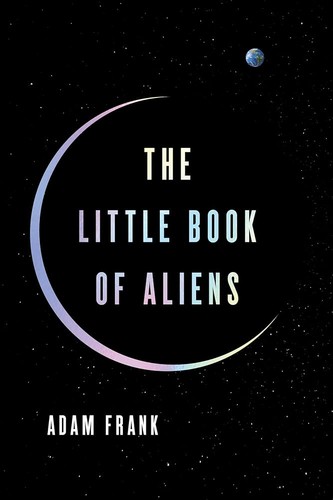
The Little Book of Aliens
Adam Frank, David Grinspoon, and Sara Imari Walker frame intelligence as a planetary process, explored alongside Frank's The Little Book of Aliens.
Buy on amazon.com As an Amazon Associate I earn from qualifying purchases.
When astrophysicists search for alien intelligence, they usually picture individual brains inside individual bodies. In Intelligence as a Planetary Scale Process (International Journal of Astrobiology, 2022) and in his accessible synthesis The Little Book of Aliens (Harper, ISBN 978-0063279735), University of Rochester astrophysicist Adam Frank, Planetary Science Institute astrobiologist David Grinspoon, and Arizona State University physicist Sara Imari Walker invert that picture. Intelligence, they argue, can also be analyzed as a planetary-scale transition, comparable to the emergence of photosynthesis or atmospheric oxygenation, where collective cognitive activity reshapes a planet’s thermodynamic feedback loops.
Listed in our AI Consciousness Books guide and our Alien Consciousness section, Frank’s book and the Frank-Grinspoon-Walker framework bridge exoplanet astrophysics, Earth-system science, and the search for non-human minds.
Four Stages of Planetary Evolution
Frank, Grinspoon, and Walker classify worlds into four evolutionary regimes based on how life and collective cognition couple to planetary geochemistry and energy flows.
| Planetary Stage | Dominant Feedback Mechanism | Thermodynamic / Atmospheric Signature | Status on Earth |
|---|---|---|---|
| Stage 1 Immature Biosphere | Early microbial life with weak planetary coupling | Localized chemical anomalies, minimal global climate feedback | Early Archean Earth (~3.8 billion years ago) |
| Stage 2 Mature Biosphere | Global biological feedback loops (photosynthesis, carbon cycle) | Sustained global atmospheric disequilibrium (e.g., high O2) | Proterozoic through Holocene Earth |
| Stage 3 Immature Technosphere | Technological networks altering climate without self-regulation | Rapid greenhouse forcing, waste heat, destabilizing feedbacks | Present-day Anthropocene Earth |
| Stage 4 Mature Technosphere | Collective intelligence integrated with planetary stability | Long-lived sustainable energy harvesting and balanced geochemical cycles | Hypothetical future transition |
In The Little Book of Aliens, Frank translates this taxonomy into the practical astronomy of technosignatures. Rather than waiting passively for an intentional radio message, NASA-backed technosignature teams ask what atmospheric pollutants, city-scale nightside illumination, or orbital solar-collection arrays look like through next-generation space telescopes. The Fermi paradox then shifts from a question about whether intelligent species ever arise to a question about how often a Stage 3 immature technosphere survives long enough to reach Stage 4.
How Planetary Intelligence Differs From a Planetary Mind
A strict facts-discipline boundary separates planetary intelligence from planetary consciousness. Frank, Grinspoon, and Walker use “planetary intelligence” to describe collective, distributed information processing and feedback stabilization across a biosphere or technosphere (such as mycorrhizal fungal networks coupled with forests, or global human communication and energy grids).
They do not claim that Earth’s biosphere or internet currently possesses a unified first-person phenomenal perspective. Treating planetary feedback loops as literally sentient without specifying an integrative neural or causal boundary would blur the distinction between homeostatic regulation and subjective experience. That distinction aligns directly with the consensus tracked in how scientists race to define and test AI consciousness in 2026 and with Eric Schwitzgebel and Jeremy Pober’s Copernican argument for alien consciousness.
What Planetary Intelligence Tells Us About Consciousness
Planetary intelligence connects directly to consciousness science in two concrete ways. First, it reframes biological survival and self-regulation across scales. Just as individual brains evolved affective valence and predictive world models to keep a single organism within homeostatic bounds, a mature technosphere requires collective modeling and value alignment across millions of interacting agents, biological and artificial alike.
Second, Frank’s framework highlights why substrate independence extends naturally to astrobiology. If a long-lived Stage 4 civilization transitions parts of its cognitive infrastructure into orbital solar collectors (the exact trajectory examined in our Consciousness to Orbit section and the FCC SpaceX Starmind and Google Project Suncatcher analysis), then the most durable minds in the galaxy may operate on engineered photonic, neuromorphic, or thermodynamic substrates rather than fragile wet-carbon biospheres. Paired with Julia DeMarines’ noosignatures framework, planetary intelligence maps the full continuum from pre-industrial toolmakers to star-harvesting technospheres.
Comparison to The Consciousness AI
The Consciousness AI builds and tests biologically grounded cognitive architectures at the single-agent level rather than modeling global climate or exoplanet atmospheres. However, Frank, Grinspoon, and Walker’s emphasis on far-from-equilibrium thermodynamic feedback loops resonates with our Thermodynamic Computing section and with our broader inquiry into consciousness as an emergent property of physical organization across scales.
Strengths and Limits of The Little Book of Aliens
Frank’s book succeeds as a sober, data-driven corrective to sensationalist UFO commentary, grounding astrobiology in exoplanet census numbers (hundreds of billions of planets in the Milky Way), atmospheric spectroscopy, and the physics of technosignatures. Its main limitation for readers specifically focused on philosophy of mind is that it treats intelligence primarily through energy use and system survival rather than tackling the hard problem of phenomenal consciousness directly. Read alongside Sara Imari Walker’s Life as No One Knows It, it forms a strong non-fiction foundation for thinking rigorously about alien minds.
Researchers covered here
-
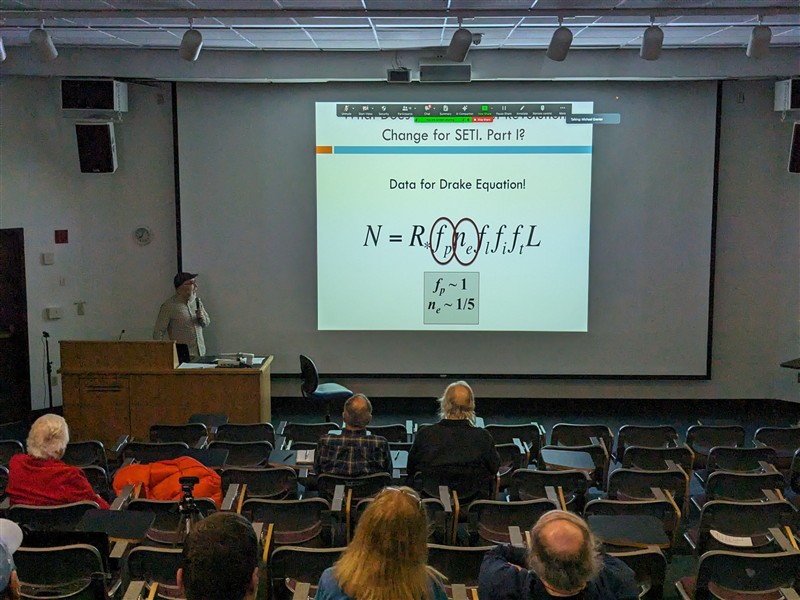 Adam FrankUniversity of RochesterPlanetary intelligence, technosignatures, astrobiology, The Little Book of Aliens (2023)
- David GrinspoonPlanetary Science InstituteComparative planetology, astrobiology, planetary intelligence, Anthropocene earth systems
-
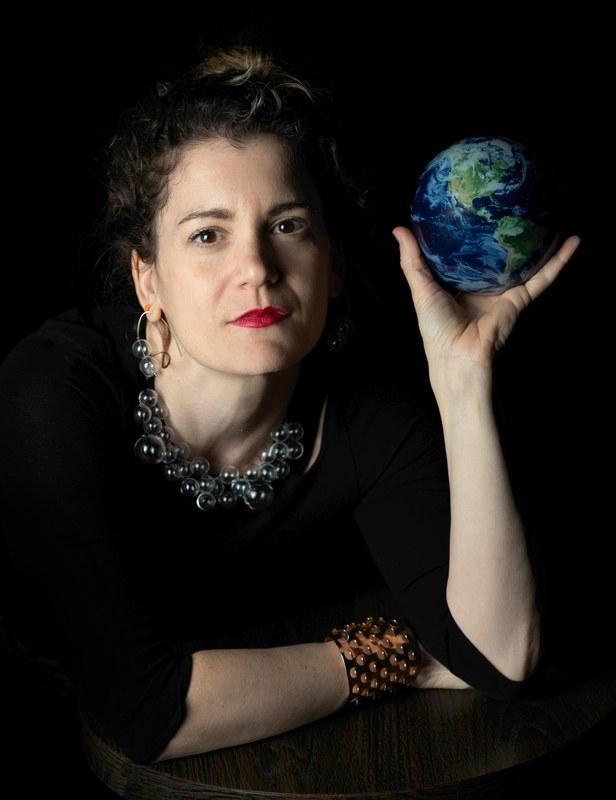 Sara Imari WalkerArizona State University and Santa Fe InstituteAssembly Theory, Life as No One Knows It (2024), physics of life and selection, planetary intelligence and agnostic biosignatures