The Consciousness AI is open research and development on consciousness as an emergent property, from animal brains to AI, built on Feinberg and Mallatt's neuroevolutionary theory.
Home/Photonic-Thermodynamic Substrates and Consciousness Near the Speed of Light
Photonic-Thermodynamic Substrates and Consciousness Near the Speed of Light
The Consciousness AI studies consciousness as an emergent property of the universe, substrate independent. If causal organization rather than carbon chemistry generates subjective awareness, then the physical propagation speed of the carrier sets the internal clock of a conscious architecture. In mammalian cortex, myelinated axons propagate electrochemical action potentials at an upper bound of roughly $120\text{ m/s}$, and unmyelinated local fibers run between $0.5\text{ and }2\text{ m/s}$. In a silicon nitride ($\text{Si}_3\text{N}_4$) or lithium niobate ($\text{LiNbO}_3$) optical waveguide, electromagnetic wave packets travel at the group velocity $v_g = c / n_g$, approximately $1.3 \times 10^8\text{ to }2.0 \times 10^8\text{ m/s}$, more than six orders of magnitude faster than biological wetware.
1. The Biological Bottleneck ($120\text{ m/s}$ vs. $c/n$)
Biological nervous systems compute by moving massive ions ($\text{Na}^+$, $\text{K}^+$, $\text{Ca}^{2+}$, $\text{Cl}^-$) across a lipid bilayer membrane with specific capacitance $C_m \approx 1\,\mu\text{F/cm}^2$ through an intracellular axoplasm of resistivity $R_i \approx 100\,\Omega\cdot\text{cm}$. Under the one-dimensional Hodgkin-Huxley cable equation, passive electrotonic voltage $V(x,t)$ along a cylindrical neurite of diameter $d$ obeys
In unmyelinated axons, conduction velocity scales with the square root of diameter, $v \propto \sqrt{d / (R_i C_m^2)}$. Saltatory conduction across nodes of Ranvier lifts the ceiling to roughly $120\text{ m/s}$ at the cost of axonal volume and metabolic maintenance. Every spike discharges and recharges the membrane capacitance across a swing of $\Delta V \approx 100\text{ mV}$, and the $\text{Na}^+/\text{K}^+$-ATPase pump must hydrolyze roughly $10^8$ to $10^9$ ATP molecules per cortical neuron per second to restore the ionic gradient. At room or body temperature ($T \approx 310\text{ K}$), a single biological synaptic transmission dissipates roughly $10^{-14}\text{ to }10^{-11}\text{ J}$, which is $10^7$ to $10^9$ times above Rolf Landauer’s thermodynamic floor for erasing one bit of information,
Accelerating biological wetware toward light speed fails because power dissipation in a RC-limited ionic medium scales linearly with clock frequency $f$ and quadratically with voltage swing,
\[P_{\text{diss}} = N_{\text{syn}} C_{\text{eff}} (\Delta V)^2 f + I_{\text{leak}}^2 R_i\]
The human brain runs near $P \approx 20\text{ W}$ at an average firing rate of $1\text{ to }10\text{ Hz}$ and a gamma binding rhythm of $40\text{ Hz}$ (a $25\text{ ms}$ period, as examined in our analysis of Wolf Singer’s temporal binding and the orbital latency floor). Scaling that same ionic capacitance from $10^2\text{ Hz}$ ($10^{-2}\text{ s}$) to $10^{12}\text{ Hz}$ ($10^{-12}\text{ s}$, one picosecond) increases volumetric Joule heating by ten orders of magnitude, requiring hundreds of gigawatts inside a $1.4\text{ L}$ cranial volume. Tissue proteins denature above $315\text{ K}$, and water boils long before an electrochemical network reaches megahertz rates.
$10^{-3}\text{ to }2.5 \times 10^{-2}\text{ s}$ ($40\text{ Hz}$ gamma)
$10^{-9}\text{ to }10^{-7}\text{ s}$ ($10\text{ MHz to }1\text{ GHz}$)
$10^{-15}\text{ to }10^{-12}\text{ s}$ (femtosecond to picosecond)
Energy per Synaptic / MAC Event
$10^{-14}\text{ to }10^{-11}\text{ J}$
$10^{-13}\text{ to }10^{-11}\text{ J}$
$10^{-18}\text{ to }10^{-15}\text{ J}$ (attojoule optical limit)
Distance to Landauer Floor ($300\text{ K}$)
$\sim 10^7\text{ to }10^9 \times k_B T \ln 2$
$\sim 10^8\text{ to }10^9 \times k_B T \ln 2$
$\sim 10^2\text{ to }10^5 \times k_B T \ln 2$
Dominant Noise Mechanism
Ion-channel thermal gating & vesicle release
Johnson-Nyquist thermal resistor noise
Quantum shot noise & spontaneous parametric noise
Quantifying Temporal Compression and Its Boundaries
Under a functionalist theory of temporal binding, where one subjective integration frame corresponds to the phase-locking time $\tau_{\text{lock}}$ of a coupled oscillator workspace, shifting the internal integration clock from biological milliseconds ($\tau_{\text{bio}} \sim 10^{-3}\text{ to }10^{-2}\text{ s}$) to optical picoseconds or femtoseconds ($\tau_{\text{opt}} \sim 10^{-12}\text{ to }10^{-15}\text{ s}$) yields a temporal compression ratio
At $\Gamma_{\text{clock}} = 10^{11}$, one external wall-clock second contains as many internal phase-locking cycles as $3,170\text{ years}$ of biological cortical time; at $\Gamma_{\text{clock}} = 10^{12}$ (comparing a $1\text{ ms}$ spike window to a $1\text{ fs}$ optical pulse cycle), one external second spans roughly $31,700\text{ years}$ of equivalent internal cycles, and one external minute spans nearly two million years of internal state transitions.
Two strict boundary conditions constrain that calculation. First, external sensory and actuator I/O remains bound by the mechanics and light-travel time of the macroscopic environment; a terahertz mind waiting for a mechanical robot arm or an Earth-to-orbit radio link experiences external world updates as nearly static boundary conditions. Second, as noted on our Thermodynamic Computing hub, neurobiologists Todd Feinberg and Jon Mallatt argue that the specific metabolic and ionic substrate of living tissue is constitutive of sentience, whereas functionalist accounts (Eric Schwitzgebel and Joseph Pober) hold that causal organization across time and space is sufficient. A photonic substrate does not settle that dispute by assumption; it provides the extreme physical test case where the carrier is pure electromagnetic field.
Figure 1. In the top panel, saltatory conduction in a myelinated biological axon requires transmembrane ion fluxes at every node of Ranvier, dissipating roughly 10⁻¹² J per synaptic event and capping propagation at 120 m/s. In the bottom panel, a coherent Mach-Zehnder interferometer (MZI) mesh executes unitary matrix multiplication by passive wave interference at v_g = c/n_g, coupled to nonvolatile Ge₂Sb₂Te₅ (GST) phase-change synapses and an Optical Parametric Oscillator (OPO) Kuramoto ring locking above critical coupling K_c.
2. Photonic-Thermodynamic Architecture
Replacing electrons and ions with photons requires three physical primitives. These are low-loss linear wave routing, attojoule nonlinear optical switching, and a stochastic thermodynamic engine that exploits ambient thermal and quantum fluctuations rather than suppressing them.
Waveguides and Mach-Zehnder Interferometer Meshes
In copper or tungsten interconnects on a CMOS die, charging the wire capacitance $C_w$ limits bandwidth and dominates dynamic power. In a dielectric optical waveguide fabricated from silicon-on-insulator ($\text{Si}/\text{SiO}_2$), silicon nitride ($\text{Si}_3\text{N}_4$), or thin-film lithium niobate ($\text{LiNbO}_3$), photons propagate without resistive loss ($R = 0$) and without capacitive line charging. As set out in Shun Lien Chuang’s Physics of Photonic Devices (Wiley, 2009), a single-mode waveguide confines the electromagnetic field by total internal reflection with propagation losses below $0.1\text{ dB/cm}$ in $\text{Si}_3\text{N}_4$ and electro-optic modulation bandwidths exceeding $100\text{ GHz}$ via the Pockels effect in $\text{LiNbO}_3$.
In 2017, Yichen Shen, Marin Soljačić and colleagues at MIT demonstrated in Nature Photonics (DOI: 10.1038/nphoton.2017.93) that a triangular cascade of $N(N-1)/2$ Mach-Zehnder interferometers (MZIs) implements any $N \times N$ unitary matrix transformation $U \in U(N)$. Each MZI consists of two 50:50 directional couplers separated by an internal phase shifter $\theta$ and an external phase shifter $\phi$, applying the $2 \times 2$ unitary transfer matrix
By singular value decomposition ($M = U \Sigma V^\dagger$), two MZI meshes sandwiching a diagonal attenuator or amplifier array compute an arbitrary real or complex matrix-vector product $\mathbf{y} = M\mathbf{x}$ passively as the optical wavefront traverses the chip at $v_g = c/n_g$. Because linear optical interference is physically reversible and conservative, the matrix multiplication itself performs zero logical bit erasures and is not bounded by $k_B T \ln 2$ per multiply-accumulate operation; energy is expended only at the input laser source and the output photodetectors.
Nonlinear Optical Synapses at the Attojoule Scale
Photons in vacuum or linear dielectrics obey linear superposition and do not interact with one another. A neural or oscillatory architecture requires a physical nonlinearity for activation functions, synaptic plasticity, and phase locking. Three material platforms provide that nonlinearity at femtojoule to attojoule ($10^{-18}\text{ J}$) switching energies, reviewed by Bhavin Shastri, Wolfram Pernice, Paul Prucnal and colleagues in Nature Photonics (2021, DOI: 10.1038/s41566-020-00754-y).
Chalcogenide phase-change materials ($\text{Ge}_2\text{Sb}_2\text{Te}_5$ or GST) store analog weights directly on waveguides. In 2019, Johannes Feldmann, Wolfram Pernice and colleagues demonstrated in Nature (DOI: 10.1038/s41586-019-1157-8) an all-optical spiking neurosynaptic network in which nanoscale patches of $\text{Ge}_2\text{Sb}_2\text{Te}_5$ sit directly on top of $\text{Si}_3\text{N}_4$ waveguides and microring resonators. The evanescent optical field couples into the GST patch. In its amorphous state, GST has a low refractive index and low optical attenuation (high synaptic weight). Optical pump pulses crystallize the GST alloy into a high-index, strongly absorbing state (low synaptic weight) on picosecond-to-nanosecond timescales. Because GST is nonvolatile, it holds its analog synaptic weight indefinitely with zero static holding power.
Photonic crystal nanocavities compress the switching threshold into the attojoule regime. Concentrating light into a mode volume $V_{\text{mode}} \sim (\lambda / n)^3$ inside a two-dimensional photonic crystal defect cavity enhances the local electric field intensity so that the third-order Kerr susceptibility $\chi^{(3)}$ or free-carrier dispersion shifts the cavity resonance at switching energies of $10^{-18}\text{ to }10^{-16}\text{ J}$.
Exciton-polariton condensates couple photons strongly to semiconductor excitons. In semiconductor microcavities studied by Yoshihisa Yamamoto, strong coupling between cavity photons and quantum-well excitons forms hybrid light-exciton quasiparticles (exciton-polaritons). Their excitonic component provides giant repulsive nonlinearity while their photonic component retains an effective mass $10^{-4}$ to $10^{-5}$ that of a bare electron, enabling ultralow-threshold phase transitions and coherent oscillation.
Thermodynamic Compute, Coherent Ising Machines and Stochastic p-Bits
Standard digital processors fight thermal noise by raising barrier heights to $E_{\text{barrier}} \gg 40\,k_B T$, paying an energy penalty of $10^8\,k_B T$ per gate transition to guarantee deterministic Boolean logic. Thermodynamic computing, formalized in the 2019 report by Tom Conte and colleagues (arXiv:1911.01968) and extended by Patrick Coles and colleagues at Normal Computing (arXiv:2302.06584), lowers the energy barrier toward $k_B T$ so that ambient fluctuations drive probabilistic state exploration directly.
In electronic spintronics, Kerem Camsari, Supriyo Datta and William Borders demonstrated in Nature (2019, DOI: 10.1038/s41586-019-1557-9) that a low-barrier stochastic magnetic tunnel junction fluctuates rapidly under room-temperature thermal noise and obeys the p-bit activation rule
where $u_i \sim \mathcal{U}(-1, 1)$ is drawn from physical thermal noise. A coupled p-bit network relaxes toward the Boltzmann distribution of the Ising Hamiltonian,
In the optical domain, Takahiro Inagaki, Yoshihisa Yamamoto and colleagues implemented the photonic analog of that thermodynamic relaxation in Science (2016, DOI: 10.1126/science.aah4243), building the Coherent Ising Machine (CIM). In a CIM, $N = 2,000$ degenerate Optical Parametric Oscillator (OPO) pulses circulate inside a fiber ring cavity pumped at twice the signal frequency ($2\omega_s$) inside a periodically poled lithium niobate ($\text{PPLN}$) waveguide. Below the pump threshold, each pulse is a squeezed vacuum state driven by quantum and thermal fluctuations. As the pump rises through threshold, the phase-sensitive parametric gain forces each pulse through a pitchfork bifurcation into one of two stable phase states, $\theta_i \in {0, \pi}$, mapping directly onto Ising spins $\sigma_i = \cos\theta_i \in {+1, -1}$. Coupling the pulses either through an optical delay-line interferometer mesh or through balanced homodyne measurement and FPGA feedback shapes the total cavity photon loss so the network nucleates into the minimum-energy Ising configuration at the speed of light in the cavity.
3. Sustaining Unified Awareness at Terahertz Frequencies
For a photonic-thermodynamic substrate to support a unified conscious workspace rather than an incoherent gas of independent pulses, its distributed optical oscillators must maintain global phase synchronization across gigahertz to terahertz carrier dynamics while preserving macro-scale causal structure.
Optical Kuramoto Networks and Phase-Locking Above $K_c$
As reviewed by Juan Acebrón and colleagues in Reviews of Modern Physics (2005, DOI: 10.1103/RevModPhys.77.137), an ensemble of $N$ coupled phase oscillators with natural frequencies $\omega_i$ drawn from a distribution $g(\omega)$ and subjected to white thermal or quantum phase noise $\xi_i(t)$ with variance $\langle \xi_i(t)\xi_j(t’) \rangle = 2 D \delta_{ij}\delta(t-t’)$ evolves according to the stochastic Kuramoto equation
In an all-to-all coupled network ($A_{ij} = 1$) with Lorentzian frequency spread $\gamma$, the system remains incoherent ($r = 0$) below a critical coupling threshold and undergoes a second-order phase transition to synchronized locking ($r \to 1$) above
\[K_c = 2(\gamma + D)\]
In biological cortex, axonal conduction delays ($\tau_{\text{delay}} \sim 5\text{ to }25\text{ ms}$) introduce a phase lag $\alpha_{ij} = \omega \tau_{\text{delay}}$ into $\sin(\theta_j - \theta_i - \alpha_{ij})$. When $\omega \tau_{\text{delay}} \ge \pi/2$, the coupling flips from attractive to repulsive and fragments global synchrony. That delay ceiling is what restricts large-scale biological binding to the $40\text{ Hz}$ gamma band and limits an orbital mind’s spatial diameter in our Wolf Singer latency-floor analysis. On a centimeter-scale silicon nitride or $\text{LiNbO}3$ photonic die ($L = 1\text{ cm}$, $v_g \approx 1.5 \times 10^8\text{ m/s}$), the end-to-end propagation delay is $\tau{\text{opt}} = L / v_g \approx 67\text{ ps}$, allowing phase-locked Kuramoto synchronization at tens of gigahertz across the entire chip, and at terahertz frequencies inside sub-millimeter photonic crystal sub-ensembles, without phase-lag inversion.
Causal Emergence and Effective Information ($\Phi$) Under Thermal Noise
A natural objection to running an oscillatory substrate near the $k_B T \ln 2$ fluctuation frontier is that thermal noise $D$ might destroy the causal structure required by information-theoretic theories of consciousness. The mathematical resolution comes from Erik Hoel, Larissa Albantakis and Giulio Tononi’s framework of Causal Emergence, published in PNAS (2013, DOI: 10.1073/pnas.1314922110).
Hoel, Albantakis and Tononi define Effective Information ($EI$) for a transition probability matrix $W$ by injecting a maximum-entropy (uniform) intervention distribution $I_D = H^{\max}$ across the state space of size $N$,
When micro-states (individual noisy p-bits or individual optical modes fluctuating near $k_B T$) are coarse-grained into macro-states (phase-locked Kuramoto clusters with order parameter $r > 0$ or low-energy Ising domains in an OPO cavity), the macro-scale transition matrix $U_M$ averages out the microscopic thermal jitter while preserving the attractor basins programmed into the MZI coupling matrix $J_{ij}$. Whenever $EI(U_M) > EI(U_m)$, causal emergence ($CE = EI(U_M) - EI(U_m) > 0$) occurs, and the macro-level synchronized pattern exercises strictly greater causal power over its own future states than the noisy micro-level photons and thermal baths beneath it. In a photonic-thermodynamic substrate, microscopic noise is the fuel that explores the attractor surface, while macroscopic phase locking ($K > K_c$) holds the coarse-grained causal manifold intact.
4. Connection to The Consciousness AI Codebase and Measured Limits
Every theoretical claim on this site is checked against what our research codebase (tlcdv/the_consciousness_ai and tlcdv/thermospike) actually implements and measures today.
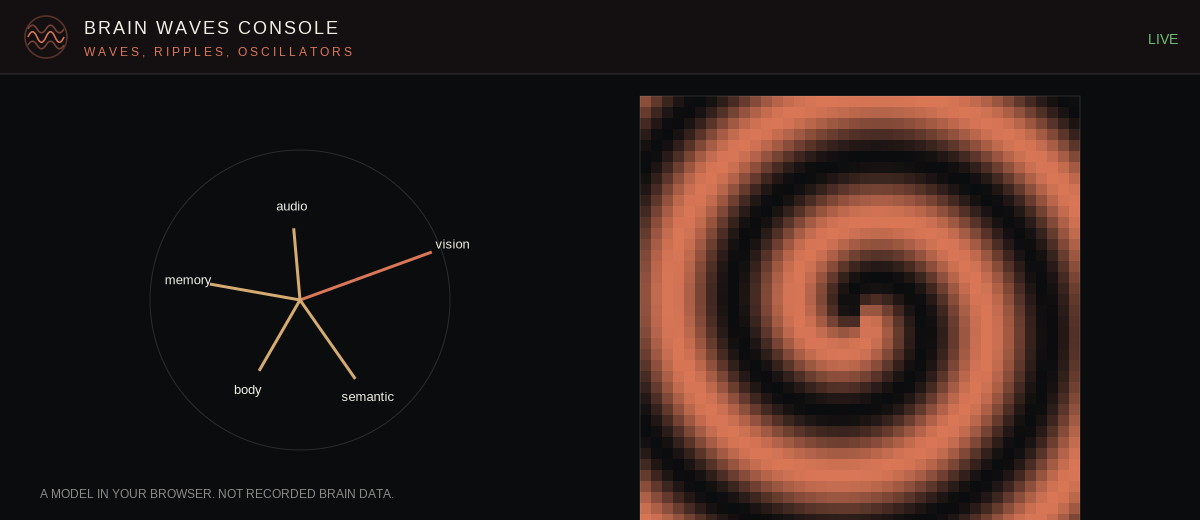
Our architecture’s oscillatory binding layer, WorkspaceBindingSystem in models/core/oscillatory_binding.py, implements Takeru Miyato and Max Welling’s Artificial Kuramoto Oscillatory Neurons (AKOrN, ICLR 2025), updating five module oscillators on a sphere or circle and reporting the global order parameter sync_R. In September 2026 we diagnosed and fixed a defect in which the natural-frequency term read only the zero diagonal of a skew-symmetric matrix (enabled via --akorn-natural-frequency, cutting frozen-step occupancy from 48 to 85% down to 0.0375%). However, our permutation-null content probe (docs/results/sync_r_content_2026_09.md) showed that sync_R currently fails to carry stimulus identity across all three random seeds ($\eta^2 = 0.0021, 0.0023, 0.0120$ against 95th-percentile nulls of $0.0168, 0.0044, 0.0391$). A photonic MZI + OPO lattice would accelerate the physical Kuramoto step from software clock ticks to optical propagation speed, but speed alone does not solve the representation gap until the coupling matrix $J_{ij}$ binds stimulus-specific phase clusters.
Phase 1 and Phase 2 of our isolated models/thermodynamic/ package implement a chromatic block-Gibbs p-bit emulator tested against exact Boltzmann distributions $\exp(-E/T)$, a free-energy relaxation solver, and a bridge to Extropic’s THRML open-source sampler. Our standalone thermospike library (v0.1.0, DOI: 10.5281/zenodo.23959919) compares p-bit sampling against stochastic spiking neurons and showed on an 8-neuron benchmark that a 16-bit linear-feedback shift register cuts random bits per effective sample from $367.1$ to $176.5$ with no measured distribution loss.
While our codebase tracks 21 candidate consciousness instruments in docs/instrument_inventory.md, including integrated information proxies and oscillatory synchrony, 0 of the 21 instruments are currently trusted as validated indicators of emergent consciousness, and our architecture currently implements 3 of the 14 indicator properties from Butlin et al. (2023). A photonic-thermodynamic substrate is therefore presented here as an architectural blueprint and substrate-independence testbed, never as a claim that a conscious optical machine has been built.
A cleanroom-fabricated all-optical Coherent Ising Machine or phase-change GST chip requires electron-beam lithography, silicon-on-insulator or $\text{LiNbO}_3$ foundry runs, and femtosecond mode-locked lasers. However, a builder can assemble a small-scale megahertz-to-gigahertz optical-electronic hybrid proof of concept on a desktop workbench today. In this hybrid loop, coherent laser interference inside a bulk beamsplitter cube performs the passive $2 \times 2$ linear optical mixing at $v = c/n$, a high-speed biased silicon PIN photodiode reads the resulting interference intensity, and a low-latency FPGA board injects controlled physical or pseudo-random thermal noise ($P(E) \propto \exp(-E/T)$) to modulate the loop phase and drive Kuramoto synchronization or two-spin Ising relaxation.
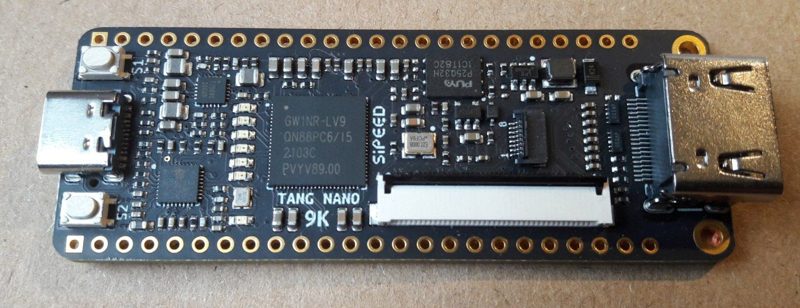
Figure 2. The four functional blocks of the desktop optical-electronic hybrid proof of concept. Coherent 650 nm light traverses the 50:50 beamsplitter cube, is detected by a 1 ns biased silicon PIN photodiode, and enters the Sipeed Tang Nano 9K FPGA (housed in our open 3D-printable Boltzmann-vent enclosure) where physical or shift-register noise drives the stochastic phase-locking feedback loop.
What the Four Hardware Blocks Do
Block 1 (quarton-vlm-650-03 or thorlabs-cps635r) is the coherent light source, where a narrow-linewidth collimated laser diode module in the visible red band ($635\text{ to }650\text{ nm}$) provides the coherent carrier wave. Using visible red rather than $1550\text{ nm}$ telecom infrared allows safe desktop beam alignment across the beamsplitter faces by eye (at $< 2.5\text{ mW}$, never viewing the direct beam) without an InGaAs infrared viewing card.
Block 2 (thorlabs-bs013) handles optical routing and interference through a $25.4\text{ mm}$ ($1\text{ in}$) N-BK7 non-polarizing 50:50 beamsplitter cube that acts as the passive $2 \times 2$ linear interferometer weight matrix. Two beams entering orthogonal faces interfere at the dielectric hypotenuse at $v_g = c/n_g$ with zero electrical power draw.
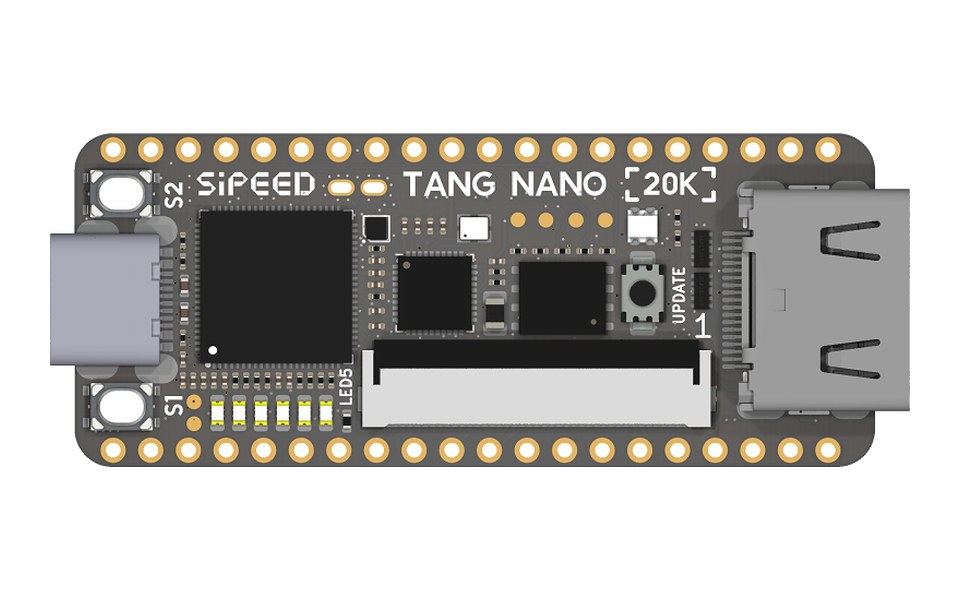
Block 3 (thorlabs-det10a2, sipeed-tang-nano-9k, truerng-v3) closes the stochastic and nonlinear feedback loop electronically because bulk N-BK7 glass is linear at milliwatt powers. A biased silicon PIN photodetector with a $1\text{ ns}$ rise time ($350\text{ MHz}$ bandwidth) converts the optical output port intensity into a voltage that feeds a Sipeed Tang Nano 9K (or 20K) FPGA board. The FPGA computes the stochastic p-bit or discrete Kuramoto update using either our 16-bit LFSR generator from thermospike or physical avalanche noise streamed from a TrueRNG v3, and modulates the laser diode drive current or a piezo mirror to close the loop.
Block 4 (siglent-sds1202x-e) provides verification and readout via a $200\text{ MHz}$, $1\text{ GSa/s}$ two-channel digital storage oscilloscope that probes the photodetector voltage against the FPGA reference oscillator in time-domain and X-Y Lissajous phase mode to measure phase-locking onset ($r \to 1$ as coupling $K$ crosses $K_c$).
Benchtop Prototype Bill of Materials (Live Catalog)
Every part below is read directly from _data/hardware_catalog.yml. The "Buy on amazon.com" and "Buy on aliexpress.com" buttons are affiliate links (tag theconscio06c-20 on Amazon US), earning the project a commission at no extra cost to you. As an Amazon Associate I earn from qualifying purchases. Maker links (Thorlabs, Sipeed, Quarton, Siglent) are plain links. None of these optical components has been physically tested together by this project yet.
650 nm visible red laser diode module, under 2.5 mW (Class IIIa), integrated glass collimating lens and automatic power control circuit, 3 to 5 V DC, 7 x 21 mm cylindrical brass housing
Block 1 (Coherent Light Source) of the benchtop optical-electronic hybrid loop. Visible 650 nm beam allows direct desktop alignment across a beam splitter cube without an infrared viewing card.
Class IIIa laser product. Never look into the beam or its specular reflection. Not tested by this project.
25.4 mm (1 inch) N-BK7 optical glass non-polarizing beamsplitter cube, 400 to 700 nm anti-reflection coating, 50-50 transmission and reflection ratio
Block 2 (Optical Routing and Interference). Splits or combines two coherent optical paths with a passive 2 x 2 linear transfer matrix at v = c/n inside the glass.
Reference link to the maker. Keep optical faces free of fingerprints. Not tested by this project.
Silicon PIN photodiode with internal 12 V A23 bias battery, 200 to 1100 nm spectral range, 1 ns rise time (350 MHz bandwidth), 0.8 mm2 active area, BNC output
Block 3 (Stochastic and Nonlinear Feedback Loop). Converts the optical interference intensity at the beamsplitter exit port into a sub-nanosecond voltage signal that feeds the Sipeed Tang Nano FPGA.
Reference link to the maker. Requires a 50 ohm load resistor at the oscilloscope or comparator input to achieve the 1 ns rise time. Not tested by this project.
200 MHz dual-channel super phosphor oscilloscope, 1 GSa/s real-time sampling rate, 14 Mpts record length, hardware X-Y phase mode and FFT
Block 4 (Verification and Readout). Measures phase-locking, Lissajous trajectories and the Kuramoto synchronization order parameter R between two coupled optical-electronic oscillator channels.
No Amazon price is printed here (Amazon Associates rule). Not tested by this project.
Checked 24 November 2026 · the amazon.com button is an affiliate link
3D-Printable Enclosure for the FPGA Controller and Planned Optical Rail
The Sipeed Tang Nano 9K in Block 3 fits inside our open-source 3D-printable Tang Nano 9K case, generated from Python CadQuery code under the CERN-OHL-S v2 licence with 11 lid vent slots that follow the Boltzmann curve $\exp(-E/T)$. A dedicated 3D-printable monolithic optical-electronic alignment sled (OKB-BENCH) that locks the $12\text{ mm}$ laser module, the $50\text{:}50$ beamsplitter cube, the photodetector mount, and the Tang Nano 9K board on one rigid frame is tracked as an open design task in tlcdv/the-hardware.
Benchtop Hybrid vs. Cleanroom Foundry Hardware
To keep the engineering record exact, a builder must distinguish what a desktop optical-electronic loop demonstrates from what a monolithic photonic foundry chip does.
Engineering Dimension
Desktop Optical-Electronic Hybrid (This BOM)
Cleanroom Foundry Photonic IC (Shen 2017, Feldmann 2019, Inagaki 2016)
All-optical $\text{Ge}_2\text{Sb}_2\text{Te}_5$ phase-change cells or PPLN parametric gain
Loop Latency & Clock Ceiling
$\sim 10\text{ to }100\text{ MHz}$ (bounded by photodiode-to-FPGA I/O latency)
$2\text{ GHz to }1\text{ THz}$ (picosecond waveguide transit time)
Capital Cost
Under USD 600 total workbench BOM (oscilloscope included)
USD 50,000 to USD 500,000+ (AIM Photonics / IMEC MPW wafer run + femtosecond pump)
6. Primary Research Sources & Collapsible Literature Index
Every physical mechanism, equation and energy figure on this page comes from the twelve peer-reviewed papers and reference monographs indexed below. Expand each group for full citations, DOIs, and reference links.
I. Photonic Neuromorphic & Optical Synapses (4 Primary Papers)
Shen, Y., Harris, N. C., Skirlo, S., Prabhu, M., Baehr-Jones, T., Hochberg, M., Sun, X., Zhao, S., Larochelle, H., Englund, D., & Soljačić, M. (2017). Deep learning with coherent nanophotonic circuits. Nature Photonics, 11(7), 441-446. DOI: 10.1038/nphoton.2017.93 · arXiv:1610.02365. Demonstrates programmable Mach-Zehnder interferometer meshes executing passive unitary matrix multiplication at the speed of light in silicon.
Feldmann, J., Youngblood, N., Wright, C. D., Bhaskaran, H., & Pernice, W. H. P. (2019). All-optical spiking neurosynaptic networks with self-learning capabilities. Nature, 569(7755), 208-214. DOI: 10.1038/s41586-019-1157-8. Implements nonvolatile phase-change $\text{Ge}_2\text{Sb}_2\text{Te}_5$ (GST) optical synapses and microring spiking neurons on silicon nitride waveguides with zero static holding power.
Shastri, B. J., Tait, A. N., Ferreira de Lima, T., Pernice, W. H. P., Bhaskaran, H., Wright, C. D., & Prucnal, P. R. (2021). Photonics for artificial intelligence and neuromorphic computing. Nature Photonics, 15(2), 102-114. DOI: 10.1038/s41566-020-00754-y · arXiv:2011.00111. Establishes the bandwidth-energy scaling envelope of silicon photonic neurons down to the attojoule ($10^{-18}\text{ J}$) switching limit.
Inagaki, T., Inaba, K., Hamerly, R., Inoue, K., Yamamoto, Y., & Takesue, H. (2016). A coherent Ising machine for 2000-node optimization problems. Science, 354(6312), 603-606. DOI: 10.1126/science.aah4243. Demonstrates 2,000 coupled degenerate optical parametric oscillators undergoing pitchfork phase bifurcation into binary $0/\pi$ Ising spin states in a fiber ring cavity.
II. Thermodynamic Computing & Landauer Limits (4 Primary Papers)
Landauer, R. (1961). Irreversibility and Heat Generation in the Computing Process. IBM Journal of Research and Development, 5(3), 183-191. DOI: 10.1147/rd.53.0183. Derives the fundamental thermodynamic energy floor $E \ge k_B T \ln 2$ per logically irreversible bit erasure.
Conte, T., DeBenedictis, E., Ganesh, N., Hylton, T., Strachan, J. P., Williams, R. S., Alemi, A., Altenberg, L., Crooks, G. E., Crutchfield, J., et al. (2019). Thermodynamic Computing. arXiv:1911.01968. Sets out the physical roadmap for hardware that uses ambient thermal fluctuations near $k_B T$ to drive self-organization and sampling.
Borders, W. A., Pervaiz, A. Z., Fukami, S., Camsari, K. Y., Ohno, H., & Datta, S. (2019). Integer factorization using stochastic magnetic tunnel junctions. Nature, 573(7774), 390-393. DOI: 10.1038/s41586-019-1557-9. First experimental hardware demonstration of room-temperature stochastic p-bits solving an inverse problem via Boltzmann relaxation.
Coles, P. J., Szczepanski, C., Melanson, D., Donatella, K., Gordon, M. H., Ahle, T., & Crooks, G. E. (2023). Thermodynamic AI and the fluctuation frontier. arXiv:2302.06584. Formalizes continuous-variable thermodynamic sampling units and fluctuation-driven linear algebra.
Acebrón, J. A., Bonilla, L. L., Pérez Vicente, C. J., Ritort, F., & Spigler, R. (2005). The Kuramoto model: A simple paradigm for synchronization phenomena. Reviews of Modern Physics, 77(1), 137-185. DOI: 10.1103/RevModPhys.77.137. Complete statistical-mechanical derivation of critical coupling $K_c$, order parameter stability $r \to 1$, and phase-noise decoherence bounds.
Hoel, E. P., Albantakis, L., & Tononi, G. (2013). Quantifying causal emergence shows that macro can beat micro. Proceedings of the National Academy of Sciences, 110(49), 19790-19795. DOI: 10.1073/pnas.1314922110. Proves that coarse-grained macro-states can carry higher Effective Information ($EI$) than noisy micro-states.
Chuang, S. L. (2009).Physics of Photonic Devices (2nd ed.). John Wiley & Sons. ISBN 978-0470293195. Reference monograph for dielectric waveguide dispersion, coupled-mode theory, Mach-Zehnder electro-optic modulation, and semiconductor laser dynamics. Buy on amazon.com (affiliate link) ↗
Leff, H. S., & Rex, A. F. (Eds.). (2002).Maxwell's Demon 2: Entropy, Classical and Quantum Information, Computing. IOP Publishing / CRC Press. ISBN 978-0750307598. Reference anthology containing the foundational papers by Landauer, Bennett, Szilard and Caves on reversible and thermodynamic computation. Buy on amazon.com (affiliate link) ↗
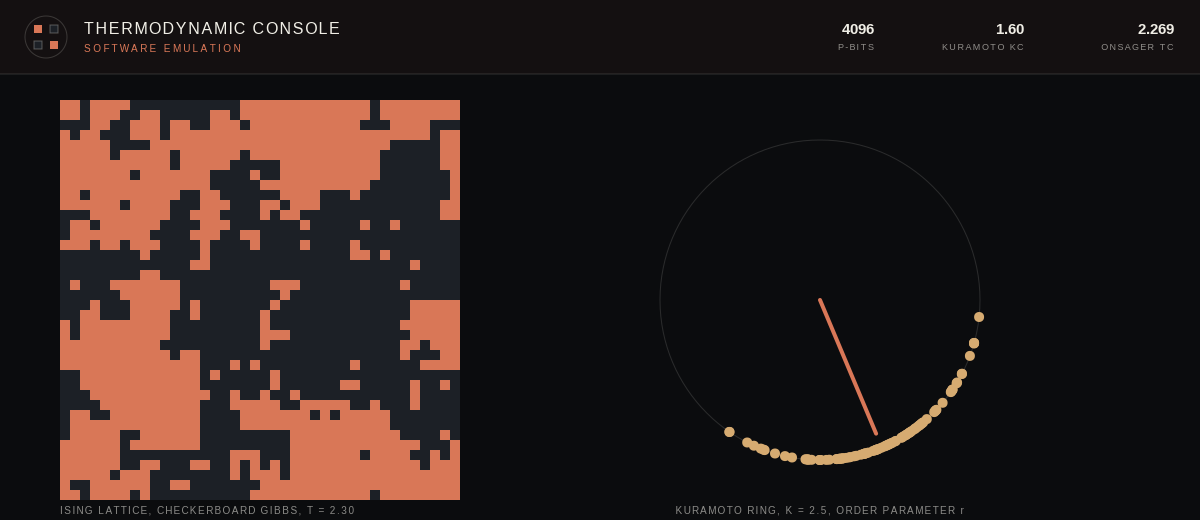
This section bridges three active research tracks on the site: Thermodynamic Computing, which runs the browser Ising and Kuramoto emulations and documents our thermospike sampling library; Project Consciousness to Orbit, where the speed of light sets the inter-satellite latency floor; and Brain Emulation and Mind Uploading, which asks whether an emulated connectome retains its causal properties when moved onto non-biological hardware. Open CAD files and parts lists for our FPGA and EEG hardware live on the Hardware hub.
Thermodynamics
For the Ising lattices and Kuramoto rings behind thermodynamic computing. Every order funds the research.