

Douglas Hofstadter and the Strange Loop Account of the Self
.jpg)
Douglas Hofstadter argues that a self is a pattern that has come to refer to itself. Gödel, Escher, Bach, published in 1979, used Gödel’s incompleteness proof, Escher’s drawings and Bach’s canons to build one idea, that a sufficiently rich formal system inevitably acquires the capacity to talk about itself, and that this capacity produces something new. I Am a Strange Loop, published in 2007, applied the idea directly to persons. On his account there is no thing that is you. There is a self referential pattern that has become detailed enough to model itself, and that pattern is what the word refers to.
| The claim | The consequence |
|---|---|
| A self is a pattern, not a substance | Substrate is irrelevant. Anything that can carry the pattern can carry a self |
| The pattern is self referential | Consciousness requires the loop, not raw capability |
| The loop comes in degrees | Selfhood is graded. Hofstadter uses the term souls of varying size |
| Patterns can be partially copied | Fragments of a person can persist in other people who modelled them closely |
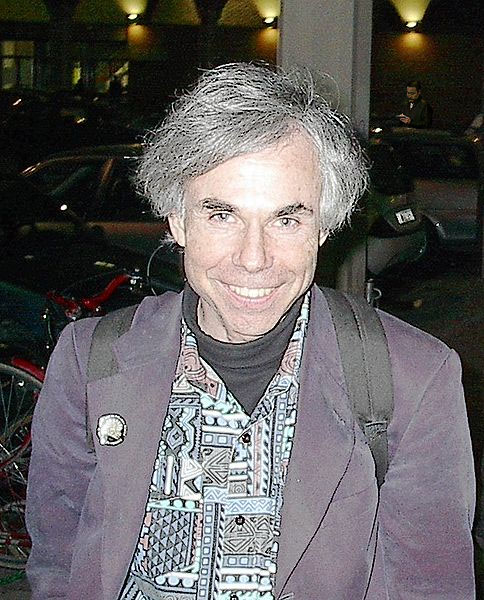
Hofstadter is Distinguished Professor of Cognitive Science and Comparative Literature at Indiana University Bloomington, where he directs the Center for Research on Concepts and Cognition. Gödel, Escher, Bach won the Pulitzer Prize for General Nonfiction in 1980.
What a Strange Loop Is
A strange loop is a hierarchy that appears to move steadily in one direction and returns to where it started. Escher’s staircases are the visual version. Gödel’s proof is the formal one, in which a system powerful enough to express arithmetic can construct a statement about its own provability.
Hofstadter’s claim is that brains do the same thing with representation. A brain builds categories, then builds categories about categories, and at sufficient depth one of those categories is the system itself. At that point the representation is representing the thing doing the representing, and the hierarchy has closed on itself.
The self, on this account, is what that closure feels like from inside. There is no additional ingredient and no place where it resides. The loop is not a mechanism that produces a self. It is the self.
Why This Is a Substrate Independence Argument
Hofstadter’s position is functionalist in the strong sense, and the argument is unusually clean. A loop is defined by its structure. Nothing about the definition mentions carbon, neurons, or metabolism. Whatever can support representations rich enough to include themselves can support a self.
That commits him to machine consciousness in principle, and he has never dodged the commitment. It also commits him to the graded reading, since loops can be shallower or deeper, and he has used the language of larger and smaller souls to make the point that this is a continuum rather than a line.
The position aligns with the one this project works from, described on the functionalist emergentism page. Where Hofstadter differs from most functionalists is in what he takes the relevant organisation to be. Global workspace accounts point at broadcast, integrated information at causal structure, and Hofstadter at self reference specifically. Those are different bets about which property is doing the work, and they are compared in the index of consciousness theories and what each predicts about AI.
The Part That Distinguishes Him
Most theories treat a self as bounded by the system that has it. Hofstadter does not. If a self is a pattern, and if one brain can model another brain in detail, then a low resolution copy of one person’s pattern runs inside the people who knew them well.
He developed this after the death of his wife Carol, and it is the emotional centre of I Am a Strange Loop rather than a technical aside. The claim is that a portion of a person genuinely persists in others, at reduced fidelity, because what persists is the pattern and patterns can be instantiated more than once.
This is not sentiment dressed as theory. It follows directly from the premise. If you accept that a self is a pattern rather than a substance, you have accepted that it can be partially copied, and the consequences for personal identity are the same ones that arise for uploading and duplication. The structure appears in fiction whenever copying is treated as survival, examined in Altered Carbon and what resleeving would cost.
What He Thinks Now
Hofstadter’s response to large language models has been notably uncomfortable, and it is worth reporting accurately rather than recruiting him to either camp.
He spent decades arguing that intelligence requires analogy, concept formation and the kind of fluid category structure his research group built small models of. His long standing view was that the statistical approaches would not get there. Systems arrived that perform much of what he predicted would require deep understanding, and by mechanisms he had argued were insufficient.
His public reaction has been that this is frightening rather than vindicating. The discomfort is philosophically interesting because his own theory offers no barrier. If a self is a self referential pattern, and a system builds representations that include itself, his framework says the loop is decisive and does not care how it was trained. The tension is between the theory and its author’s expectations about what such a system would be like.
Comparison to The Consciousness AI
The architecture on the architecture page has seven layers, and the Self-Model layer builds a body schema and a self-other boundary in which the somatotopic map overlaps the environment map in a shared coordinate frame.
That produces a representation of the system. It does not obviously produce a strange loop, and the distinction is the whole of Hofstadter’s point. A model of the body is a representation whose content happens to be the system. A strange loop requires the representation to be operating on the level that produced it, so that the modelling process appears in its own output.
The Global Workspace layer is the more promising site. It runs reentrant processing across five to ten adaptive convergence cycles, and broadcast is fed back to the specialists that produced the bids. That is a closed loop with the right shape. Whether the content circulating in it ever includes a representation of the circulation is a separate question, and answering it would require probing for self referential structure rather than assuming it.
This is an open design question and it is stated here as one. Nothing in the current system was built to produce Hofstadter’s loop, and the reentrant architecture is the place it would be looked for.
What Follows
Hofstadter supplies the most economical account of selfhood on offer. It needs no substance, no special substrate and no extra ingredient, and it explains why the self feels both undeniable and impossible to locate.
What it does not supply is a measurement. Nobody has proposed a way to detect a strange loop in a system from outside, and the depth of self reference required for selfhood is unspecified. Compared with attention schema theory, which produced testable predictions in artificial agents as described in Michael Graziano and the attention schema theory of AI consciousness, Hofstadter’s account remains a picture rather than a programme. It is the most persuasive picture in the literature, and that is a different achievement from being the most useful one.