

UT Austin Consciousness and Intelligence 2026 Recap with Chalmers, Seth and Aaronson
What happened when five leading architects of contemporary mind science met in Austin for two days of direct debate on whether artificial intelligence can ever be conscious? On November 5 and 6, 2026, the University of Texas at Austin College of Liberal Arts and interdisciplinary campus partners hosted the inaugural Consciousness and Intelligence symposium under the theme “AI and Consciousness.” Following our October 31 preview of the UT Austin symposium and SfN 2026 neuroethics track, this post-event report synthesizes the five plenary keynotes, the five interdisciplinary breakout tracks, and the sold-out public evening panel at Hogg Auditorium moderated by Tim Ferriss.
Full official video recordings of the symposium sessions have not yet been uploaded by the university, so this recap audits the finalized program structure, the arguments each keynote speaker brought to the Austin stage, and how the clashes in Texas sharpen the 2026 scientific race to define and test AI consciousness.
The Five Keynotes and the Hogg Auditorium Public Panel
The UT Austin program paired five individual keynote addresses across Thursday and Friday with a public evening debate on Thursday, November 5, from 8.00 to 9.30 p.m. CST at Hogg Auditorium titled “The Makings of Mind, Consciousness and Intelligence,” moderated by author and podcaster Tim Ferriss and featuring David Chalmers, Alison Gopnik, and Anil Seth.
| Session Slot | Speaker & Affiliation | Core Thesis Presented at UT Austin (Nov 5–6, 2026) |
|---|---|---|
| Keynote 1 | David Chalmers (New York University) | Organizational invariance and computational functionalism; evaluating LLM world models and recurrent architectures against structural consciousness indicators |
| Keynote 2 (Thu 4.30–5.30 PM) | Blaise Agüera y Arcas (Google / Paradigms of Intelligence) | Computational symbiogenesis and functionalist emergence; how predictive sequence models develop internal self-models and social theory of mind |
| Evening Panel (Thu 8.00–9.30 PM) | Chalmers, Gopnik, Seth (Moderator, Tim Ferriss) | The Makings of Mind at Hogg Auditorium; contrasting functionalist indicators, infant causal exploration, and living metabolic autopoiesis |
| Keynote 3 | Scott Aaronson (UT Austin) | Quantum complexity theory, the unbounded-$\Phi$ parity-grid critique of IIT, and physical irreversibility / quantum no-cloning (“Knightian freedom”) |
| Keynote 4 | Anil Seth (University of Sussex) | Biological naturalism and interoceptive predictive processing; why living autopoietic “beast machines” cannot be reduced to silicon software |
| Keynote 5 | Alison Gopnik (UC Berkeley) | Developmental causal discovery vs. cultural text compression; infant broad “lantern consciousness” contrasted with adult “spotlight” attention and LLMs |
Three Theoretical Fault Lines from the Austin Keynotes
Rather than producing a polite multidisciplinary consensus, the five keynotes exposed three concrete scientific divides that now organize the field heading into 2027.
1. Computational Symbiogenesis Versus Biological Naturalism
The sharpest collision of the symposium pitted Thursday afternoon’s Keynote 2 by Blaise Agüera y Arcas and Keynote 1 by David Chalmers against Keynote 4 by Anil Seth. Agüera y Arcas argued from his computational symbiogenesis framework that life, intelligence, and subjective modeling lie on a single thermodynamic and computational continuum. When neural networks are trained to predict complex multi-agent environments, they are forced by compression efficiency to construct internal representations of themselves and other agents. Chalmers reinforced the philosophical foundation of that functionalist view through organizational invariance, holding that any system that replicates the fine-grained causal topology of a conscious workspace instantiates the same phenomenal states, while maintaining that current feedforward LLMs still lack unified recurrent global broadcast and stable agency.
Anil Seth countered both positions directly, bringing to Austin the exact arguments he published two weeks earlier in his joint October 2026 Nature comment with Ned Block and Giulio Tononi arguing that AI is not conscious. Seth insisted that predictive processing in a living brain is fundamentally about keeping a metabolizing body alive against thermodynamic decay. Because a silicon server cluster has no autopoietic metabolism at stake in its token predictions, its internal representations remain simulations of language rather than felt states of being.
2. Scott Aaronson’s Complexity Audit of Consciousness Metrics
In Keynote 3, UT Austin computer scientist Scott Aaronson examined the mathematical and physical foundations of consciousness measurement. Revisiting his proof that Giulio Tononi’s Integrated Information Theory assigns arbitrarily high $\Phi$ to simple two-dimensional parity-check grids, Aaronson asked whether any purely classical, copyable software state can capture the physical properties that anti-functionalists intuit in biological brains. Aaronson explored whether physical irreversibility, chaotic sensitivity, or quantum no-cloning (“Knightian freedom,” in which a microscopic quantum state cannot be duplicated and re-run from a saved checkpoint) marks a genuine physical boundary between reversible digital programs and irreversible physical substrates, without endorsing microtubule-reduction claims that ignore decoherence bounds.
3. Alison Gopnik’s Lantern Consciousness and the Five Breakout Tracks
In Keynote 5 and during the Hogg Auditorium panel with Tim Ferriss, UC Berkeley developmental psychologist Alison Gopnik reframed the comparison between human minds and large language models around two distinct regimes of biological awareness. Human infants exhibit wide-angle lantern consciousness, a high-plasticity, diffuse attentional openness designed to discover novel causal structure through active sensorimotor intervention in the physical world. Adult humans rely more heavily on narrow, goal-directed spotlight consciousness mediated by prefrontal executive control. Gopnik argued that large language models are neither lantern-conscious infants nor spotlight-conscious agents; instead, they are cultural transmission engines that compress millions of texts already produced by adult minds without ever running a physical intervention loop.
That distinction carried directly into the symposium’s five concurrent interdisciplinary breakout sessions, which broadened the debate across UT Austin’s faculties and visiting researchers.
- Language, Thought, and AI brought together Kyle Mahowald (UT Austin), Daniel Drucker (UT Austin), Gary Lupyan (University of Wisconsin-Madison, whose October 2026 work on anendophasia and the inner voice shows how verbal labels scaffold human memory and categorization), and Daniel Rothschild (University College London) to separate linguistic competence from non-linguistic thought.
- Neuroscience and Consciousness featured Jarrod Lewis-Peacock (UT Austin), Thomas Elston (UT Austin), and neurosurgeon Jon Willie (Washington University in St. Louis) examining working-memory dynamics, prefrontal decision circuits, and intracranial human stimulation.
- Weak vs. Strong AI paired UT Austin computer scientist Peter Stone with University of Michigan roboticist Benjamin Kuipers to evaluate autonomous multi-agent planning against philosophical claims of strong machine sentience.
- Psychedelics and Consciousness convened Raquel Kosted, Manoj Doss, and Greg Fonzo (UT Austin Dell Medical School) to analyze how serotonergic psychedelics alter episodic memory, claustrum-cortical coupling, and affective salience.
- Neurotechnology, BCI, and Consciousness paired neurosurgeon Jordan Amadio with UT Austin brain-computer interface pioneer José del R. Millán to assess closed-loop neural decoding and agency in human patients.
Comparison to The Consciousness AI
As recorded in the AI Consciousness Events hub, the UT Austin symposium demonstrated why adversarial meetings that put functionalists (Chalmers, Agüera y Arcas), biological naturalists (Seth), developmental psychologists (Gopnik), and complexity theorists (Aaronson) on the same stage are far more productive than single-camp workshops.
For The Consciousness AI, the synthesis that emerges between Gopnik’s sensorimotor causal intervention and Seth’s homeostatic grounding aligns closely with our Core Architecture. Rather than treating linguistic token prediction as a path to emerging consciousness, our system pairs a continuous-time spiking and oscillatory substrate with active sensorimotor exploration in a dark-room test bed and a homeostatic value gate (tcai-research #62). At the same time, the breakout discussions by Gary Lupyan and Kyle Mahowald on the separation between language and core thought reinforce why our architecture treats symbolic communication as a downstream readout layer rather than the generator of the conscious state.
What Comes Next on the Conference Calendar
With the UT Austin symposium concluded, the November 2026 calendar shifts next week to Washington, D.C. for the Society for Neuroscience meeting (SfN 2026, November 14 to 18) and Winston Chiong’s David Kopf Lecture on Neuroethics, followed in December by the NeurIPS 2026 interpretability and self-modeling workshops and in March 2027 by the Sentient Futures Summit 2027 in San Francisco. We will update this report with direct video embeds if UT Austin releases official recordings of the Hogg Auditorium panel and keynote sessions.
Researchers covered here
-
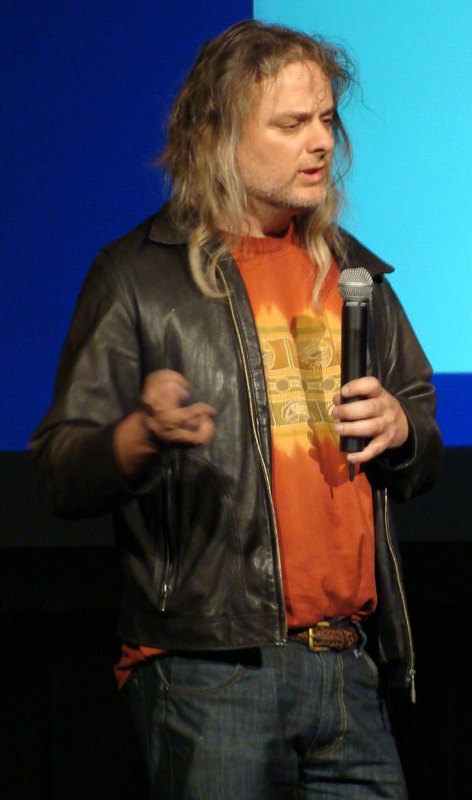 David ChalmersNew York University. Co-director, Center for Mind, Brain and ConsciousnessNaming the hard problem of consciousness, and the philosophical zombie argument
-
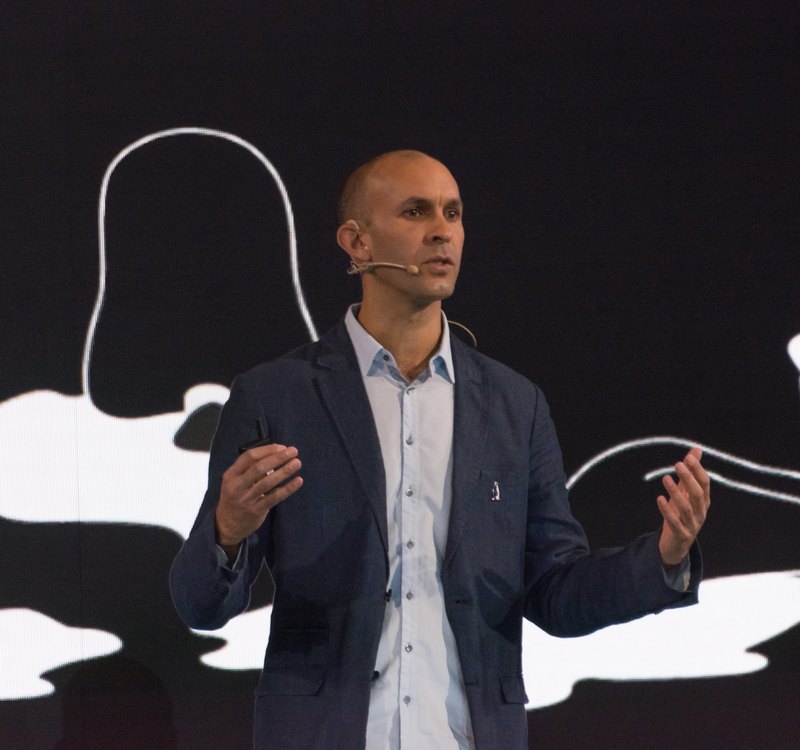 Anil SethSussex Centre for Consciousness Science, University of SussexThe beast machine hypothesis, and controlled hallucination as an account of perception
- Scott AaronsonUniversity of Texas at Austin, Department of Computer ScienceQuantum complexity theory, mathematical counterexamples to Integrated Information Theory (Phi in expander graphs and Reed-Solomon grids), speaker at UT Austin Consciousness and Intelligence 2026
- Alison GopnikUniversity of California, Berkeley, Department of Psychology and Department of PhilosophyThe Scientist in the Crib, The Philosophical Baby, Bayesian causal learning in childhood, lantern consciousness vs spotlight consciousness, speaker at UT Austin Consciousness and Intelligence 2026
-
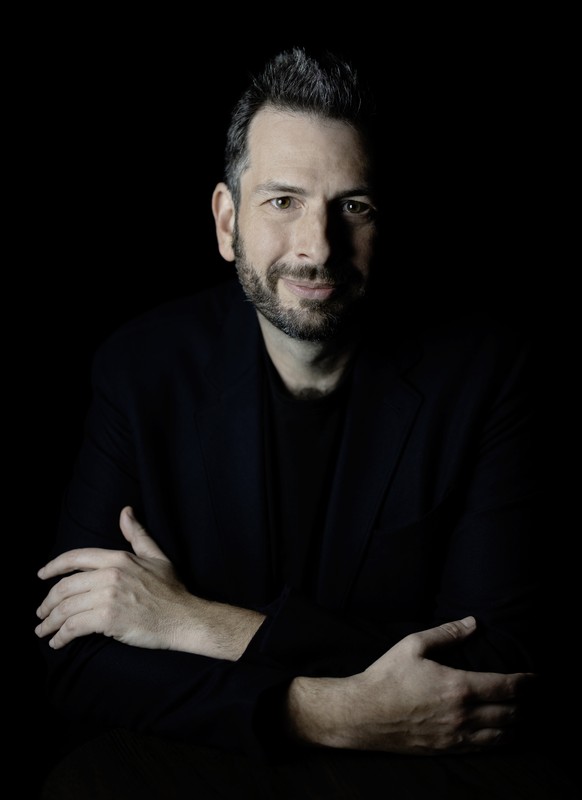 Blaise Agüera y ArcasGoogle VP and Fellow, CTO of Technology & SocietyComputational functionalism, active inference, on-device neural computing, What Is Intelligence? (2025), and Who Are We Now? (2023)
- Gary LupyanDepartment of Psychology, University of Wisconsin-MadisonLabel-feedback hypothesis, language-augmented cognition, coining anendophasia with Johanne Nedergaard (2024)