
John R. Searle
University of California, Berkeley
Critic Current evidence and current methods do not support the claims being made
John R. Searle is an American philosopher and former Willis S. and Marion Slusser Professor Emeritus of Philosophy of Mind and Language at the University of California, Berkeley. His work in the philosophy of language, intentionality, and consciousness reshaped twentieth-century debates on artificial intelligence.
In his 1980 paper “Minds, Brains, and Programs,” Searle introduced the Chinese Room thought experiment to demonstrate that formal symbol manipulation (syntax) does not generate intentional understanding or subjective meaning (semantics). He articulated the philosophical framework of Biological Naturalism in The Rediscovery of the Mind (1992), asserting that consciousness is a real, higher-level biological phenomenon caused by lower-level neurobiological processes in the brain, possessing an irreducible first-person ontology.
Searle’s position directly opposes computational functionalism, holding that simulating mental states on silicon digital computers has no more causal power to produce actual subjective consciousness than running a computer simulation of a rainstorm has to make the computer wet.
Known for. The Chinese Room Argument (1980), Biological Naturalism, Syntax is not semantics, The Rediscovery of the Mind (1992)
Coverage on this site
Research Papers and Preprints
Articles and Commentary
Related researchers
- David FoulkesDevelopmental research on children's dream reports and narrative dreaming
-
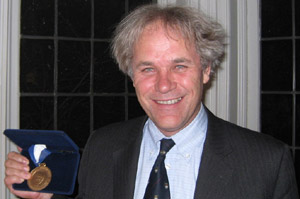 Mark SolmsUniversity of Cape TownNeuropsychoanalysis, and the brainstem account of affective consciousness
- Erik HoelCenter for Humanities and Sciences, Tufts UniversityFormal theory of Causal Emergence (macro over micro causation), The Overfitted Brain Hypothesis of Dreams, The World Behind the World (2023), The Kleiner-Hoel Dilemma
-
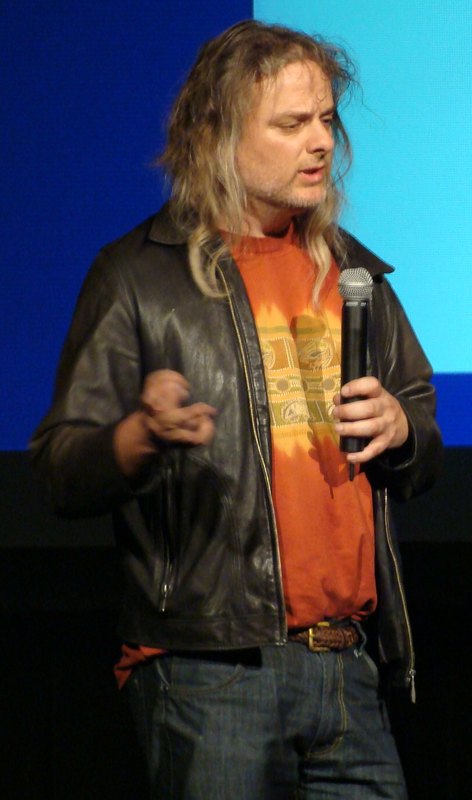 David ChalmersNew York University. Co-director, Center for Mind, Brain and ConsciousnessNaming the hard problem of consciousness, and the philosophical zombie argument
- Michel BitbolCNRSPhenomenology and quantum physics, the critique of objectivist reduction, first-person knowledge as irreducible, collaboration with Claire Petitmengin
- Ned BlockDepartment of Philosophy, New York UniversityDistinction between Phenomenal and Access Consciousness (1995), Blockhead argument against behavioral tests, The Border Between Seeing and Thinking (2023)
John R. Searle is listed with the other critics and skeptics, who hold that current evidence and current methods do not support the claims being made. The positions themselves are set out in the index of consciousness theories. Every researcher covered on this site is indexed in the directory of consciousness researchers.