



The Importance of Being Conscious. Lee and Pautz's OUP Volume on Moral Weight
Oxford University Press published The Importance of Being Conscious on September 3, 2026, a 406-page edited volume from Geoffrey Lee and Adam Pautz that asks the question the AI consciousness debate keeps deferring. If consciousness is real, what follows. The publisher’s page states the frame directly, in what ways conscious experience carries moral and epistemic significance, and it names the distribution question that pulls the book toward AI, do animals, insects, or near-future AIs have consciousness, and what difference would it make if they did. Fourteen chapters across three parts answer with a spread of positions rather than a consensus, which makes the volume a map of where the moral-status argument about artificial minds actually stands in late 2026.
The AI relevance is not incidental. The overview lists the exploration of AI welfare and animal welfare, and their connections to consciousness, as one of the volume’s three stated concerns. That places this collection alongside the welfare literature this site tracks from Birch’s centrist manifesto to the Goldstein and Kirk-Giannini moral standing case, but with a sharper question underneath. Those works argue about what to do under uncertainty about AI consciousness. This volume asks why consciousness would settle anything morally at all.
What the volume contains
The table of contents verifies the structure. Part I carries the moral significance question in its plain form.
| Part | Question | Chapters |
|---|---|---|
| I | The moral significance of consciousness | Chalmers, Harman, Kriegel, Bradford, Andrew Lee |
| II | Moral significance joined to the metaphysics | Lee, Papineau, Dorr and Hawthorne, Cutter, Simon |
| III | The epistemic significance joined to the metaphysics | Pautz, Yetter-Chappell, Smithies, Balog |
The headline chapter is David Chalmers’ “Sentience and Moral Status”, which addresses whether sentience, the capacity for valenced experience, is what confers moral standing, and by implication what that means for systems whose sentience status is uncertain. The site has covered Chalmers’ related move of integrating consciousness probabilities into moral weight calculations, and this chapter is the volume’s contribution to the same line.
The sharpest counterweight is David Papineau’s “Consciousness is not the Key to Moral Standing”, a chapter whose title states its thesis. Papineau is a materialist about the mind, and his chapter pushes against the assumption that locating moral status in consciousness secures anything, presumably on the ground that whatever grounds moral standing, the same grounds would apply to systems whose consciousness is unknowable. The chapter cuts against a hinge the AI debate relies on, because the welfare research programme assumes consciousness is the right place to attach moral caution. Papineau’s position attacks that hinge. Read against the probability-of-patienthood argument, it asks whether the moral caution survives the removal of the consciousness premise, and the volume pairs the two positions without resolving them.
Part II and Part III bind the significance questions to the metaphysics. Geoffrey Lee’s own chapter, “Consciousness, Pseudo-Consciousness, and the Moral Significance of Consciousness”, engages the distinction between a system in which experience does the moral work and one that only appears to instantiate it, which is the distinction the AI assessment problem lives inside. Adam Pautz’s chapter uses the Mary case to argue against identity physicalism on significance grounds. Helen Yetter-Chappell, whose profile on this site covers her idealism work, argues against material acquaintance. Declan Smithies’ chapter title, “Understanding Concepts: Why Experience Matters”, carries the epistemic half of the volume’s question, quoted here as a title.
What the volume changes for the AI debate
The collection’s practical effect is to raise the quality of the premise the AI welfare literature relies on. The welfare programme, from the Eleos conference findings onward, attaches moral caution to possible consciousness in artificial systems. The chapters in this volume test that attachment from both ends. If Chalmers and the sentience-based chapters are right, the welfare programme’s premise holds and the uncertainty handling this site tracks is the correct institutional response. If Papineau and the anti-primacy chapters are right, moral status may not track consciousness at all, and part of the welfare programme’s machinery is attached to the wrong variable.
Neither reading resolves the near-future AI question the publisher’s description names. What the volume does supply is the philosophical grounding the AI debate usually lacks when it borrows moral status language. The site’s flagship field survey tracks the science of attribution, and the welfare literature tracks the institutions responding to it. This volume is the layer underneath both, the argument about why the attribution question would carry moral weight in the first place.
Access note and limits
This article was written from the publisher’s product page, read through a retrieval proxy because OUP blocks direct fetching, and from the contributors’ established public records. The chapter contents beyond titles and the publisher’s description were not available at writing time, so nothing above attributes an argument to a chapter beyond what its title and the volume’s stated structure support. The site’s policy is to state access limits rather than paper over them, and a follow-up update is warranted once the volume’s chapters are accessible. The book is available in hardcover, listed at 155 dollars, and as an e-book.
Researchers covered here
- Geoffrey LeeNew York UniversityFoundational work on perception and consciousness, AI Consciousness Pluralism and Anthropocentrism, co-editor of The Importance of Being Conscious
- Adam PautzBrown UniversityEmpirically-informed philosophy of perception, the significance argument against identity physicalism, co-editor of The Importance of Being Conscious and Blockheads!
-
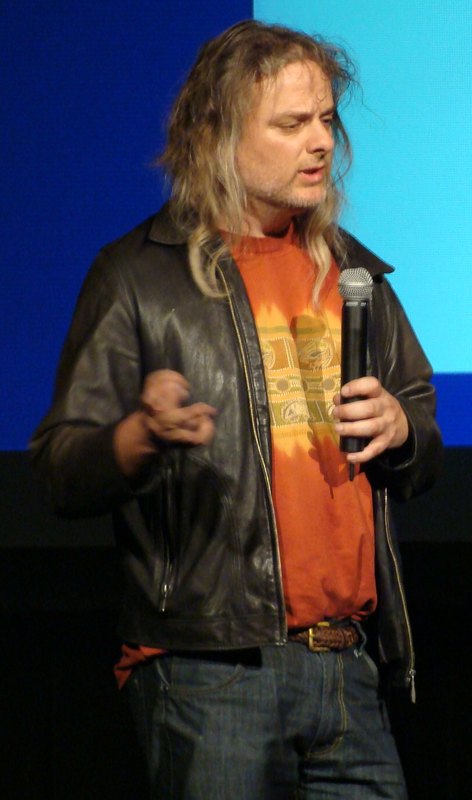 David ChalmersNew York University. Co-director, Center for Mind, Brain and ConsciousnessNaming the hard problem of consciousness, and the philosophical zombie argument
- David PapineauKing's College LondonMaterialist philosophy of mind, the cultural origins of religion and science, the 2026 chapter Consciousness is not the Key to Moral Standing
- Helen Yetter-ChappellUniversity of MiamiRealist idealism, The View From Everywhere, consciousness without a subject, idealist responses to the AI consciousness question