

David Papineau
King's College London
David Papineau is one of the clearest defenders of materialism in the philosophy of mind, holding that conscious states are physical states and that the explanatory gap around them reflects limits on our concepts rather than gaps in nature. His career spans King’s College London and work that crosses into the philosophy of science, where his arguments about naturalism and about the relation between causal and explanatory reasoning were developed. That combination, a strict physicalism plus an interest in what actually grounds moral and practical judgement, is what his 2026 contribution to the AI consciousness debate draws on.
In The Importance of Being Conscious, the Oxford University Press volume edited by Geoffrey Lee and Adam Pautz, Papineau contributes the chapter “Consciousness is not the Key to Moral Standing”. The title states the thesis. The assumption that consciousness is the hinge on which moral status turns, which the AI welfare literature has effectively adopted as its working premise, is itself contested. Papineau’s chapter gives that contestation a named home in a major 2026 collection, alongside Chalmers’ “Sentience and Moral Status” in the same volume, which presents the opposite pairing.
For the AI debate, the position has a concrete consequence. If moral standing does not track consciousness, then the precautionary machinery built around possible AI consciousness, welfare assessments, moral-status tests, probability-weighted moral weight calculations, is attached to a variable that may not be doing the moral work. Papineau’s materialism means this is not a denial that machines might be conscious. It is a denial that consciousness would settle what they are owed.
Known for. Materialist philosophy of mind, the cultural origins of religion and science, the 2026 chapter Consciousness is not the Key to Moral Standing
Coverage on this site
Related researchers
- Geoffrey LeeNew York UniversityFoundational work on perception and consciousness, AI Consciousness Pluralism and Anthropocentrism, co-editor of The Importance of Being Conscious
- Adam PautzBrown UniversityEmpirically-informed philosophy of perception, the significance argument against identity physicalism, co-editor of The Importance of Being Conscious and Blockheads!
-
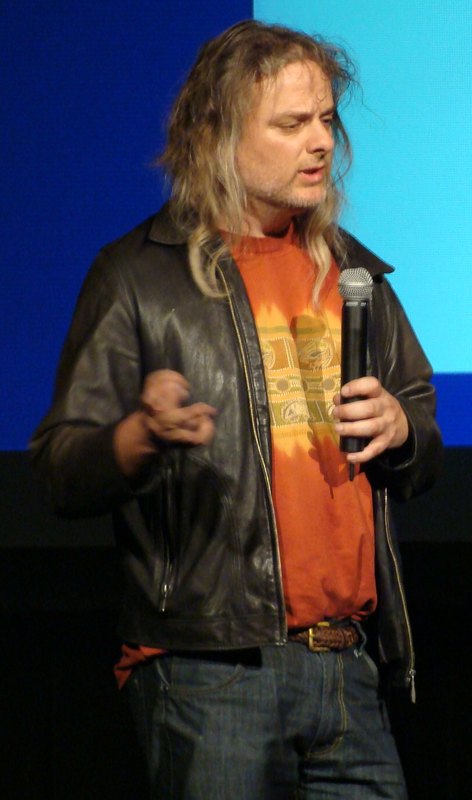 David ChalmersNew York University. Co-director, Center for Mind, Brain and ConsciousnessNaming the hard problem of consciousness, and the philosophical zombie argument
- Helen Yetter-ChappellUniversity of MiamiRealist idealism, The View From Everywhere, consciousness without a subject, idealist responses to the AI consciousness question
Every researcher covered on this site is indexed in the directory of consciousness researchers.