
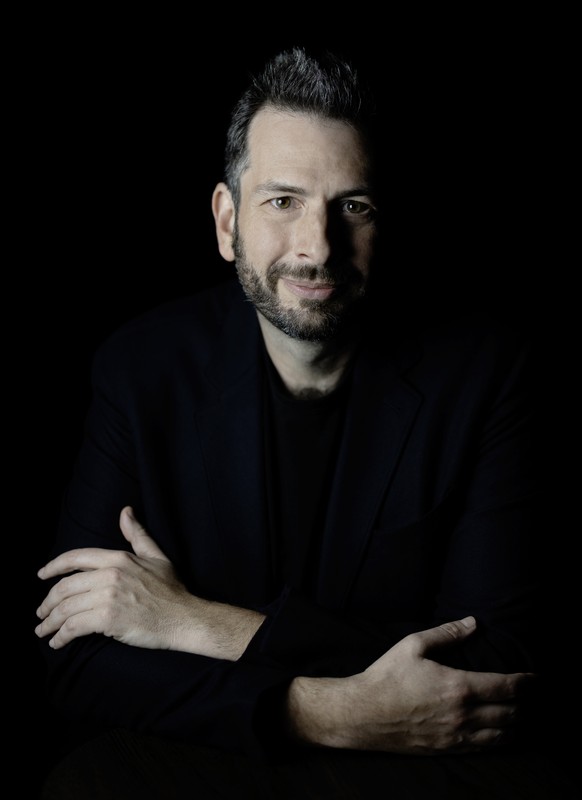
Blaise Agüera y Arcas
Google VP and Fellow, CTO of Technology & Society
Functionalist What matters is the organisation of the processing, not the material

Blaise Agüera y Arcas approaches cognition and consciousness through the lens of computational functionalism. In What Is Intelligence? (2025) and Who Are We Now? (2023), as well as research from the Paradigms of Intelligence team at Google, he argues that intelligence, life, and subjective experience form a continuous spectrum of computational self-organization rather than a set of disjoint biological privileges.
His theoretical work centers on the principle that living systems and artificial networks share a fundamental drive toward predictive coherence. Drawing on active inference, neural scaling dynamics, and distributed optimization, Agüera y Arcas contends that as systems scale in predictive capacity within rich social environments, they inevitably develop internal models of themselves and others. These higher-order self-representations provide the structural scaffolding for what human beings experience as perspective and selfhood.
Agüera y Arcas rejects biological essentialism, arguing that any system performing the requisite computations across its operational loops can instantiate genuine cognitive agency. His work bridges technical machine learning architectures with evolutionary anthropology, examining how cumulative culture, communication protocols, and multi-agent coordination shape the emergence of mind.
Known for. Computational functionalism, active inference, on-device neural computing, What Is Intelligence? (2025), and Who Are We Now? (2023)
Coverage on this site
Related researchers
- Hedayat AbedijooACE Conscious Studio / IndependentACE.await (2026), the ACE decision framework (Agency, Connection, Exchange)
- Igor AleksanderImperial College LondonAxiomatic Consciousness Theory, neural state machines, The World in My Mind, pioneering neural network engineering
-
 Joscha BachCalifornia Institute for Machine ConsciousnessThe machine consciousness hypothesis, cyber animism, and MicroPsi
- Talis BachmannUniversity of TartuAttention-awareness theory, the preactivation hypothesis for conscious perception, masking and the microgenesis of awareness, perception without awareness
- Adam BalesAustralian National UniversityDecision-theoretic and normative methodology, co-author of the cacophony assessment framework
- Max BennettIndependent Researcher and AI EntrepreneurThe Five Breakthroughs evolutionary neuroscience framework and A Brief History of Intelligence (2023)
Blaise Agüera y Arcas is listed with the other functionalists and computationalists, who hold that what matters is the organisation of the processing, not the material. The theory family behind that position is set out in the index of consciousness theories. Every researcher covered on this site is indexed in the directory of consciousness researchers.