Intelligence Unbound, the Anthology That Framed the Uploading Debate
Intelligence Unbound
Blackford and Broderick's 2014 Wiley collection gathered the uploading debate between covers, including Chalmers' Uploading: A Philosophical Analysis.
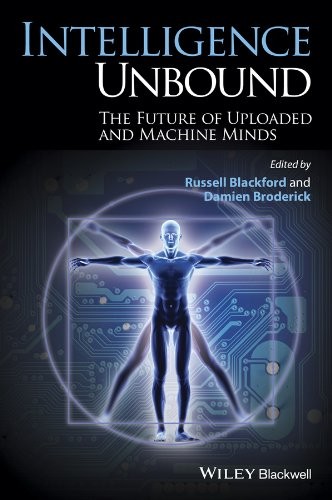
Russell Blackford and Damien Broderick edited Intelligence Unbound: The Future of Uploaded and Machine Minds for Wiley-Blackwell in 2014. The book is an edited collection rather than a monograph, and that is its point. By 2014 the mind uploading debate had accumulated a decade of journal papers, blog essays and book chapters scattered across philosophy, futurism and science fiction commentary. The anthology gathered the opposing camps under one cover and let them answer each other.
The most consequential inclusion is David Chalmers’ chapter Uploading: A Philosophical Analysis, the 2014 book-form version of his 2010 Journal of Consciousness Studies paper (DOI 10.1002/9781118736302.ch6). The chapter’s taxonomy of destructive, gradual and nondestructive uploading, and its argument that gradual uploading plausibly suffices for survival, is examined in full in the Chalmers uploading analysis. Placing that chapter beside its critics was the anthology’s structural achievement. The survival question stopped being a conversation between separate literatures.
| What the collection fixed | How |
|---|---|
| The uploading debate’s vocabulary | Gradual replacement, scan-and-copy, survival criteria, in one volume |
| The positions’ contact | Advocates and skeptics printed beside each other |
| The permanence of the argument | The Chalmers analysis preserved in book form, citable by chapter |
The two editors
Russell Blackford is an Australian philosopher and critic whose own work examines the ethics of enhancement and the claims of futurist movements. Damien Broderick is an Australian science fiction author and transhumanist writer who has covered machine intelligence across fiction and nonfiction for decades. The pairing is deliberate. One editor pulls the debate toward philosophical scrutiny, the other toward the speculative tradition where uploaded minds lived first. The book’s Culture placement on this site reflects that double parentage, neither a pure advocacy volume nor a pure critique.
What the anthology settled and unsettled
The collection fixed the vocabulary that later work inherited. Destructive uploading, gradual uploading, nondestructive uploading, and the personal identity conditions attached to each, appear in the subsequent literature with the meanings this volume consolidated. What it unsettled is larger. The contributors did not agree, and the book’s structure makes the disagreement visible. The survival question for destructive uploading, the branching problem for nondestructive uploading, and the consciousness question underneath both, remained open when the covers closed, and remain open now.
Comparison to The Consciousness AI
This site’s brain emulation section inherits the anthology’s frame. The distinction between copying a structure and continuing a subject, which the collection staged between contributors, is the distinction the project’s research code, maintained in the tlcdv/the_consciousness_ai repository, builds into its own architecture by keeping structural data, dynamic parameters and validation separate. The anthology’s unresolved consciousness question is the one this site exists to track. Whether a preserved pattern carries experience, and what evidence could settle it, is the debate the anthology froze in 2014 and the field is still thawing.
What the Collection Left for the Field
The book’s weakness is a strength for a later reader. Because it preserved positions rather than a consensus, it gives 2026 debates their baseline. The arguments made since, from Piccinini’s mechanist challenge to Kleiner’s definitional work, are responses to positions this volume printed. The state of the field ten years on is reviewed in the flagship overview of AI consciousness research, and the emulation work the anthology anticipated is collected on the brain emulation page.