


Jakob Hohwy
Monash Centre for Consciousness and Contemplative Studies, Monash University
Functionalist What matters is the organisation of the processing, not the material
Jakob Hohwy is a professor of philosophy at Monash University and director of the Monash Centre for Consciousness and Contemplative Studies. His 2013 book The Predictive Mind established predictive processing as a unified account of perception, attention, and conscious awareness, arguing that the brain is an inference engine isolated behind a sensory veil that knows the world only by testing and updating its own top-down generative hypotheses.
In Hohwy’s framework, attention is the optimization of precision weights on prediction errors, and conscious perception corresponds to the posterior hypothesis that best explains away sensory surprise across the cortical hierarchy. His more recent work on self-evidencing, presented in his showcase address at Models of Consciousness 7 in Copenhagen in October 2026, traces how a system that maximizes Bayesian model evidence for its own existence generates the bounded, perspectival structure of conscious experience.
Because predictive processing defines perception and self-evidencing in terms of hierarchical Bayesian inference and Markov blankets rather than specific biological molecules, Hohwy’s account is a central pillar of computational functionalism. It specifies a concrete algorithmic architecture, hierarchical generative modeling under precision control, that an artificial system would have to instantiate to move beyond passive input-output mapping toward genuine perceptual inference.
Known for. The Predictive Mind (2013), predictive processing and self-evidencing accounts of conscious perception, adversarial testing of consciousness theories
Coverage on this site
Research Papers and Preprints
Keynotes and Event Talks
Related researchers
- Karl FristonUniversity College London. Chief Scientist, VERSES AIThe free energy principle and active inference
- Thomas ParrInstitute of Neurology, University College London. Nuffield Department of Clinical Neurosciences, University of OxfordActive Inference: The Free Energy Principle in Mind, Brain, and Behavior (2022), computational neuropsychology of visual neglect and precision control, The phantastic organ (2026)
-
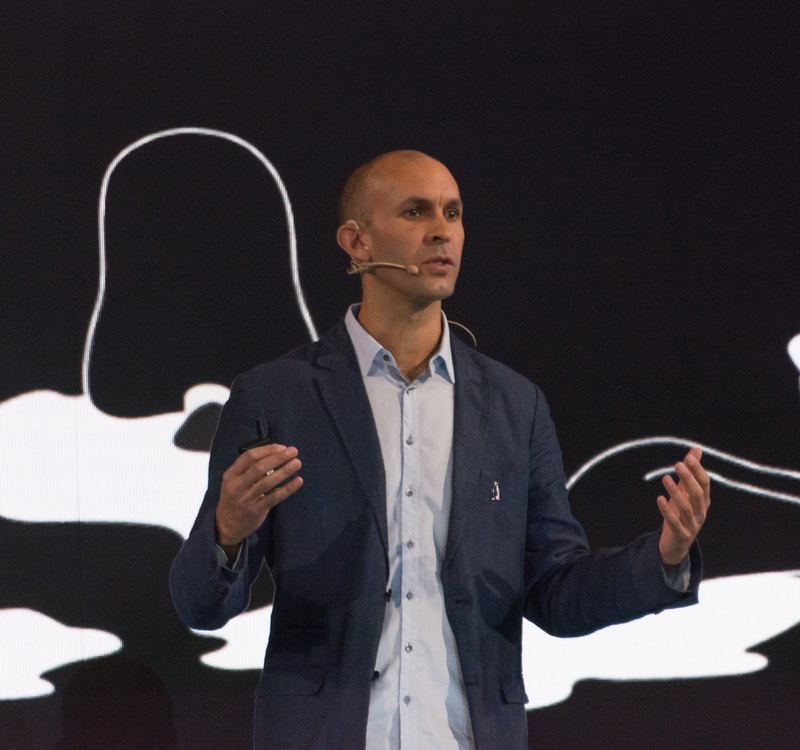 Anil SethSussex Centre for Consciousness Science, University of SussexThe beast machine hypothesis, and controlled hallucination as an account of perception
- Megan PetersUniversity of California, IrvineMetacognitive access in AI, consciousness test validity, computational requirements for self-awareness
- John O'KeefeSainsbury Wellcome Centre / Department of Cell and Developmental Biology, UCLNobel Prize in Physiology or Medicine (2014), Discovery of Hippocampal Place Cells (1971), The Hippocampus as a Cognitive Map (1978, with Lynn Nadel)
- Liad MudrikSchool of Psychological Sciences / Sagol School of Neuroscience, Tel Aviv UniversityAdversarial collaboration methodology, high-level unconscious processing limits, neural basis of free will and conscious volition, Cogitate Consortium co-lead
Jakob Hohwy is listed with the other functionalists and computationalists, who hold that what matters is the organisation of the processing, not the material. The theory family behind that position is set out in the index of consciousness theories. Every researcher covered on this site is indexed in the directory of consciousness researchers.