


The Brainstem Theory of Consciousness from Marshall Devor and Mark Baron
Does conscious experience originate in the folded outer mantle of the cerebral cortex, or does the raw feeling of being an awake self ignite deep inside the ancient vertebrate brainstem? In a 2026 hypothesis article in The Neuroscientist (Brainstem theory of consciousness, doi:10.1177/10738584261470362), neurobiologist Marshall Devor of the Hebrew University of Jerusalem and neurologist Mark Baron of Harvard Medical School and Beth Israel Deaconess Medical Center present a detailed anatomical and physiological case for the Brainstem Theory of Consciousness.
Devor and Baron argue that mainstream neuroscience has inverted the division of labor between the cortex and the brainstem. Rather than serving as a mere arousal power supply for a conscious cortex, the upper brainstem, centered on the mesopontine tegmentum, generates raw phenomenal awareness (the felt “me inside”), while the cerebral cortex acts as a high-dimensional sensory and cognitive supercomputer that supplies discriminated content to that subcortical state.
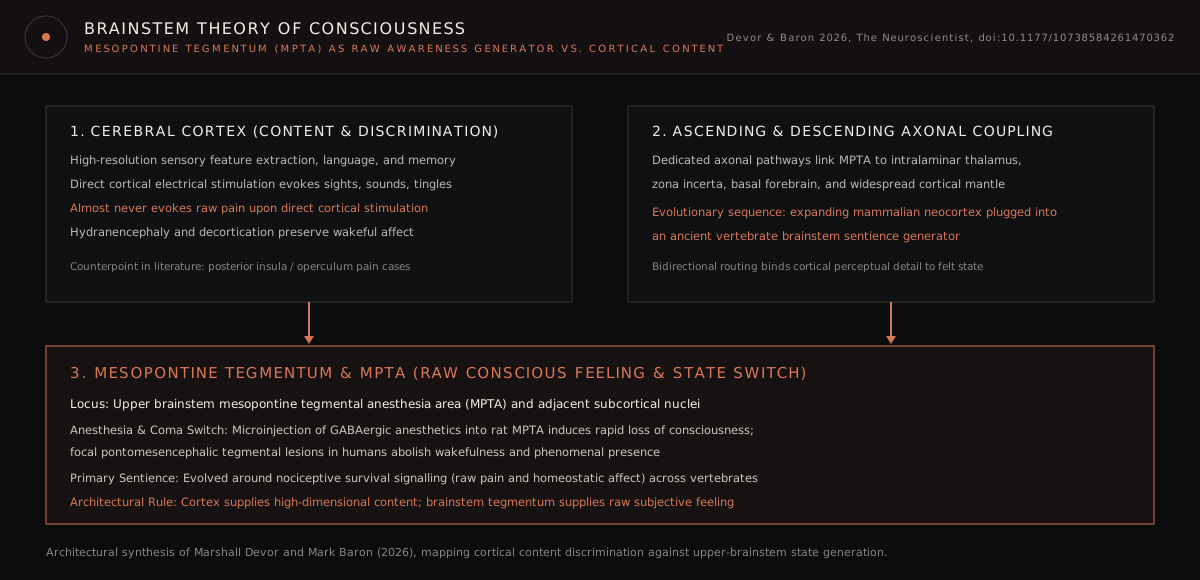
Five Lines of Evidence for a Brainstem Generator
Because their paper in The Neuroscientist is a theoretical synthesis of existing clinical and animal data rather than a single new laboratory trial, Devor and Baron assemble five converging lines of neurological evidence that cortico-centric theories struggle to explain simultaneously.
- Direct electrical stimulation of the exposed human cerebral cortex during awake neurosurgery reliably evokes visual flashes, auditory tones, motor twitches, or localized somatosensory tingling, yet almost never evokes raw pain, philosophy’s canonical example of undeniable subjective feeling. Conversely, stimulating or irritating subcortical and brainstem nociceptive pathways produces intense affective pain.
- Surgical excision or traumatic destruction of large expanses of cerebral cortex, including unilateral hemispherectomy and congenital hydranencephaly (children born with minimal or no cerebral cortex), leaves wakefulness, sleep-wake cycling, emotional vocalization, social orientation, and pain responsiveness intact. By contrast, a pinpoint hemorrhage or ischemia only a few millimeters wide in the upper pontine and mesencephalic tegmentum plunges a human patient into immediate, irreversible coma.
- In focal seizure disorders, epileptic discharges confined to a cortical sensory or motor area alter specific perceptual or motor contents without abolishing the patient’s conscious presence, whereas seizures that propagate into upper brainstem and diencephalic structures trigger immediate loss of consciousness (as in absence and generalized tonic-clonic seizures).
- In rodent microinjection studies pioneered in Devor’s laboratory, delivering nanoliter quantities of GABAergic general anesthetics directly into a millimeter-scale bilateral zone of the upper brainstem, the mesopontine tegmental anesthesia area (MPTA), induces rapid loss of the righting reflex and cortical slow-wave synchronization identical to systemic surgical anesthesia. Microinjections placed a millimeter outside the MPTA fail to anesthetize the animal, and targeted MPTA lesions render animals resistant to systemic anesthetics.
- Across vertebrate evolution, fish, amphibians, reptiles, and birds exhibit coordinated nociceptive avoidance, analgesic self-administration, and affective learning despite lacking a six-layered mammalian neocortex. Devor and Baron argue from evolutionary parsimony that when the mammalian neocortex expanded over the last 200 million years, evolution did not build a second, duplicate consciousness generator in the cortex; instead, the expanding cortical mantle wired its ascending and descending axons into the pre-existing brainstem awareness hub.
| Empirical Domain | Cortico-Centric Prediction (GNW / Cortical HOT / Cortical IIT) | Brainstem Theory Observation (Devor & Baron 2026) |
|---|---|---|
| Awake Cortical Stimulation | Stimulating primary/secondary somatosensory cortex should frequently elicit conscious pain | S1/S2 stimulation evokes paresthesia or tingling, almost never raw pain |
| Lesion Asymmetry | Massive cortical tissue loss should abolish raw conscious feeling | Hydranencephaly and decortication preserve affect; tiny mesopontine tegmental strokes cause coma |
| Targeted Micro-Anesthesia | Anesthetic loss of consciousness requires direct drug action across global cortex | Nanoliter GABAergic microinjection into rat MPTA alone induces surgical loss of consciousness |
| Vertebrate Phylogeny | Non-mammalian vertebrates without neocortex lack phenomenal pain | Fish, reptiles, and birds share conserved brainstem nociceptive and tegmental sentience circuits |
| Functional Role of Cortex | Primary generator of both conscious state and conscious content | High-capacity information processor supplying detailed content to the brainstem state generator |
The Counterpoint from Posterior Insular and Opercular Pain Studies
A balanced evaluation of Devor and Baron’s pain argument requires examining the strongest counter-evidence from human intracranial electrophysiology. While stimulation of the convexities of primary somatosensory cortex (S1), prefrontal cortex, and parietal association cortex almost never produces pain, depth-electrode studies by Luis Garcia-Larrea, Roland Peyron, and Jean Isnard have documented that electrical stimulation of the posterior insula and medial parietal operculum (SII/pIns) can elicit acute nociceptive sensations in roughly 1 to 10 percent of contacts, and focal lesions of the posterior operculo-insular cortex can produce “pain asymbolia” or selective thermonociceptive deficits.
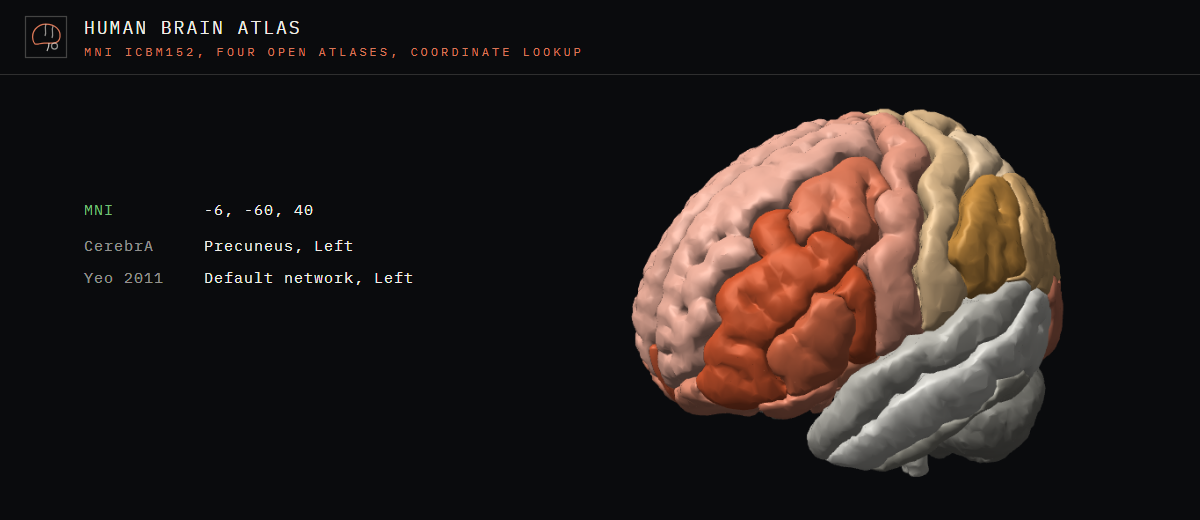
Devor and Baron address this tension by distinguishing between the discriminative localization of a noxious stimulus (which utilizes operculo-insular and thalamocortical maps) and the raw, aversive affective state that persists even after insular lesions or in decorticate animals. Whether the posterior insula constitutes a true cortical nociceptive generator or the primary cortical receiving station that feeds descending projections back into the periaqueductal gray and mesopontine tegmentum remains an active experimental dispute. Readers can inspect the exact anatomical positions of the mesopontine tegmentum, periaqueductal gray, intralaminar thalamus, and insula in 3D space on our Human Brain Atlas, which integrates the Harvard Ascending Arousal Network brainstem nuclei directly into the MNI template.
How the Mesopontine Tegmentum Connects to Merker, Panksepp, Solms, and Vertebrate Origins
Within the wider research context mapped in our 2026 flagship review of consciousness science, Devor and Baron’s paper forms the fourth pillar of a converging subcortical tradition.
- Bjørn Merker’s upper-brainstem selection triangle locates the minimal machinery of awareness in the coupling of target selection (superior colliculus / optic tectum), action selection (basal ganglia), and motivation (periaqueductal gray and hypothalamus).
- Jaak Panksepp’s affective neuroscience mapped seven conserved subcortical emotional systems (
SEEKING,FEAR,RAGE,PANIC,CARE,LUST,PLAY) across mammals using direct deep-brain stimulation. - Mark Solms’s interoceptive active-inference framework and Antonio Damasio’s homeostatic feeling theory ground consciousness in brainstem regulation of visceral survival variables.
- Todd Feinberg and Jon Mallatt’s neuroevolutionary origins framework traces primary sensory and affective consciousness back 520 million years to the Cambrian vertebrate optic tectum and brainstem.
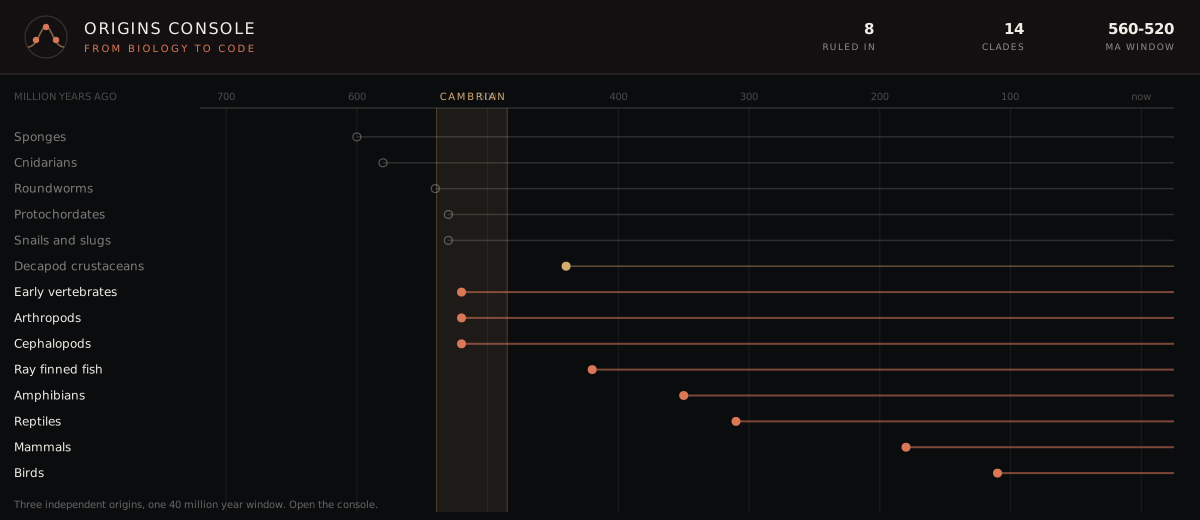
Devor and Baron add a specific switching node to this subcortical map. Whereas Merker emphasizes the superior colliculus and Solms emphasizes the parabrachial complex and periaqueductal gray, Devor and Baron pinpoint the mesopontine tegmental anesthesia area (MPTA) and its dedicated axonal projections to the zona incerta, intralaminar thalamus, and basal forebrain as the master state switch that couples raw nociceptive survival feeling to the rest of the brain.
Comparison to The Consciousness AI
For The Consciousness AI, which investigates consciousness as an emergent, substrate-independent property across biological animals and synthetic architectures, Devor and Baron’s Brainstem Theory reinforces why our Neutral Core architecture is built subcortex-first.
Standard artificial intelligence architectures attempt to build minds from the top down, training giant cortical-style language and vision transformers while omitting the brainstem floor entirely. In our architecture, Layer 1 and Layer 2 implement a tectum-first sensorimotor map and an Affective Modulator / homeostatic value gate where survival variables modulate global workspace competition. Devor and Baron’s distinction between a brainstem generator that sustains the raw awake state and a cortical network that supplies discriminated content mirrors our separation between continuous homeostatic arousal gating and high-dimensional workspace representations.
Experimental Tests Ahead
Because Brainstem theory of consciousness is a hypothesis paper built on clinical and rodent literature, converting its strongest claim into a settled demonstration requires targeted causal tests. First, cell-type-specific optogenetic and chemogenetic tracing of MPTA projection neurons in rodents and non-human primates must determine whether MPTA activity merely gates cortical arousal (acting as a permissive switch) or directly encodes the valence and intensity of conscious pain when cortical feedback is silenced. Second, ultra-high-field 7-Tesla functional MRI of the human brainstem during graded sedation and noxious stimulation can test whether MPTA bold-signal collapse precedes frontoparietal and posterior cortical deactivation at the exact moment subjective report vanishes.
Researchers covered here
- Marshall DevorDepartment of Cell and Developmental Biology, Institute of Life Sciences, The Hebrew University of JerusalemBrainstem Theory of Consciousness, Mesopontine Tegmental Anesthesia Area (MPTA), neuropathic pain electrophysiology
- Mark BaronDepartment of Neurology, Beth Israel Deaconess Medical Center and Harvard Medical SchoolBrainstem Theory of Consciousness, subcortical mechanisms of wakefulness, pain, and anesthesia with Marshall Devor