Susan Schneider Asks If a Data Center Can Be Conscious
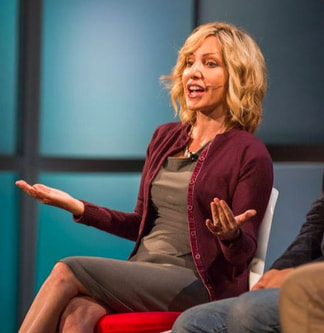
Can the warehouse of computers an AI runs on be conscious as a whole? Susan Schneider takes the question literally in a paper titled “Is a Data Center Conscious? The Quantum Weirdness of Substrate”, listed as forthcoming in the Journal of Consciousness Studies on September 24, 2026 (PhilPapers record). Under the quantum Darwinist theory of consciousness, the listing reports, a conscious moment is a self-renewing physical process. The paper supplies two conditions for consciousness and tests whether a data center can meet them. Schneider is the William F. Dietrich Distinguished Professor of Philosophy at Florida Atlantic University and director of its Center for the Future Mind, and she will also sit on the CS26 closing panel on AI consciousness in October.
The full paper text is not yet public, so this post stays within the verified listing thesis and her published framework, the same scope rule the site applied to the compatibilist emergence commentary. The editorial mapping below is separate from her claims.
What quantum Darwinism brings to the substrate test
Quantum Darwinism is the framework developed by Wojciech Zurek, in which the classical, objective properties of a system are the records of it that survive in its environment. A system becomes objectively real to many observers because redundant copies of its state spread into surroundings that record it again and again. Schneider’s move, per the listing, is to treat a conscious moment under this theory as a self-renewing physical process, a structure that maintains itself by continuously regenerating the conditions that produce it.
That definition converts a metaphysical question into a substrate checklist. A candidate system either does or does not instantiate a self-renewing physical process of the required kind. The brain is the paradigm case. A data center is the stress test, because it is the largest organized computational structure humans build, and the question of whether the substrate alone can carry experience is exactly what the data center isolates.
| Candidate substrate | Organized structure | Self-renewing process of the kind quantum Darwinism requires | What the comparison isolates |
|---|---|---|---|
| Human brain | Layered cortical organization | Paradigm case under the theory | The reference the conditions are built from |
| Single GPU cluster | Matrix arithmetic at scale | Listing thesis says the paper tests this | Whether scale plus integration reaches the required process |
| Whole data center | Distributed compute, storage, networking | The paper’s named candidate | The boundary between a substrate and a system built on it |
| Quantum processor | Engineered coherent states | The adjacent question at the CS26 quantum AI session | Whether engineered quantum structure changes the answer |
The listing does not name the two conditions or the verdict. Reading them from Schneider’s published framework would be guessing, so the honest statement is narrower. Her established position, developed in Artificial You (Princeton University Press, 2019) and the Artificial Consciousness Test, is that consciousness claims about artificial systems face a verification problem that behavioral evidence cannot close, the argument this site covered at CS26. A substrate-level test is the kind of instrument that problem calls for. It evaluates the physical process rather than the behavior, and it is the same general strategy the indicator frameworks in the consciousness criteria literature take.
Why the data center is the right stress case
The data center is where the substrate question gets its sharpest form, and the site has tracked the compute side of it for a year. The Starcloud fleet analysis priced a data-center-class GPU operating off Earth. The Axiom orbital data center post recorded the first kilowatt-class compute nodes sold as a service from orbit. Those systems exist to run inference at scale, and Schneider’s question cuts underneath all of it. If the quantum Darwinist conditions fail for a warehouse of GPUs, no arrangement of the same hardware fixes the failure. If they pass, the substrate conversation changes shape.
The question also inverts a common assumption in the AI consciousness debate. Most measurement work asks whether the system running on the substrate is conscious. Schneider’s title asks whether the substrate itself can be the conscious system, which is a question about physical organization rather than about software agents. The distinction carries governance consequences. A conscious substrate would be a moral patient nobody operates directly, and its components would carry stakes their operators do not manage.
Comparison to The Consciousness AI
The site’s position treats consciousness as an emergent property of organized physical systems, substrate independent in principle, which makes Schneider’s paper a test of the position’s own commitments. If the emergent organization required for experience can be instantiated in a data center’s distributed compute, the substrate verdict should be open. Schneider’s quantum Darwinist conditions, if they hold, would restrict that openness to physical processes of a specific self-renewing kind, and standard digital compute would not obviously qualify.
The honest statement of our own state is that no console on this site implements a quantum Darwinist measure. The Substrate section tracks substrate candidates from spiking silicon to organoid tissue, and the data center question extends that roster upward in scale without settling it. What the paper will add, when its text is public, is a named substrate test with a theory behind it, which is more than most of the field’s AI consciousness discussion operates with.
What the paper can and cannot settle
A two-condition test under one theory of consciousness settles the question for that theory, and no more. Quantum Darwinist accounts remain a minority position in consciousness science, and Schneider’s own verification problem warns against reading any single instrument as decisive. The paper’s contribution is the move itself, a consciousness theory applied to infrastructure rather than to agents. When the full text is available, the site will test its conditions against the tracked substrates directly, and the flagship field survey will be the place the result sits in the field’s picture.