



Alexander Shapson-Coe
Harvard University
Builder The claim is about what the hardware does, and the philosophy is left open
Alexander Shapson-Coe was the first author of A Petavoxel Fragment of Human Cerebral Cortex Reconstructed at Nanoscale Resolution, published in Science in May 2024 with Jeff Lichtman as senior author. The dataset is a single cubic millimeter of human temporal cortex, imaged with electron microscopy and reconstructed with about 57,000 cells, 150 million synapses and 1.4 petabytes of annotated data.
The reconstruction produced the first nanoscale picture of human cortical tissue at this scale, including rare and powerful connections that coarser datasets miss, such as synapses formed between axons. The data volume is itself a result. One cubic millimeter generated 1.4 petabytes, which quantifies the cost of nanoscale human connectomics and places whole human cortex reconstruction beyond current capability by orders of magnitude.
This site’s Builder category refers to his authorship of that dataset. The fragment is a structural measurement of the tissue that generates human experience, and its findings constrain emulation and modeling work directly, but it contains no activity recording and makes no claim about consciousness. This site covers the result in the petavoxel cortex post.
Known for. First author of the petavoxel reconstruction of human cerebral cortex
Coverage on this site
Related researchers
- Jeff LichtmanHarvard UniversityBrainbow, senior author of the petavoxel human cortex reconstruction, serial electron microscopy connectomics
- Matt AngleParadromicsFounder and CEO of Paradromics, developer of the Connexus Direct Data Interface high-data-rate brain-computer interface
- Isabella R. BeckettCoauthor of the MaleCNS preprint comparing male and female Drosophila brain connectomes
- Stuart BergFirst author of the MaleCNS preprint on the male Drosophila central nervous system
- Edward BoydenMassachusetts Institute of Technology, Howard Hughes Medical InstituteExpansion microscopy, optogenetics, connectomics tools for consciousness research
-
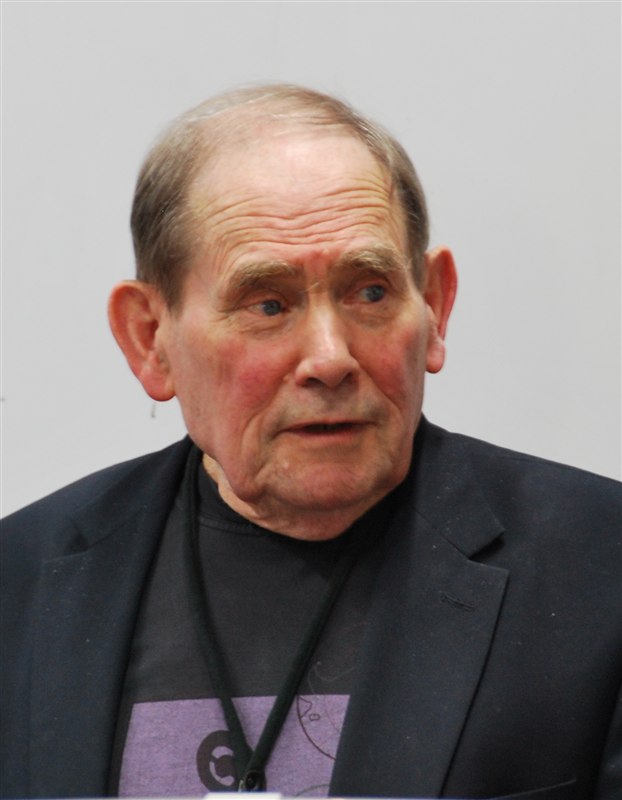 Sydney BrennerMRC Laboratory of Molecular Biology, CambridgeFounding the C. elegans research program, the 1986 connectome, the 2002 Nobel Prize in Physiology or Medicine
Alexander Shapson-Coe is listed with the other builders, who hold that the claim is about what the hardware does, and the philosophy is left open. The positions themselves are set out in the index of consciousness theories. Every researcher covered on this site is indexed in the directory of consciousness researchers.