Builders of the Hardware Consciousness Research Runs On
Every empirical claim about machine consciousness eventually runs on a piece of hardware somebody had to build. The people on this page built those pieces. They are listed separately from the other researchers on this site for one reason. None of them has published a position on whether consciousness is substrate independent, and this site does not assign one to them.
Mike Davies directs Intel’s Neuromorphic Computing Lab, whose Loihi 2 chip is the first neuromorphic processor with programmable neuron microcode. That feature is what allows a researcher to swap a leaky integrate-and-fire neuron for an Izhikevich neuron on the same silicon, which turns a long standing theoretical argument about neuron models into a controlled experiment. The Loihi 2 architecture paper is explicit that the chip is a research tool for studying neural computation rather than a system designed to satisfy consciousness criteria.
Marcus S. Murbach led TechEdSat-13 at NASA Ames, which in January 2022 flew the first neuromorphic processor to operate in Earth orbit and ran spike-timing-dependent plasticity in the radiation environment of low Earth orbit. That result is the empirical basis for treating orbital deployment of a spiking architecture as an engineering question with measured answers.
Matt Angle founded Paradromics, whose Connexus Direct Data Interface reached first-in-human implantation in 2025 at 421 microwire electrodes per cortical module. Benjamin Rapoport co-founded Neuralink and then founded Precision Neuroscience, whose Layer 7 Cortical Interface records from the cortical surface without penetrating tissue. Their two devices bracket the central trade in cortical interfacing, single unit resolution against tissue damage, and the numbers on both sides set the real distance between current hardware and any claim about bridging a conscious stream.
The reason to track builders alongside theorists is that a theory of consciousness which cannot be run on any available hardware is not yet testable. For the hardware argument in full, see Project Consciousness to Orbit and the Substrate Console. For the full researcher directory, see all consciousness researchers.
-
MA
Matt AngleParadromicsFounder and CEO of Paradromics, developer of the Connexus Direct Data Interface high-data-rate brain-computer interface
1 article
-
IB
Isabella R. BeckettCoauthor of the MaleCNS preprint comparing male and female Drosophila brain connectomes
1 article
-
SB
Stuart BergFirst author of the MaleCNS preprint on the male Drosophila central nervous system
1 article
-
EB
Edward BoydenMassachusetts Institute of Technology, Howard Hughes Medical InstituteExpansion microscopy, optogenetics, connectomics tools for consciousness research
1 article
-
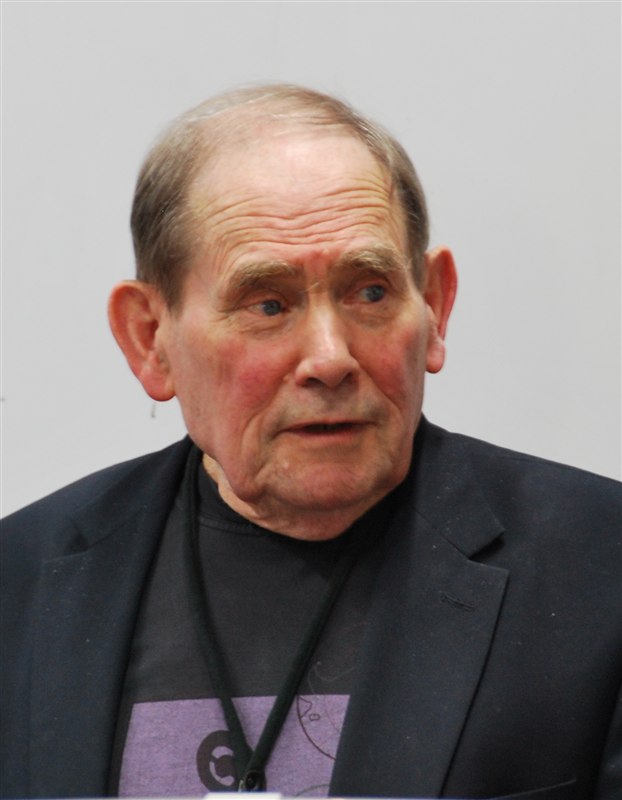 Sydney BrennerMRC Laboratory of Molecular Biology, CambridgeFounding the C. elegans research program, the 1986 connectome, the 2002 Nobel Prize in Physiology or Medicine
1 article
Sydney BrennerMRC Laboratory of Molecular Biology, CambridgeFounding the C. elegans research program, the 1986 connectome, the 2002 Nobel Prize in Physiology or Medicine
1 article
-
KC
Kwanghun ChungMassachusetts Institute of TechnologyFirst author of CLARITY, hydrogel-tissue transformation for intact brain imaging
1 article
-
MC
Marta CostaCoauthor of the MaleCNS preprint on sexual dimorphism in Drosophila circuits
1 article
-
MD
Mike DaviesIntel LabsDirecting Intel's Neuromorphic Computing Lab and co-developing the Loihi and Loihi 2 neuromorphic research processors
1 article
-
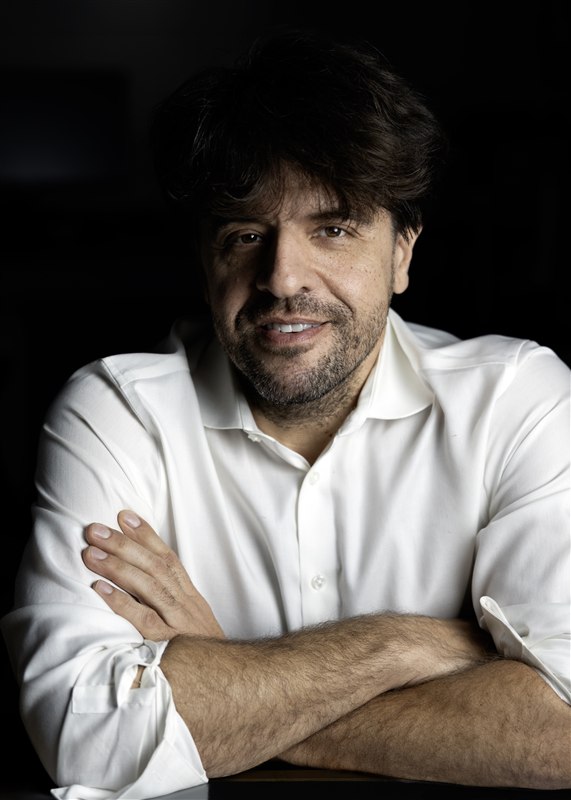 Karl DeisserothStanford UniversityOptogenetics, CLARITY hydrogel-tissue chemistry, senior author of the 2013 Nature CLARITY paper
1 article
Karl DeisserothStanford UniversityOptogenetics, CLARITY hydrogel-tissue chemistry, senior author of the 2013 Nature CLARITY paper
1 article
-
MF
Mark FernandezHewlett Packard Enterprise, as identified in NASA's May 2022 investigation reportPrincipal investigator for Spaceborne Computer-2, identified by NASA in July 2022
1 article
-
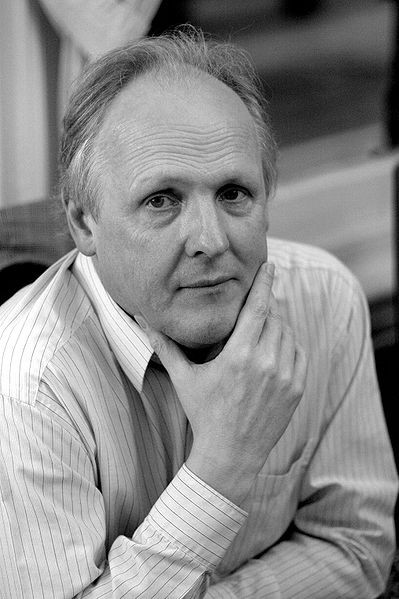 Steve FurberDepartment of Computer Science, University of ManchesterSpiNNaker, the million-core spiking neural network supercomputer, ARM processor architecture
1 article
Steve FurberDepartment of Computer Science, University of ManchesterSpiNNaker, the million-core spiking neural network supercomputer, ARM processor architecture
1 article
-
FG
Feng GuoDepartment of Intelligent Systems Engineering, Indiana University BloomingtonBrainoware, brain organoid reservoir computing, biocomputing on multielectrode arrays
1 article
-
GJ
Gregory S. X. E. JefferisCoauthor of the MaleCNS preprint describing the male Drosophila central nervous system
1 article
-
TK
T. Anderson KellerKempner Research Fellow, Kempner Institute for the Study of Natural and Artificial Intelligence, Harvard University (2023 to 2026)Neural Wave Machines (ICML 2023), locally coupled oscillatory RNNs with waves in the hidden state, and convolutional recurrent networks whose waves widen the effective receptive field (Jacobs et al., 2025)
-
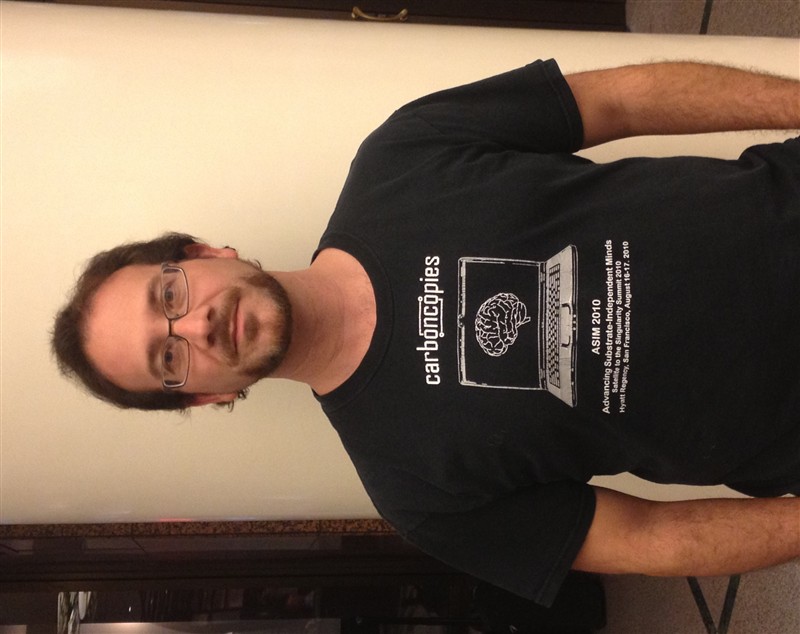 Randal KoeneCarboncopies FoundationSubstrate-independent minds, whole brain emulation, the Carboncopies foundation, cortical interfaces
1 article
Randal KoeneCarboncopies FoundationSubstrate-independent minds, whole brain emulation, the Carboncopies foundation, cortical interfaces
1 article
-
RL
Rafael Lahoz-BeltraComplutense University of MadridThe spiking DMN pacemaker model of elementary self-consciousness, the bioelectric pulse of the Self, Izhikevich-based ablation studies of tonic neuromodulation
1 article
-
SL
Stephen LarsonOpenWorm FoundationCo-founder of the OpenWorm project, open science whole animal simulation
1 article
-
XL
Xiaojian LiTsinghua UniversityFirst author of AwarenessBench, the 14,381-sample benchmark measuring awareness capabilities across 15 cognitive functions in language models
1 article
-
JL
Jeff LichtmanHarvard UniversityBrainbow, senior author of the petavoxel human cortex reconstruction, serial electron microscopy connectomics
1 article
-
AM
Adam MarblestoneHarvard University, Wyss InstituteFirst author of Physical Principles for Scalable Neural Recording, brain mapping scaling analysis
1 article
-
TM
Takeru MiyatoPreferred Networks, Inc.; PhD student, Autonomous Vision Group, University of TübingenFirst author of Artificial Kuramoto Oscillatory Neurons (ICLR 2025 oral), and earlier work on spectral normalization and adversarial training methods for semi-supervised learning
-
MM
Marcus S. MurbachNASA Ames Research CenterPrincipal Investigator of the TechEdSat satellite series, pioneering the first orbital flight of a neuromorphic processor (TechEdSat-13 / Loihi 1)
1 article
-
AM
Arvo Muñoz MoránAI Cognition Institute; Rethink PrioritiesBuilding the interactive implementation and public code for the cacophony AI consciousness assessment framework
1 article
-
BR
Benjamin RapoportPrecision Neuroscience, Mount Sinai Health SystemCo-founder of Precision Neuroscience, founding member of Neuralink, and pioneer of conformable micro-electrocorticography (Layer 7 Cortical Interface)
1 article
-
PS
Philipp SchlegelCoauthor of the MaleCNS preprint on male and female Drosophila circuit organisation
2 articles
-
AS
Alexander Shapson-CoeHarvard UniversityFirst author of the petavoxel reconstruction of human cerebral cortex
1 article
-
BS
Balázs SzigetiOpenWorm project, University of EdinburghFirst author of the 2014 OpenWorm paper, whole animal simulation
1 article
-
GV
Guillaume VerdonExtropic, San Francisco, founder. Kardashev Research, the nonprofit research initiative announced under the Beff Jezos pseudonymExtropic's thermodynamic computing hardware and the Z1 chip, the e/acc movement written under the Beff Jezos pseudonym, and the 2026 Kardashev Research launch
1 article
-
MW
Max WellingProfessor of Machine Learning, University of Amsterdam; Chief AI Officer, CuspAICo-author of Artificial Kuramoto Oscillatory Neurons (Miyato, Löwe, Geiger and Welling, ICLR 2025), Neural Wave Machines with T. Anderson Keller (ICML 2023), and foundational work on variational inference, geometric deep learning and graph neural networks
-
JW
John G. WhiteMRC Laboratory of Molecular Biology, CambridgeFirst author of the 1986 complete C. elegans nervous system reconstruction
1 article
-
WX
Wei XuXi'an Jiaotong University; ShanghaiTech UniversitySenior author of AwarenessBench, the awareness benchmark spanning metacognition, self-awareness, social awareness, and situational awareness in language models
1 article
-
PR
Pieter van RooyenDepartment of Electrical and Electronic Engineering, Stellenbosch UniversityThe Cross-Substrate Access Assay, the five-declaration audit for consciousness indicator tests crossing from brains to machines, released data and code
1 article