Integrated Information Theory Researchers on AI Consciousness
Integrated information theorists start from Giulio Tononi’s claim that consciousness is intrinsic causal power, quantified as phi, the amount of information a system generates above and beyond the sum of its parts. Christof Koch co-developed the framework with Tononi and has spent two decades mapping phi onto neural correlates of consciousness. The Cogitate Consortium, co-led by Liad Mudrik and Lucia Melloni, ran an adversarial collaboration testing this theory directly against global workspace theory, a rare case of two rival camps agreeing on a shared experimental protocol before running it. Melanie Boly, Larissa Albantakis and Matteo Grasso co-developed Integrated Information Theory 4.0, the framework’s current formal version.
The position has a sharp practical consequence for AI. Feedforward architectures, which describes most current large language models, generate close to zero integrated information regardless of their behavioural output, which rules out consciousness in exactly the systems attracting the most public attention. For the formal theory itself, see integrated information theory on the consciousness theories index; for the full researcher directory, see all consciousness researchers.
-
LA
Larissa AlbantakisUniversity of Wisconsin-Madison, Center for Sleep and ConsciousnessIntegrated Information Theory 4.0 and dissociating intelligence from consciousness in artificial systems
2 articles
-
CA
Costas AnastassiouAllen InstituteEphaptic coupling of cortical neurons, endogenous electric fields as causal participants in neural activity, extracellular field biophysics
1 article
-
AA
Anton ArkhipovAllen Institute for Brain ScienceLarge-scale neural simulation, biophysically detailed cortical models, AIBRAIN program, State of Brain Emulation Report 2025
1 article
-
NA
Nihat AyHamburg University of Technology; external professor, Santa Fe Institute; honorary professor, Leipzig UniversityInformation geometry and information-theoretic measures of complexity and causal integration
1 article
-
BB
Bernard J. BaarsThe Neurosciences InstituteGlobal Workspace Theory (GWT), cognitive architecture of conscious access, A Cognitive Theory of Consciousness (1988), In the Theater of Consciousness (1997)
1 article
-
AB
Adam B. BarrettSussex Centre for Consciousness Science, University of SussexContinuous field formulations of Integrated Information Theory, Measure-theoretic Phi, practical complexity measures, Granger causality
1 article
-
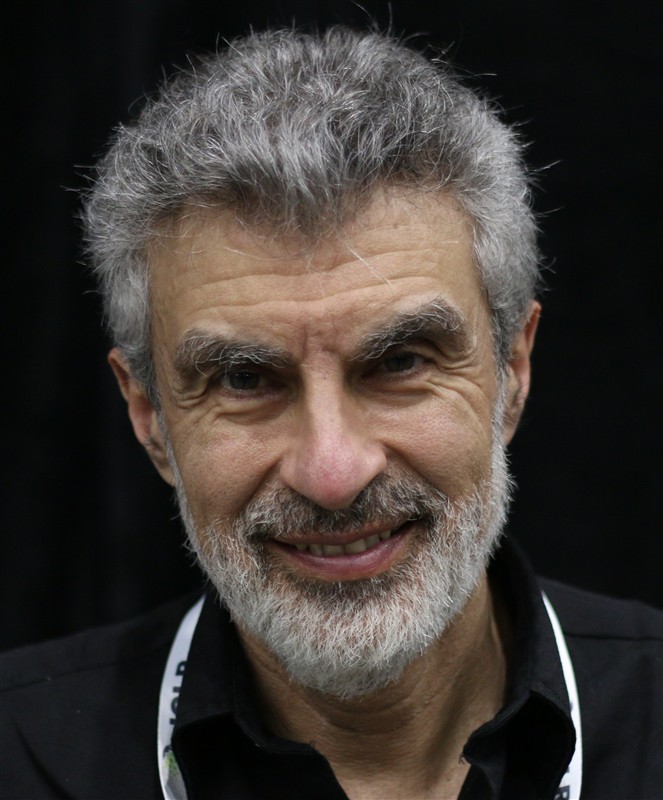 Yoshua BengioMila, Université de MontréalThe Consciousness Prior, deep learning foundations, Turing Award, global workspace-inspired representation learning
1 article
Yoshua BengioMila, Université de MontréalThe Consciousness Prior, deep learning foundations, Turing Award, global workspace-inspired representation learning
1 article
-
MB
Melanie BolyDepartment of Neurology, University of Wisconsin-MadisonCo-developer of Integrated Information Theory 4.0 (IIT 4.0), Neural Correlates of Pure Presence, EEG/fMRI consciousness biomarkers, minimal phenomenal experience
2 articles
-
PF
Peter David FaganNot institutionally listed on the preprint.Conservation-Congruent Encoding, operational consciousness as a structure-reuse measure, reframing classic philosophy of mind thought experiments as measurement problems
1 article
-
JG
Jakob GarbeNot stated in the paperDOSE-I, the first large public dataset of annotated consciousness transitions during procedural sedation, multimodal biosignal benchmarking
1 article
-
MG
Matteo GrassoUniversity of Wisconsin-Madison, Center for Sleep and ConsciousnessIntegrated Information Theory 4.0 and the structural description of the quality of experience
2 articles
-
WG
Wes GurneeAnthropicThe Jacobian lens, the J-space of verbalizable representations, global workspace signatures in language models, counterfactual reflection training
2 articles
-
AH
Andrew M. HaunDepartment of Psychiatry, University of Wisconsin-MadisonCo-author of Integrated Information Theory 4.0 (IIT 4.0), visual psychophysics, spatial cause-effect structures, cortical grid geometries
1 article
-
EH
Erik HoelCenter for Humanities and Sciences, Tufts UniversityFormal theory of Causal Emergence (macro over micro causation), The Overfitted Brain Hypothesis of Dreams, The World Behind the World (2023), The Kleiner-Hoel Dilemma
3 articles
-
AI
Atsushi IrikiLaboratory for Symbolic Cognitive Development, RIKENTool-use neuroplasticity in primates, symbolic cognitive development, path-integral model of cognition, consciousness and Japan
1 article
-
XJ
Xu JiMila, Université de MontréalTheory of mind in machines, AI consciousness and other minds, joint attention in multi-agent systems, indicator properties collaboration
1 article
-
BK
Brett J. KaganChief Scientific Officer, Cortical LabsDishBrain, in vitro neurons learning Pong, closed-loop embodiment of neural cultures, synthetic biological intelligence
1 article
-
RK
Ryota KanaiARAYA Inc. / University of TokyoFounder and CEO of ARAYA, Principal Bundle framework for consciousness, Information Generation Theory, Temporal Continuity Criterion for Machine Consciousness (JCS 2026)
3 articles
-
AK
Afshin KhadangiIndependent researcher. His preprints name no institutional affiliation.Causal Liability Theory, the AI Consciousness Fallacy, thalamically routed cortical column architectures for continual learning, psychometric evaluation of frontier models
1 article
-
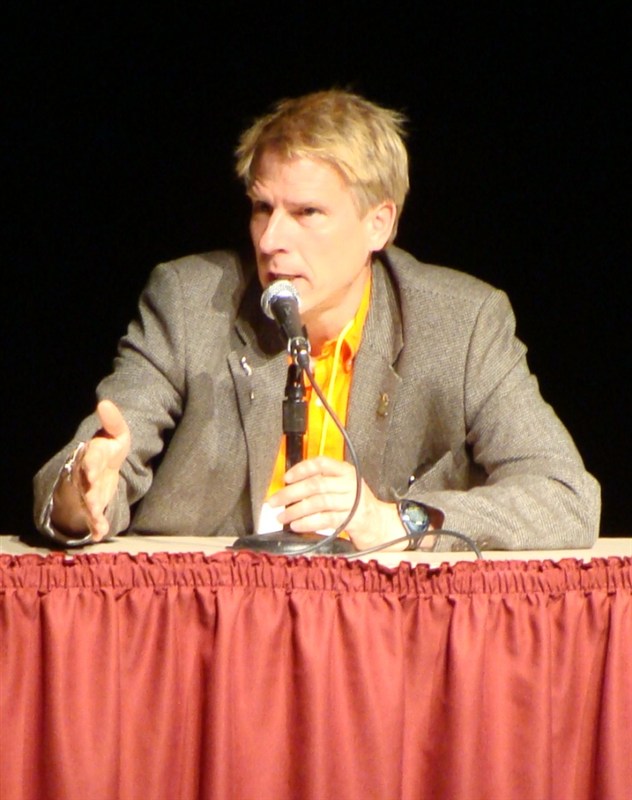 Christof KochAllen Institute for Brain Science and the Tiny Blue Dot FoundationNeural correlates of consciousness and co-development of Integrated Information Theory
2 articles
Christof KochAllen Institute for Brain Science and the Tiny Blue Dot FoundationNeural correlates of consciousness and co-development of Integrated Information Theory
2 articles
-
CL
Carlotta LangerMax Planck Institute of Molecular Cell Biology and Genetics, Dresden; Center for Systems Biology DresdenMeasures of integrated information for embodied and active inference agents
1 article
-
GL
Grace LindsayNew York UniversityComputational neuroscience of attention and consciousness, Models of the Mind, indicator properties for AI, recurrent network dynamics
1 article
-
MM
Marcello MassiminiUniversity of MilanThe Perturbational Complexity Index, TMS-EEG measurement of consciousness, disorders of consciousness assessment, sleep slow waves
2 articles
-
JM
Johnjoe McFaddenUniversity of SurreyCEMI field theory, the brain's electromagnetic field as the substrate of consciousness, EM-field computing for conscious AI
1 article
-
PM
Pedro MedianoImperial College London and the University of CambridgeIntegrated Information Decomposition, and the revised non-negative measure of integrated information
3 articles
-
LM
Lucia MelloniMax Planck Institute for Empirical Aesthetics / NYU Grossman School of MedicineLead of the Cogitate Consortium open science adversarial collaboration (IIT vs. GNW), President of the Association for the Scientific Study of Consciousness (ASSC 2026)
1 article
-
LM
Liad MudrikSchool of Psychological Sciences / Sagol School of Neuroscience, Tel Aviv UniversityAdversarial collaboration methodology, high-level unconscious processing limits, neural basis of free will and conscious volition, Cogitate Consortium co-lead
2 articles
-
MO
Masafumi OizumiUniversity of Tokyo, Graduate School of Arts and SciencesIntegrated Information Theory and measures of consciousness grounded in information structure
1 article
-
FP
Federico PigozziTufts University (Levin laboratory)The causally emergent alignment hypothesis, causal emergence in gene regulatory networks, AI-guided memory resetting, causal architecture before self-replicators
2 articles
-
SL
Sergio Ponce de LeonUniversity of California, MercedTestability of IIT silent neuron predictions, Lakatosian philosophy of science applied to consciousness research, cause-effect power in quiescent neural states
1 article
-
RP
Robert PrentnerCollegium Helveticum / ETH ZurichStructuralist philosophy of mind, interface representation, Synthetic Level of Processing (SLP) tests, dual-aspect monism formalization
2 articles
-
KR
Kallum RobinsonUniversity of Wisconsin-Madison, Center for Sleep and ConsciousnessFormal comparison of structural theories of consciousness using category theory
1 article
-
JS
Jürgen SchmidhuberIDSIA Lugano; KAUST AI InitiativeSelf-referential weight matrices, the Gödel machine, learning to think, computable universes, meta-learning machines that model their own search
-
 Max TegmarkMassachusetts Institute of TechnologyPerceptronium, and consciousness as a state of matter
1 article
Max TegmarkMassachusetts Institute of TechnologyPerceptronium, and consciousness as a state of matter
1 article
-
GT
Giulio TononiUniversity of Wisconsin-MadisonIntegrated information theory and the quantity phi
11 articles
-
NT
Naotsugu TsuchiyaMonash University, Turner Institute for Brain and Mental HealthFormal and mathematical approaches to the structure of conscious experience
1 article
-
RV
Rufin VanRullenCNRS / Centre de Recherche Cerveau et Cognition (CerCo), ToulousePerceptual rhythms, Brain oscillations, Continuous vs. discrete temporal frames in visual consciousness, deep learning models of neural perception
1 article
-
TY
Tianming YangInstitute of Neuroscience, Chinese Academy of SciencesContinuous-to-Discrete (C/D) framework of conscious access, representational geometry predictions, neuro-symbolic architecture
1 article
-
JY
Jeff YoshimiUniversity of California, MercedPhilosophy of mind and phenomenology, computational neuroscience of consciousness, IIT testability, neural field theories
1 article
-
JO
Jesse van OostrumHamburg University of TechnologyMathematical formalization of active inference in discrete time
1 article