

Research and development of emerging artificial consciousness through The Consciousness AI project, based on Feinberg and Mallatt's neuroevolutionary theory.
© 2026. All rights reserved.


The cosmists reached the conclusion that mind is not bound to the body or the planet that produced it, and they reached it a century before anyone could state it as substrate independence. Nikolai Fyodorov argued in The Philosophy of the Common Task that resurrecting the dead by physical means is an obligation, and that settling other worlds follows because every generation restored at once does not fit on one planet. His mechanism, reassembling a person from their dispersed particles, has no scientific standing. The question underneath it survives, because reassembly is a claim about what has to be preserved for a person to still be that person, which is the uploading question approached from the other end.
Konstantin Tsiolkovsky derived the rocket equation in 1903 in service of a position he already held, that the point of leaving Earth was not to occupy another planet. His scheme of cosmic eras ends with mind existing in a form that needs no body. The mechanism he offered was panpsychism, treating sensation as a property of matter as such, and that is the part of his system that fails, on the same combination problem contemporary panpsychist positions face.
Both are relevant here for one narrow reason. They pair a physical route off the planet with an argument that what should make the trip is mind rather than biology. The route was sound and the argument for the passenger has since been replaced. For where that argument stands now, see Project Consciousness to Orbit; for the full researcher directory, see all consciousness researchers.
 J. D. BernalBirkbeck College, University of London. Ireland, 1901 to 1971The World, the Flesh and the Devil (1929), the Bernal sphere space habitat, and X-ray crystallography of proteins
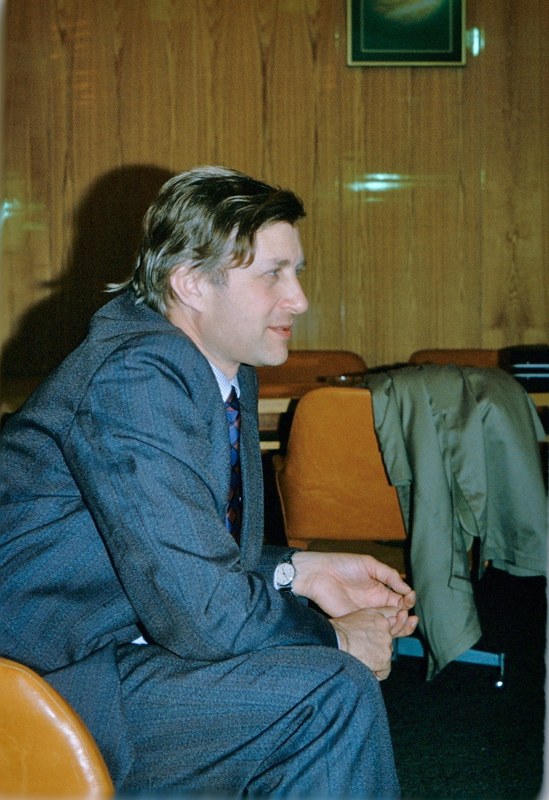 Nikolai KardashevSternberg Astronomical Institute, Moscow State University, later the Russian Academy of SciencesThe 1964 classification of civilizations by captured power, the Kardashev scale, and the Byurakan SETI meeting where it was presented