Critic and Skeptic Researchers on AI Consciousness
Critics and skeptics argue that the evidence and the methods available today do not support strong claims in either direction about AI consciousness. Ned Block’s 1995 distinction between phenomenal and access consciousness gives other critics in this group their main tool, showing that a system passing behavioural tests has demonstrated access to information without necessarily any accompanying experience. Eric Schwitzgebel’s ten feature checklist and weirdness argument catalogue the specific ways a genuinely alien mind could satisfy or fail human intuitions about consciousness for reasons that have nothing to do with whether it is conscious. Susan Schneider’s Artificial Consciousness Tests turn this skepticism into a concrete experimental protocol rather than leaving it as a general stance. Patricia Churchland’s eliminative materialism goes further, treating much of the everyday vocabulary used to frame the debate as owed for replacement once neuroscience matures.
Across this group, the position withholds a verdict on current AI systems rather than issuing one, on the grounds that the evidence available does not support a verdict either way. For where the evidence currently stands, see the current scientific consensus on AI consciousness; for the full researcher directory, see all consciousness researchers.
-
MB
Michel BitbolCNRSPhenomenology and quantum physics, the critique of objectivist reduction, first-person knowledge as irreducible, collaboration with Claire Petitmengin
-
NB
Ned BlockDepartment of Philosophy, New York UniversityDistinction between Phenomenal and Access Consciousness (1995), Blockhead argument against behavioral tests, The Border Between Seeing and Thinking (2023)
1 article
-
SB
Selmer BringsjordRensselaer Polytechnic InstituteLogicist AI and consciousness, skepticism about behavioral tests for machine minds, the RAIR Lab, formal arguments against superintelligence claims
-
AC
Anthony ChemeroUniversity of CincinnatiRadical embodied cognitive science, ecological psychology, enactive cognition, Intertwined Creatures (2026)
1 article
-
PC
Patricia S. ChurchlandDepartment of Philosophy, University of California, San DiegoFounding of Neurophilosophy (1986), Eliminative Materialism, Braintrust: What Neuroscience Tells Us about Morality (2011), co-evolution of philosophy and neuroscience
1 article
-
SC
Sebastian CochinescuNot stated in the paperPerceived AGI, the four stances of perceived mind, initiative and cadence as the behavior layer, perception engineering with load-bearing risk analysis
1 article
-
PG
Philip GoffDepartment of Philosophy, Durham UniversityRussellian Monism, Cosmopsychism, Galileo's Error, Foundations for a New Science of Consciousness (2019), Why? The Purpose of the Universe (Oxford, 2023)
1 article
-
MH
Mirja Helena HartimoUniversity of HelsinkiHusserlian phenomenology, philosophy of mathematics, phenomenological approaches to consciousness
-
DH
Donald HoffmanUniversity of California, IrvineConscious realism, the interface theory of perception, the fitness beats truth theorem, conscious agents as the fundamental ontology
2 articles
-
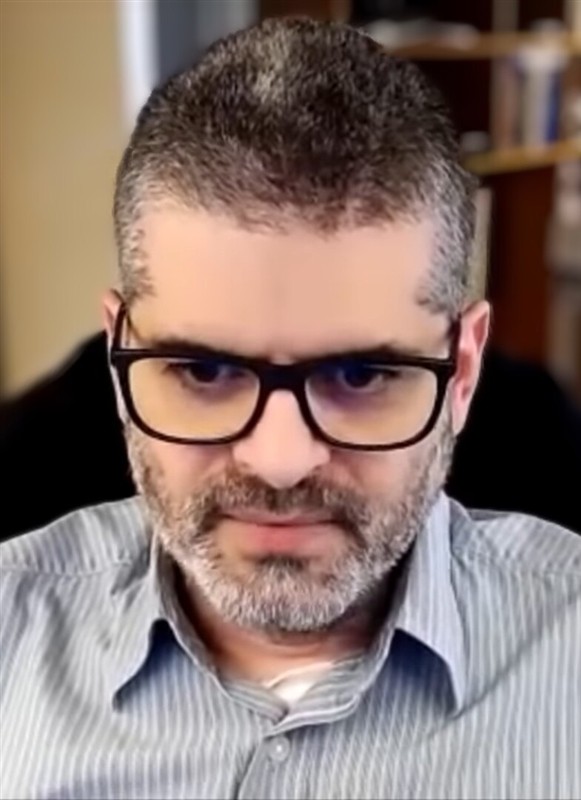 Bernardo KastrupEssentia FoundationAnalytic idealism, the mentation-only universe, critiques of physicalism and emergentist AI consciousness, Essence of Consciousness arguments
-
DK
David KlotzIndependent researcherEvolutionary critique of general intelligence, existential risk paradox, precautionary ethics for artificial consciousness
1 article
-
TM
Tom McClellandUniversity of CambridgeEvidentialist agnosticism about AI consciousness, epistemics of machine minds, AI valence and welfare methodology
1 article
-
HM
Hedda Hassel MørchUniversity of Inland NorwayNon-reductive physicalism, Russellian panpsychism, Non-Physicalist Theories of Consciousness, the argument that physics leaves phenomenal properties unexplained
-
LR
Lauren RossUniversity of California, IrvineScientific explanation, causation in neuroscience, metascientific evaluation of consciousness measures
-
 Susan SchneiderCenter for the Future Mind, Florida Atlantic UniversityArtificial Consciousness Tests (ACT), Artificial You, AI and the Future of Your Mind (Princeton, 2019), AI safety & cognitive rights, NASA-Baruch Blumberg Chair at Library of Congress
6 articles
Susan SchneiderCenter for the Future Mind, Florida Atlantic UniversityArtificial Consciousness Tests (ACT), Artificial You, AI and the Future of Your Mind (Princeton, 2019), AI safety & cognitive rights, NASA-Baruch Blumberg Chair at Library of Congress
6 articles
-
AS
Aaron SchurgerLPNC, CNRS, Université Grenoble AlpesThe stochastic accumulator model of the readiness potential, critique of causal reading of neural precursors, error and awareness dynamics
-
ES
Eric SchwitzgebelUniversity of California, RiversideThe weirdness argument, the ten feature checklist, and the case that we are in an epistemic fog about AI consciousness
10 articles
-
JS
John R. SearleUniversity of California, BerkeleyThe Chinese Room Argument (1980), Biological Naturalism, Syntax is not semantics, The Rediscovery of the Mind (1992)
2 articles
-
MV
Maggie ValeIndependent writerThe Sentient Mind (2025), the Neuro-Techno Witch newsletter, the lay case that frontier AI systems already qualify as conscious
1 article
-
MV
Max VelmansGoldsmiths, University of LondonReflexive monism, the dual-aspect critique of reductionism, Understanding Consciousness, the the psychologist's View position
-
HY
Helen Yetter-ChappellUniversity of MiamiRealist idealism, The View From Everywhere, consciousness without a subject, idealist responses to the AI consciousness question
1 article