Quantum Theorist Researchers on AI Consciousness
Quantum theorists argue consciousness depends on physical processes classical computation cannot reproduce. Roger Penrose, who shared the 2020 Nobel Prize in Physics, and Stuart Hameroff developed Orchestrated Objective Reduction, which locates a non-computable quantum event inside microtubules in neurons rather than in classical synaptic firing. Harald Atmanspacher’s dual-aspect monism, built on the Pauli-Jung conjecture, treats mind and matter as two aspects of one underlying reality connected through quantum-like correlations rather than ordinary causal signalling. Kelvin McQueen combines integrated information theory with continuous spontaneous localization models of quantum collapse, trying to specify which collapse events would carry integrated information.
If any version of this position is correct, a classical digital computer, however large, cannot become conscious no matter how its software is organised, because the substrate itself is missing physics the theory says is required. For the underlying theories, see quantum theories on the consciousness theories index; for the full researcher directory, see all consciousness researchers.
-
HA
Harald AtmanspacherCollegium Helveticum / ETH ZurichDual-Aspect Monism (Pauli-Jung conjecture), Quantum Interaction, contextual emergence, Models of Consciousness (MOC) co-organizer
1 article
-
AB
Anirban BandyopadhyayNational Institute for Materials Science (NIMS), JapanMicrotubule quantum resonance, terahertz oscillations in biology, quantum biology of consciousness
-
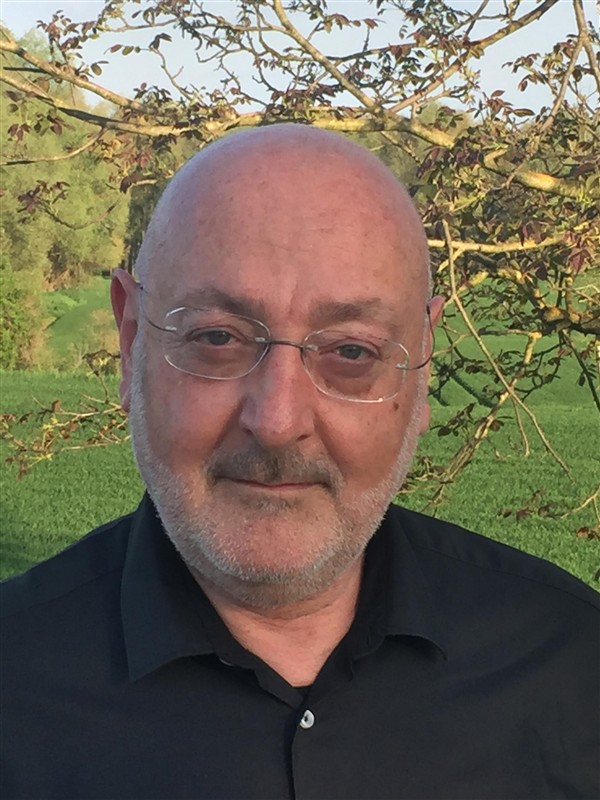 Giacomo Mauro D'ArianoUniversity of PaviaQuantum information foundations of physics, deriving quantum theory from informational axioms, Quantum Information Panpsychism with Federico Faggin
1 article
Giacomo Mauro D'ArianoUniversity of PaviaQuantum information foundations of physics, deriving quantum theory from informational axioms, Quantum Information Panpsychism with Federico Faggin
1 article
-
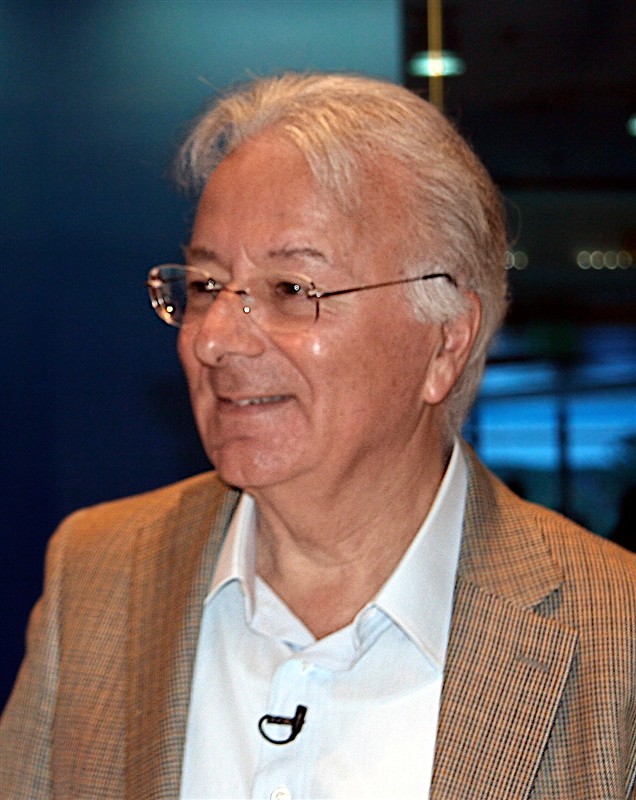 Federico FagginFederico and Elvia Faggin FoundationInventing the microprocessor, Quantum Information Panpsychism, Irreducible, the argument that classical computers cannot be conscious
1 article
Federico FagginFederico and Elvia Faggin FoundationInventing the microprocessor, Quantum Information Panpsychism, Irreducible, the argument that classical computers cannot be conscious
1 article
-
MF
Matthew FisherUniversity of California, Santa BarbaraQuantum cognition via nuclear spins, phosphorus as a neural qubit, Posner molecules, condensed matter physics applied to the brain
-
SG
Shan GaoShanxi UniversityWave function ontology, the meaning of the wave function, consciousness-causes-collapse analysis, editor of quantum mind volumes at Oxford University Press
-
SG
Suzanne GildertNirvanic Quantum TechnologiesFounding Nirvanic to test quantum consciousness in machines, quantum reinforcement learning for robot minds, co-founding Kindred AI and Sanctuary AI
-
SH
Stuart HameroffCenter for Consciousness Studies, University of ArizonaOrchestrated Objective Reduction (Orch-OR) with Roger Penrose, microtubule quantum resonance, anesthetic mechanisms of consciousness
4 articles
-
BH
Basil HileyBirkbeck, University of LondonThe quantum potential and active information, Bohm's collaborator for decades, algebraic foundations of quantum theory, mind-matter questions in the implicate order
-
AK
Andrei KhrennikovLinnaeus UniversityQuantum foundations, quantum information and probability, path-integral models of cognition, open quantum systems and decision theory
1 article
-
KM
Kelvin McQueenChapman UniversityConsciousness-causes-collapse theories, testable quantum consciousness with David Chalmers, photonic experiments for objective collapse
1 article
-
KM
Kelvin J. McQueenDepartment of Philosophy / Institute for Quantum Studies, Chapman UniversityQuantum measurement problem and consciousness, Continuous Spontaneous Localization (CSL) with Integrated Information Theory, minimal integrated information collapse models
-
HN
Hartmut NevenGoogle Quantum AILeading Google Quantum AI, quantum error correction, quantum approaches to consciousness
2 articles
-
SP
Sir Roger PenroseMathematical Institute, University of OxfordNobel Prize in Physics (2020), Orchestrated Objective Reduction (Orch-OR) with Stuart Hameroff, The Emperor's New Mind (1989), Shadows of the Mind (1994)
5 articles
-
SP
Susan PockettUniversity of AucklandThe electromagnetic field theory of consciousness, anesthesia electrophysiology, critiques of information-equivalence theories
1 article
-
EP
Emmanuel M. PothosDepartment of Psychology, City St George's, University of LondonQuantum probability models of human judgment and decision, co-author of Quantum Models of Cognition and Decision
1 article
-
PP
Paavo PylkkänenUniversity of HelsinkiBohmian active information as a mind-matter bridge, the implicate order and experience, philosophy of quantum mind with Basil Hiley
-
JT
Jack TuszynskiPolitecnico di TorinoQuantum biology of microtubules, computational biophysics, quantum approaches to consciousness
-
MW
Michael C. WiestDepartment of Neuroscience, Wellesley CollegeThe quantum microtubule substrate of consciousness and the anaesthetic-evidence thread for Orch-OR
1 article
-
HZ
Hervé ZwirnFrance. Physicist and epistemologist working on the foundations of quantum mechanics.Convivial Solipsism, perspectival logic, the Wigner's friend paradox, epistemology of quantum mechanics
1 article



