



Balázs Szigeti
OpenWorm project, University of Edinburgh
Builder The claim is about what the hardware does, and the philosophy is left open
Balázs Szigeti was the first author of OpenWorm: an open-science approach to modeling Caenorhabditis elegans, published in Frontiers in Computational Neuroscience on November 3, 2014, with Padraig Gleeson, Michael Vella and Stephen Larson among the coauthors. The paper reports the project’s modular simulation engine, the Geppetto middleware that integrates neuronal and soft-body physics simulators, the Sibernetic physics engine for the worm’s hydrostatic body, and the NeuroML encoding of the 302-neuron connectome.
The paper is equally explicit about the model’s limits. The first worm models contain no realistic active membrane conductances, no dopamine signaling and none of the worm’s neuropeptide chemistry, and the paper frames those absences as the validation domain of the first model family. It also states the project’s validation criterion, David Harel’s Turing-like test in which an expert tries to distinguish a real worm from a simulated one using objective measurements.
This site’s Builder category refers to his authorship of that founding report. The paper is the empirical hinge of the structure-versus-dynamics debate in whole brain emulation, and this site covers it in the OpenWorm post. It makes no claim about consciousness, and its honest record of what a connectome alone cannot produce is evidence this site weighs directly.
Known for. First author of the 2014 OpenWorm paper, whole animal simulation
Coverage on this site
Related researchers
- Stephen LarsonOpenWorm FoundationCo-founder of the OpenWorm project, open science whole animal simulation
- Matt AngleParadromicsFounder and CEO of Paradromics, developer of the Connexus Direct Data Interface high-data-rate brain-computer interface
- Isabella R. BeckettCoauthor of the MaleCNS preprint comparing male and female Drosophila brain connectomes
- Stuart BergFirst author of the MaleCNS preprint on the male Drosophila central nervous system
- Edward BoydenMassachusetts Institute of Technology, Howard Hughes Medical InstituteExpansion microscopy, optogenetics, connectomics tools for consciousness research
-
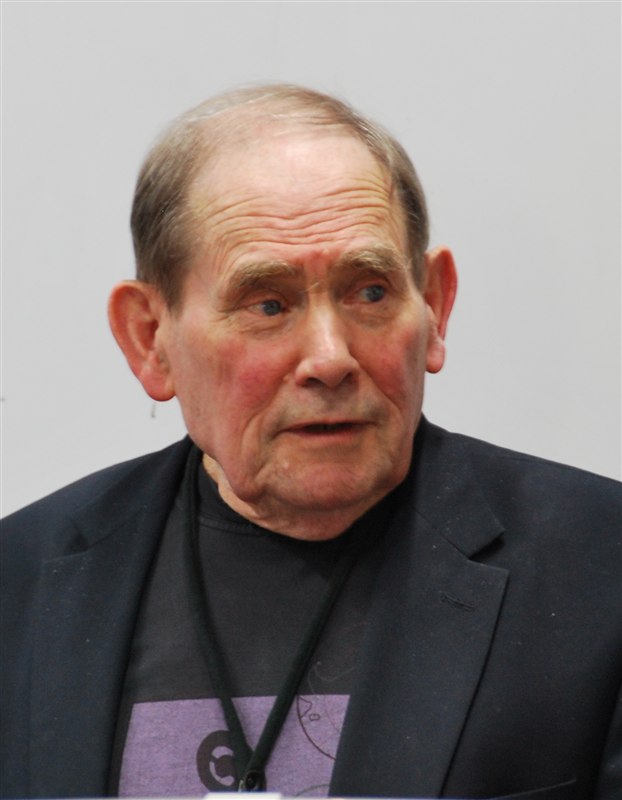 Sydney BrennerMRC Laboratory of Molecular Biology, CambridgeFounding the C. elegans research program, the 1986 connectome, the 2002 Nobel Prize in Physiology or Medicine
Balázs Szigeti is listed with the other builders, who hold that the claim is about what the hardware does, and the philosophy is left open. The positions themselves are set out in the index of consciousness theories. Every researcher covered on this site is indexed in the directory of consciousness researchers.