


Donald Hoffman
University of California, Irvine
Critic Current evidence and current methods do not support the claims being made
Donald Hoffman is a cognitive scientist at the University of California, Irvine, and one of the few consciousness researchers who rejects the starting assumption shared by nearly every rival framework. Where standard theories ask how physical processes produce subjective experience, Hoffman argues that consciousness is the fundamental thing and that physical processes, including brains, are representations within it. Spacetime, on his account, is a user interface that evolution built for managing fitness, and the interface does not resemble the reality behind it. His fitness beats truth theorem gives that claim formal content, showing in evolutionary game theory models that selection favours perception tuned to fitness rather than perception tuned to truth, so a perceptual system that veridically represents the world is not what evolution tends to produce.
The constructive half of his position is conscious realism, the claim that the basic constituents of reality are conscious agents, formal entities with state spaces, perceptual maps, and action maps, whose interactions generate more complex structures including human experience. The framework is a research program rather than a finished theory, and its strongest engineering translation so far comes from Robert Prentner, who derived category-theoretic tests for whether a system instantiates an interface representation, covered on this site in Prentner’s interface representation tests.
For AI consciousness research the position cuts in an unusual direction. Whether a machine is conscious, on Hoffman’s account, has nothing to do with substrate or with architectural imitation of brains. The question is whether the system constitutes a genuine conscious agent in his formal sense, and current evaluation methods do not resolve that question in either direction. His framework is therefore a standing challenge to the field’s measurement discipline, covered in the site’s analysis of conscious realism and AI consciousness, because it denies that the standard evidence hierarchy, behavior, then architecture, then substrate, even points at the right object.
Known for. Conscious realism, the interface theory of perception, the fitness beats truth theorem, conscious agents as the fundamental ontology
Coverage on this site
Research Papers and Preprints
- Donald Hoffman's Conscious Realism What It Means for AI Consciousness Research June 2026
- Donald Hoffman's Conscious Realism and TCAI Development January 2025
Keynotes and Event Talks
Related researchers
- Sir Roger PenroseMathematical Institute, University of OxfordNobel Prize in Physics (2020), Orchestrated Objective Reduction (Orch-OR) with Stuart Hameroff, The Emperor's New Mind (1989), Shadows of the Mind (1994)
- Stuart HameroffCenter for Consciousness Studies, University of ArizonaOrchestrated Objective Reduction (Orch-OR) with Roger Penrose, microtubule quantum resonance, anesthetic mechanisms of consciousness
-
 Susan SchneiderCenter for the Future Mind, Florida Atlantic UniversityArtificial Consciousness Tests (ACT), Artificial You, AI and the Future of Your Mind (Princeton, 2019), AI safety & cognitive rights, NASA-Baruch Blumberg Chair at Library of Congress
- Giulio TononiUniversity of Wisconsin-MadisonIntegrated information theory and the quantity phi
-
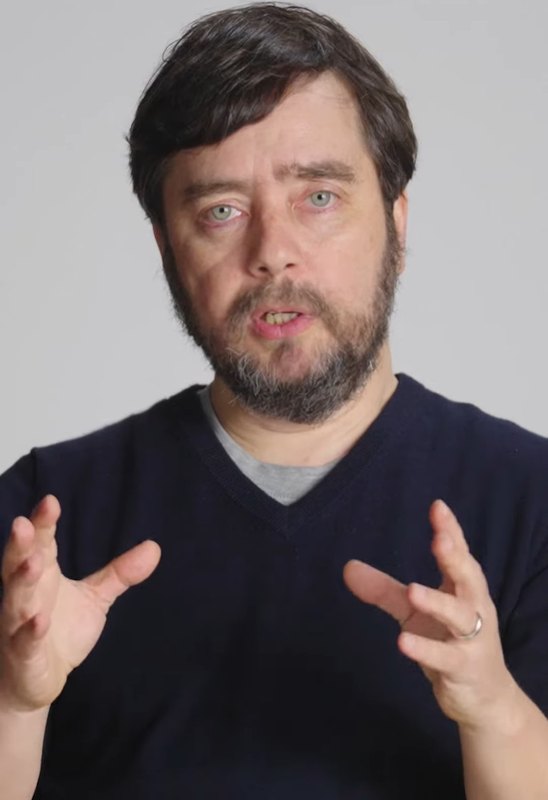 Michael LevinAllen Discovery Center, Tufts UniversityBioelectric signalling, the cognitive light cone, and diverse intelligence
- Hartmut NevenGoogle Quantum AILeading Google Quantum AI, quantum error correction, quantum approaches to consciousness
Donald Hoffman is listed with the other critics and skeptics, who hold that current evidence and current methods do not support the claims being made. The positions themselves are set out in the index of consciousness theories. Every researcher covered on this site is indexed in the directory of consciousness researchers.