


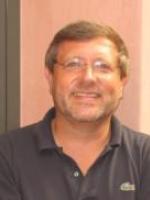
Gustavo Deco
ICREA, Universitat Pompeu Fabra, Barcelona
Functionalist What matters is the organisation of the processing, not the material

The dynamical cortical core result is the quantitative anchor for the metastability claim. Gustavo Deco, Morten Kringelbach, Viktor Jirsa and Petra Ritter fitted whole-brain Hopf models to resting-state human neuroimaging and found the empirical data sit at the edge of the Hopf bifurcation, where the system maximizes metastability (Deco et al. 2017). Metastability there is defined precisely as the variability over time of global synchronization, measured as the standard deviation of the Kuramoto order parameter, following Wildie and Shanahan. The brain at rest is neither locked nor incoherent. It visits synchrony and leaves it, continuously.
That definition gives the consciousness fingerprint theory its state measure. A static fingerprint cannot distinguish wakefulness from deep sleep, and the metastability framework explains why. The trait is the repertoire the structural connectome makes available. The state is where in that repertoire the system currently travels. Measures built on this framework separate wakefulness, sleep and anesthesia regimes in a way no static connectivity matrix can.
For emulation and substrate independence, the result names the fidelity target. A faithful copy must reproduce the regime, the balance of coupling and noise that puts a network at the edge of the bifurcation, rather than any particular frequency or pattern. Deco’s broader program, from The Virtual Brain simulator to whole-brain models of anesthesia and disorders, treats consciousness-relevant dynamics as something a model can be tuned into and out of. The identity consequences of that program are examined on The Consciousness Fingerprint.
Known for. Whole-brain computational models, metastability at the edge of the Hopf bifurcation, the dynamical cortical core
Coverage on this site
Related researchers
- Tomas Berjaga-BuisanComputational Neuroscience Group, Center for Brain and Cognition, Universitat Pompeu Fabra, BarcelonaNon-equilibrium thermodynamics of whole-brain models, fluctuation-dissipation theorem violations as a non-invasive consciousness marker
- Morten KringelbachDepartment of Psychiatry, University of Oxford; Centre for Eudaimonia and Human Flourishing, Linacre College, Oxford; Department of Clinical Medicine, Aarhus UniversityWhole-brain computational modeling of non-equilibrium brain dynamics, the thermodynamics of mind framework, hedonic and pleasure circuitry
- Marcello MassiminiUniversity of MilanThe Perturbational Complexity Index, TMS-EEG measurement of consciousness, disorders of consciousness assessment, sleep slow waves
- Hedayat AbedijooACE Conscious Studio / IndependentACE.await (2026), the ACE decision framework (Agency, Connection, Exchange)
-
 Blaise Agüera y ArcasGoogle VP and Fellow, CTO of Technology & SocietyComputational functionalism, active inference, on-device neural computing, What Is Intelligence? (2025), and Who Are We Now? (2023)
- Igor AleksanderImperial College LondonAxiomatic Consciousness Theory, neural state machines, The World in My Mind, pioneering neural network engineering
Gustavo Deco is listed with the other functionalists and computationalists, who hold that what matters is the organisation of the processing, not the material. The theory family behind that position is set out in the index of consciousness theories. Every researcher covered on this site is indexed in the directory of consciousness researchers.