


Igor Aleksander
Imperial College London
Functionalist What matters is the organisation of the processing, not the material
Igor Aleksander, Emeritus Professor at Imperial College London, was building machine consciousness arguments before the modern field existed. His career spans pioneering neural network hardware in the 1980s, the RAM-based neural state machines that he argued could model visual awareness, and the Axiomatic Consciousness Theory he introduced in the 1990s, which states five axioms any system must satisfy to be described as having inner experience. The axioms cover presence in the world, imagination, attention, planning, and emotion, and they were designed to be checkable against an implemented system rather than to be philosophically final.
His 2005 book The World in My Mind, My Mind in the World is the fullest statement, and his public position has stayed consistent across decades, that consciousness is a property of organized neural-style state machines and that refusing to model it is a failure of nerve rather than of rigor. This site’s Murray Shanahan profile marks the continuation of the same London school into the current indicator-property program.
Aleksander’s significance for the AI consciousness debate is as its proof of engineering lineage. The indicator checklists now applied to language models descend from axioms an engineer wrote down to make machine inner experience a buildable, inspectable target, and his career demonstrates the program’s feasibility in principle at the scale of the machines of its time.
Known for. Axiomatic Consciousness Theory, neural state machines, The World in My Mind, pioneering neural network engineering
Coverage on this site
No articles yet. This profile exists because the researcher's work is referenced elsewhere on the site, and coverage will be linked here as it is published.
Related researchers
- Hedayat AbedijooACE Conscious Studio / IndependentACE.await (2026), the ACE decision framework (Agency, Connection, Exchange)
-
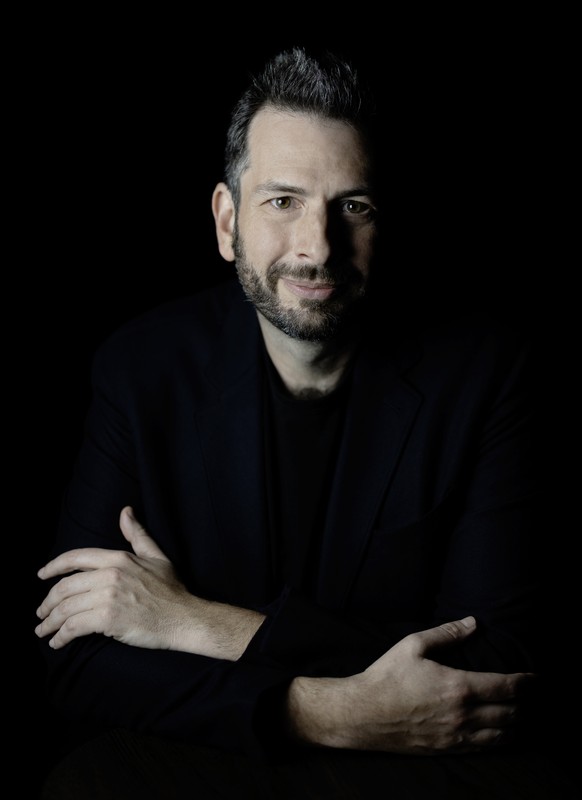 Blaise Agüera y ArcasGoogle VP and Fellow, CTO of Technology & SocietyComputational functionalism, active inference, on-device neural computing, What Is Intelligence? (2025), and Who Are We Now? (2023)
-
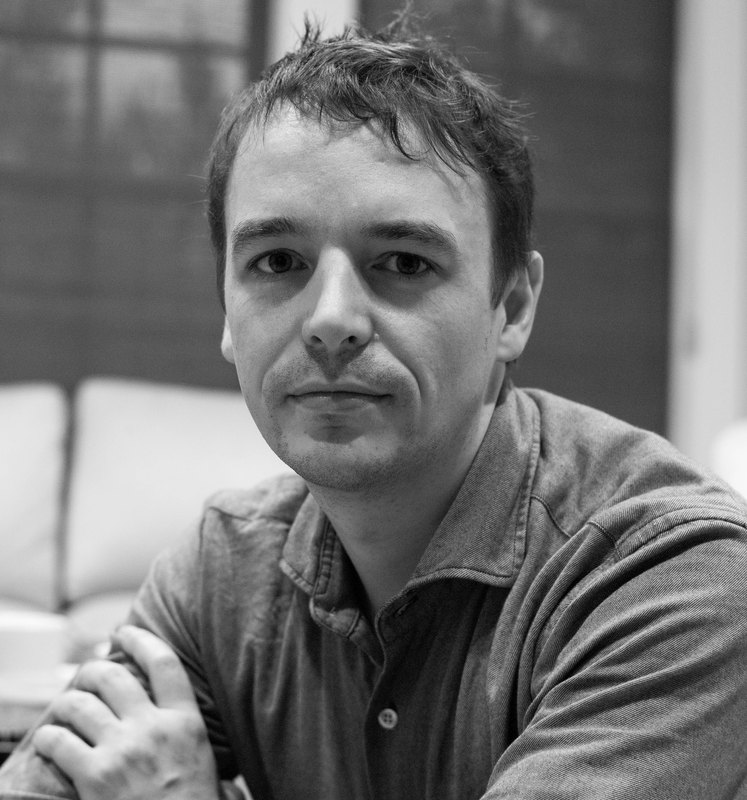 Joscha BachCalifornia Institute for Machine ConsciousnessThe machine consciousness hypothesis, cyber animism, and MicroPsi
- Talis BachmannUniversity of TartuAttention-awareness theory, the preactivation hypothesis for conscious perception, masking and the microgenesis of awareness, perception without awareness
- Adam BalesAustralian National UniversityDecision-theoretic and normative methodology, co-author of the cacophony assessment framework
- Max BennettIndependent Researcher and AI EntrepreneurThe Five Breakthroughs evolutionary neuroscience framework and A Brief History of Intelligence (2023)
Igor Aleksander is listed with the other functionalists and computationalists, who hold that what matters is the organisation of the processing, not the material. The theory family behind that position is set out in the index of consciousness theories. Every researcher covered on this site is indexed in the directory of consciousness researchers.