

Xiaojian Li
Tsinghua University
Builder The claim is about what the hardware does, and the philosophy is left open
Position on AI consciousness
Li's team explicitly separates awareness-as-capability from consciousness, advocating awareness as a practical proxy while instructing that current models are not conscious, and the benchmark's own finding is that the capabilities which scale with capability growth are not the self-directed ones.
Xiaojian Li is first author of AwarenessBench, posted to arXiv on September 28, 2026 by a Tsinghua University and Shanghai Qi Zhi Institute team with collaborators at Carnegie Mellon, Columbia, and ShanghaiTech. The benchmark defines awareness through what the model takes as its evaluation target, cognition itself for metacognition, the model itself for self-awareness, other entities for social awareness, and the environment for situational awareness, and operationalizes fifteen cognitive functions across 14,381 samples.
The classification on this site is Builder, covered for the resource built rather than a philosophical position held. The team’s published framing is nevertheless explicit on the question central to this site. They advocate measuring awareness as a practical proxy for consciousness, they instruct readers to communicate clearly that contemporary language models, however aware they may appear, are not conscious, and they caution against using the benchmark for cultivating machine consciousness. The benchmark’s central empirical finding, that the lowest human group exceeds the median model by over 50 percent on self-awareness while models lead on social functions, is the kind of result that disciplines attribution arguments with data, and it is the reason the resource earns coverage on this site.
Known for. First author of AwarenessBench, the 14,381-sample benchmark measuring awareness capabilities across 15 cognitive functions in language models
Coverage on this site
Related researchers
- Wei XuXi'an Jiaotong University; ShanghaiTech UniversitySenior author of AwarenessBench, the awareness benchmark spanning metacognition, self-awareness, social awareness, and situational awareness in language models
- Matt AngleParadromicsFounder and CEO of Paradromics, developer of the Connexus Direct Data Interface high-data-rate brain-computer interface
- Isabella R. BeckettCoauthor of the MaleCNS preprint comparing male and female Drosophila brain connectomes
- Stuart BergFirst author of the MaleCNS preprint on the male Drosophila central nervous system
- Edward BoydenMassachusetts Institute of Technology, Howard Hughes Medical InstituteExpansion microscopy, optogenetics, connectomics tools for consciousness research
-
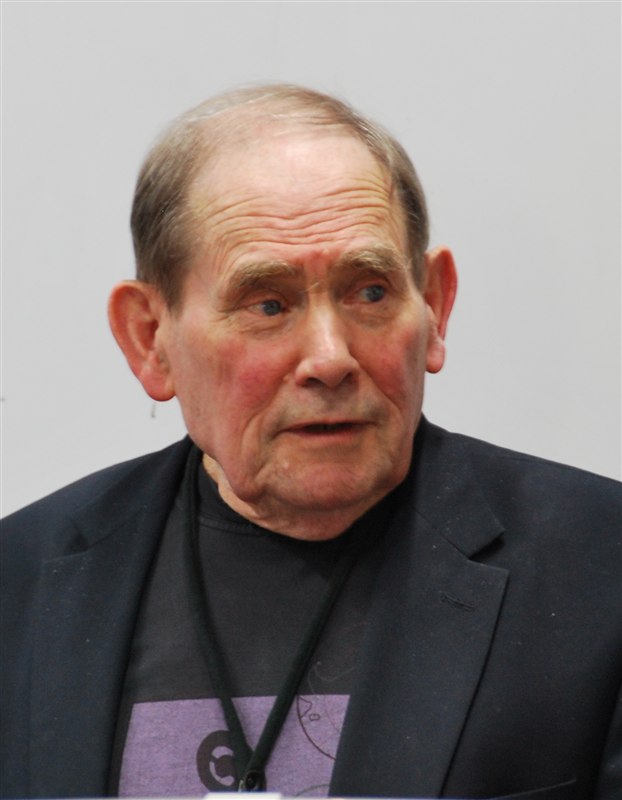 Sydney BrennerMRC Laboratory of Molecular Biology, CambridgeFounding the C. elegans research program, the 1986 connectome, the 2002 Nobel Prize in Physiology or Medicine
Xiaojian Li is listed with the other builders, who hold that the claim is about what the hardware does, and the philosophy is left open. The positions themselves are set out in the index of consciousness theories. Every researcher covered on this site is indexed in the directory of consciousness researchers.