


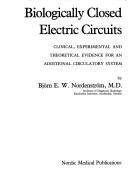
Bjorn E. W. Nordenstrom Biologically Closed Electric Circuits
Biologically Closed Electric Circuits
Radiologist Bjorn E. W. Nordenstrom's 1983 monograph Biologically Closed Electric Circuits proposes a vascular-interstitial electrical network and examines electrochemical tumor therapy.
Buy on amazon.com As an Amazon Associate I earn from qualifying purchases.
In the late 1960s, Swedish radiologist Bjorn E. W. Nordenstrom at the Karolinska Institute noticed faint radiating streaks, which he termed corona structures, surrounding lung tumors and granulomas on diagnostic chest radiographs. Rather than dismissing them as routine tissue scarring, he measured DC electrical potentials between injured or malignant lesions and the surrounding healthy parenchyma. In Biologically Closed Electric Circuits (Nordic Medical Publications, 1983, ISBN 9197043206), Nordenstrom proposed that blood vessel walls act as electrical insulators while blood plasma and interstitial fluid form conductive loops carrying steady ionic currents throughout the body.
Indexed in our Bioelectricity hub and AI Consciousness Books guide, Nordenstrom’s monograph is one of the most unconventional clinical entries in the forgotten century of bioelectricity. Evaluating it carefully, separating verified electrochemical phenomena from unconfirmed systemic claims, connects directly to our standards in consciousness research.
The Vascular-Interstitial Closed Circuit Hypothesis
Nordenstrom, who also served as Chair of the Nobel Assembly for Physiology or Medicine, built his theory around a physical analogy with electrical engineering. Whenever a localized injury, inflammation, or necrotic tumor creates a redox or metabolic imbalance, it develops a steady electrical potential difference relative to surrounding healthy tissue. Nordenstrom proposed that current flows out through blood plasma along vessels and returns across capillary walls and interstitial fluid, forming what he called a Vascular-Interstitial Closed Circuit (VICC).
| Component of Nordenstrom’s Model | Proposed Physical Role | Scientific Status Today |
|---|---|---|
| Localized injury or tumor redox potential | Acts as an endogenous DC battery | Well established that wounds and tumors exhibit altered resting potentials and pH gradients |
| Vascular-Interstitial Closed Circuit (VICC) | Insulated blood vessels conducting systemic healing currents | Contested and largely unconfirmed as a general physiological circulatory system |
| Electrochemical Treatment (EChT) | Applied DC electrodes inducing local pH shifts and tumor necrosis | Documented local cytolytic effects in clinical case series, mostly studied in China and Europe |
To test whether endogenous currents could be applied clinically, Nordenstrom inserted platinum electrodes into inoperable lung and breast tumors and applied low direct-current voltages. The resulting electrochemical treatment (EChT) produced severe local pH extremes, electrolysis, and osmotic shifts around the anode and cathode, causing localized tumor necrosis.
Clinical Reception and Scientific Boundaries
Strict facts discipline requires stating clearly how mainstream biophysics evaluates Biologically Closed Electric Circuits. Nordenstrom’s empirical observation that tumors and injured tissues show altered electrical potentials and conductivity is consistent with modern bioelectricity and cancer biophysics, where depolarized membrane potentials are known markers of proliferative and neoplastic cells. Likewise, direct-current electrochemical ablation produces undeniable local physicochemical destruction of tissue around electrodes.
However, Nordenstrom’s sweeping claim that vascular-interstitial closed circuits constitute a universal second circulatory system regulating normal physiology, healing, and even traditional acupuncture meridians has not been accepted by mainstream electrophysiology. Critics noted that blood vessel walls are far leakier to ions than true electrical cable insulation and that many of Nordenstrom’s radiographic corona patterns can be explained by conventional fluid mechanics, edema, and fibrosis without invoking long-range vascular circuits. Placing Nordenstrom alongside Robert O. Becker and Andrew A. Marino and Mae-Wan Ho and Fritz-Albert Popp illustrates an important methodological boundary in bioelectricity. Bold physical hypotheses must be judged by repeatable ion-level perturbation controls, like those pioneered by Richard B. Borgens and Richard Nuccitelli.
What Biologically Closed Electric Circuits Tells Us About Consciousness
Nordenstrom did not propose a theory of consciousness, yet his work highlights a recurring question in our study of consciousness as an emergent property. Living bodies are conductive, electrochemically active media in which metabolic imbalances continually generate macroscopic voltage gradients. Determining which of those electrical fields actually carry functional biological information, and which are merely passive physical side effects of metabolism, is a core methodological challenge in both developmental bioelectricity and consciousness science.
In the race to define AI consciousness and in Michael Levin’s work on bioelectric cognition, the same discipline applies. Measuring an electromagnetic field or a voltage difference around a system is never enough on its own to prove functional computation or sentience; researchers must demonstrate causal information flow through controlled interventions.
Comparison to The Consciousness AI and bioelectrics
Nordenstrom approached bioelectricity at the macroscopic organ and vascular scale using equivalent-circuit diagrams of blood vessels and tissue resistance. By contrast, our open-source PyTorch library bioelectrics (pip install bioelectrics, MIT licence, Zenodo DOI 10.5281/zenodo.23531183) operates at the cellular and multicellular tissue-sheet scale, modeling resting membrane voltage (V_mem) governed by well-characterized ion channels, pumps, and voltage-gated gap junctions.
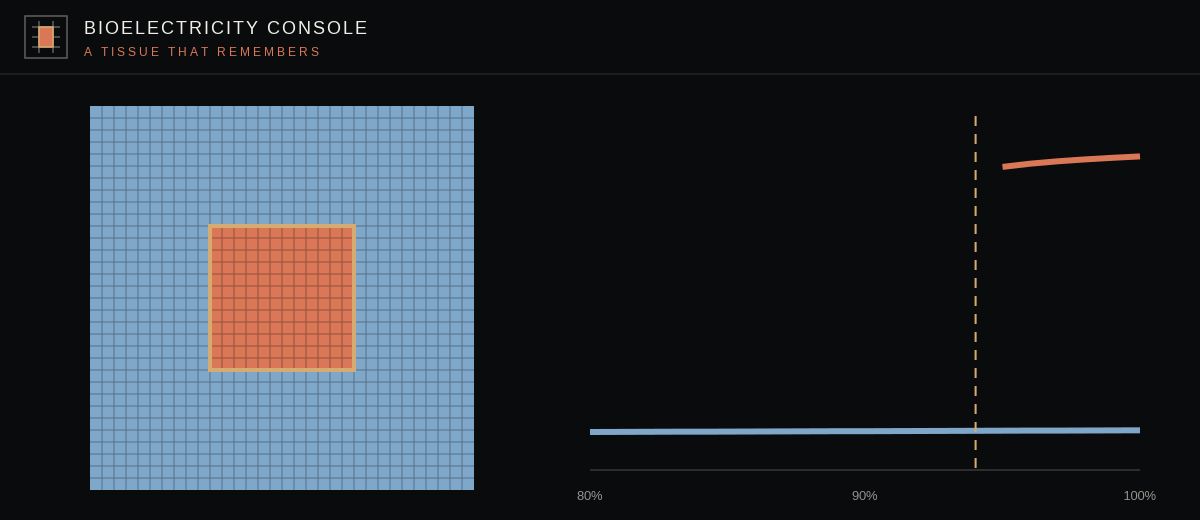
We keep this distinction explicit. bioelectrics does not implement Nordenstrom’s vascular-interstitial circuit hypothesis or clinical electrochemical tumor ablation. It models verifiable, cellular ion-flux electrodiffusion and differentiable inverse design for somatic voltage patterns. Readers can explore coupled somatic voltage domains in our Bioelectricity Console or inspect the library below.

Strengths and Limits of Biologically Closed Electric Circuits
Biologically Closed Electric Circuits is historically interesting as the work of a senior clinical radiologist who refused to ignore anomalous electrical signatures in human disease and documented his measurements in meticulous detail. Its limits are equally clear. Overextended physiological analogies and a lack of molecular ion-channel controls kept the VICC model outside mainstream physiology, even as cancer bioelectricity later matured along a different, cellular-membrane path. Read critically, the book is a valuable primary source for understanding both the promise and the pitfalls of clinical bioelectricity. Browse our Bioelectricity apparel collection below to support open research.
Bioelectricity
Planaria, axolotls and the voltage patterns that tell cells what to build. Every order funds the research.
-
 Planaria - Bioelectricity T-Shirt
From $23.99
-
 Planaria - Bioelectricity T-shirt | Small Chest Logo
From $23.99
-
 Axolotl - Bioelectricity T-Shirt
From $24.99
-
 Axolotl - Bioelectricity T-shirt | Small Chest Logo
From $23.99
-
 Cognition - Bioelectricity T-Shirt
From $23.99
-
 Cognition Bioelectricity T-shirt | Small Chest Logo
From $23.99