
Michael J. Apter Cybernetics and Development and Embryonic Computation
Cybernetics and Development
Michael J. Apter's 1966 monograph Cybernetics and Development applies automata theory, feedback loops, and information theory to embryonic morphogenesis and regeneration.
Buy on amazon.com As an Amazon Associate I earn from qualifying purchases.
Long before developmental biologists routinely described tissues as computational networks, British psychologist and cyberneticist Michael J. Apter asked a direct engineering question about embryos. How can a single fertilized egg construct a complex three-dimensional body, monitor its own proportions, and repair surgical damage using only local cellular rules and feedback loops? Following his 1965 paper with Lewis Wolpert in the Journal of Theoretical Biology, Apter published Cybernetics and Development (Pergamon Press, 1966, ISBN 0080114318), the first book-length synthesis applying cybernetics, information theory, and John von Neumann’s automata theory to embryonic development.
Indexed in our Bioelectricity hub and AI Consciousness Books guide, Cybernetics and Development is the direct conceptual ancestor of modern basal cognition and Michael Levin’s TAME framework, linking early systems thinking to the race to define AI consciousness.
Embryos as Self-Regulating Cybernetic Systems
Apter wrote during the height of first-wave cybernetics, drawing on Norbert Wiener, W. Ross Ashby, Alan Turing, and John von Neumann. Rather than treating the genome as a miniature photograph of the adult organism, Apter and Wolpert argued that DNA acts more like a compact algorithmic program whose instructions unfold dynamically through cell-to-cell signaling and negative feedback.
| Cybernetic Concept in Apter (1966) | Classical Engineering Example | Embryological Counterpart | Modern Bioelectric Connection |
|---|---|---|---|
| Negative feedback and homeostasis | Thermostat maintaining target temperature | Embryonic regulation restoring proportions after bisection | Anatomical homeostasis guided by resting V_mem setpoints |
| Self-reproducing cellular automata | Von Neumann’s universal constructor | Dividing cells executing local state-transition rules | Coupled somatic cells updating state via gap junctions |
| Information compression in programs | Short algorithm generating a complex geometric structure | Compact genome producing an adult body plan | Bioelectric prepatterns storing coarse-grained anatomical targets |
| Error correction and reliability | Redundant circuits tolerating component failure | Regeneration of missing limbs or organs | Rewriting target morphology after physiological perturbation |
Apter dedicated full chapters to how growing networks of cells avoid catastrophic error accumulation, how pattern formation scales across changing embryo sizes, and how homeostatic feedback loops explain why a sea urchin embryo split in half develops into two smaller, complete larvae rather than two half-larvae. Paired with Hans Meinhardt’s reaction-diffusion models and Brian Goodwin’s morphogenetic fields, Apter’s book gave developmental biology the formal language of control theory.
From 1966 Cybernetics to Modern Basal Cognition
For decades, Cybernetics and Development sat largely outside mainstream molecular embryology because 1960s biologists could not yet observe the physical signals carrying feedback information between developing cells. Today, developmental bioelectricity supplies the missing physical layer.
When E. J. Lund, Richard Nuccitelli, and Richard B. Borgens measured steady ionic currents across embryos and regenerating stumps, they were recording the physical feedback channels that Apter’s abstract automata required. In the twenty-first century, Michael Levin’s laboratory explicitly frames morphogenesis as a cybernetic error-minimization loop operating in anatomical morphospace, where bioelectric prepatterns encode the setpoint and cellular collectives act as the effectors. Apter’s 1966 monograph anticipates that exact synthesis nearly sixty years early.
What Cybernetics and Development Tells Us About Consciousness
Apter’s cybernetic bridge between engineering and embryology goes straight to the heart of consciousness as an emergent property. If goal-directed feedback, error detection, and distributed problem-solving operate inside developing embryos without a single neuron, then the boundary between biological morphogenesis and cognitive architecture is far more continuous than classical neuroscience assumed.
This insight underpins Rouleau and Levin’s mapping of consciousness theories onto unconventional embodiments. Major theories of consciousness rely on functional properties such as recurrent feedback, global integration, and information broadcast, all of which can be analyzed formally in cybernetic terms without naming carbon neurons in their definitions. Strict facts discipline still applies. Demonstrating that an embryo executes homeostatic feedback loops establishes goal-directed cybernetic control; it does not prove that a developing blastula possesses subjective experience.
Comparison to The Consciousness AI and bioelectrics
Apter could only sketch paper-and-pencil automata models of cellular feedback in 1966. Our open-source PyTorch library bioelectrics (pip install bioelectrics, MIT licence, Zenodo DOI 10.5281/zenodo.23531183) turns that cybernetic vision into differentiable biophysical code for somatic tissues.
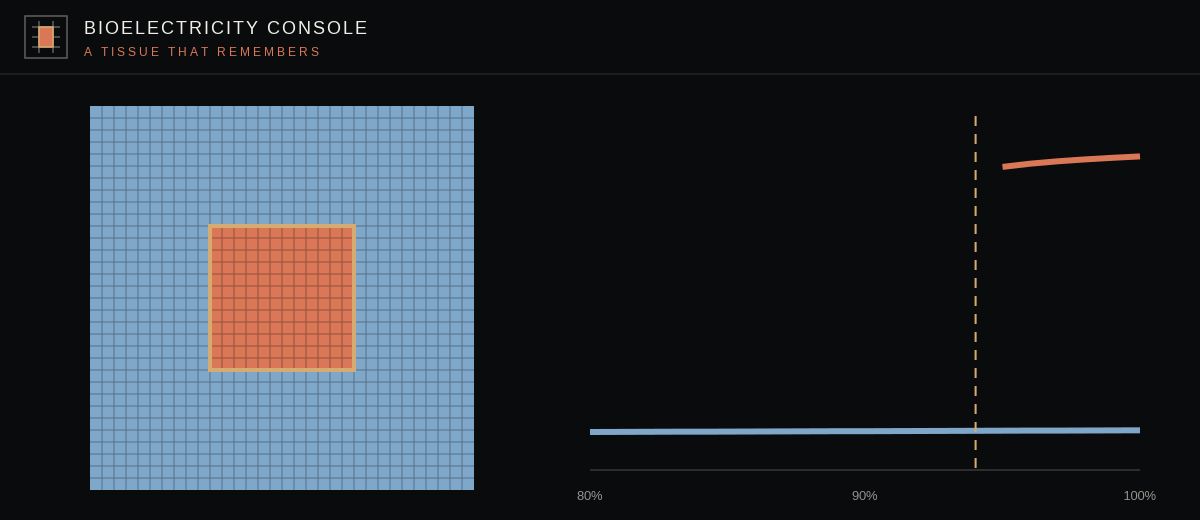
In bioelectrics, cells are coupled through explicit ion channels, pumps, and voltage-gated gap junctions, forming a physical feedback network whose steady states act as bioelectric setpoints. Because every state variable carries a gradient, researchers can directly solve the control-theory question Apter posed in 1966, finding which realizable perturbation drives a tissue into a desired spatial pattern. Its scope remains focused on ion-level somatic electrodiffusion rather than discrete symbolic automata or full genetic regulatory networks. Explore bistable voltage domains in our Bioelectricity Console or inspect the library below.

Strengths and Limits of Cybernetics and Development
Cybernetics and Development is remarkably prescient in treating morphogenesis as distributed information processing and feedback control rather than passive chemical assembly. Its limitations reflect 1960s biology. Apter had almost no molecular data on ion channels, signaling pathways, or gene regulatory networks, so his models remain abstract compared to modern biophysical simulators. Read today alongside contemporary developmental bioelectricity, the book stands as a clear intellectual bridge connecting early cybernetics to non-neural cognition. Browse our Bioelectricity apparel collection below to support open research.
Bioelectricity
Planaria, axolotls and the voltage patterns that tell cells what to build. Every order funds the research.
-
 Planaria - Bioelectricity T-Shirt
From $23.99
-
 Planaria - Bioelectricity T-shirt | Small Chest Logo
From $23.99
-
 Axolotl - Bioelectricity T-Shirt
From $24.99
-
 Axolotl - Bioelectricity T-shirt | Small Chest Logo
From $23.99
-
 Cognition - Bioelectricity T-Shirt
From $23.99
-
 Cognition Bioelectricity T-shirt | Small Chest Logo
From $23.99