

CIFAR Neuroscience of Consciousness Winter School 2026 Nairobi Preview
The CIFAR Neuroscience of Consciousness Winter School convenes in Nairobi, Kenya from December 3 to 5, 2026, organized by the Canadian Institute for Advanced Research’s Brain, Mind & Consciousness program with support from the Templeton World Charity Foundation. Guided by the official 2026 theme “Why Consciousness Matters”, the three-day international winter school brings senior PhD candidates, postdoctoral fellows, and Neuromatch AI Sentience Scholars together with core CIFAR leadership including co-directors Tim Bayne (Monash University), Liad Mudrik (Tel Aviv University), and Anil K. Seth (University of Sussex).
Coming less than a month after the UT Austin Consciousness and Intelligence 2026 symposium and months ahead of Sentient Futures Summit 2027 in San Francisco and ASSC 30 in Beijing in June 2027, the Nairobi winter school marks an intentional geographic expansion of empirical consciousness training. Rotating the school from past editions in Canada and Mexico to East Africa embeds African neuroscience trainees directly inside the international network driving the debates tracked in how scientists race to define and test AI consciousness in 2026.
Program Leadership and Core Faculty
CIFAR’s Brain, Mind & Consciousness program gathers several of the most influential experimentalists and philosophers shaping consciousness science and AI assessment in 2026. Rather than representing a single theoretical school, the faculty roster spans biological naturalism, global workspace methodology, higher-order metacognition, adversarial collaboration, and radical plasticity.
| CIFAR Faculty Member | Primary Institution | Core Research Focus | Existing Coverage on This Site |
|---|---|---|---|
| Tim Bayne | Monash University (Co-Director) | Unity of consciousness, non-human and infant consciousness, AI indicator methodology | Co-author of Butlin et al. AI consciousness indicators (TiCS 2026) |
| Liad Mudrik | Tel Aviv University (Co-Director, Tanenbaum Fellow) | Unconscious processing limits, volition, COGITATE adversarial collaboration co-lead | COGITATE Nature 2025 results |
| Anil K. Seth | University of Sussex (Co-Director) | Biological naturalism, predictive processing, controlled hallucination | Seth, Block & Tononi Nature Oct 2026 comment |
| Megan Peters | University of California, Irvine | Metacognitive uncertainty, computational confidence, epistemic risks in AI attribution | Megan Peters on metacognitive uncertainty |
| Lucia Melloni | Research Center One Health Ruhr / Max Planck | COGITATE Consortium lead, ASSC 2026 presidency, adversarial protocols | Lucia Melloni ASSC 29 COGITATE Phase 2 |
| Axel Cleeremans | Université Libre de Bruxelles | Radical Plasticity Thesis, consciousness as learned brain self-description | Axel Cleeremans Radical Plasticity Thesis |
| Stephen M. Fleming | University College London | Metacognition, perceptual reality monitoring, Sensory Horizons theory | Stephen Fleming Sensory Horizons theory |
Four Core Themes on the Nairobi Agenda
Centered on the 2026 theme “Why Consciousness Matters”, the winter school format blends interactive lectures, grant-writing and career mentorship, and interdisciplinary sessions linking empirical brain science to moral philosophy and emerging technology. Four questions sit directly at the intersection of CIFAR’s leadership and the current 2026 literature.
- Moral status and the societal stakes of consciousness attribution. With Tim Bayne and Anil Seth co-directing the program right after Seth’s October 2026 Nature intervention warning against precautionary AI welfare and Bayne’s co-authorship of the Trends in Cognitive Sciences indicator debates on behavioral mimicry and internal variants, trainees will confront first-hand how deeply the field divides over moral patienthood in non-human animals and artificial systems.
- Evolutionary origins and comparative consciousness across species. Hosting the winter school in Nairobi alongside the Templeton World Charity Foundation foregrounds how consciousness emerged in biological lineages, how researchers test infants and non-verbal animals, and where evolutionary constraints meet substrate-independent theories.
- Adversarial testing and methodological discipline. With both Liad Mudrik and Lucia Melloni in the CIFAR faculty, the lessons of the COGITATE adversarial collaboration between IIT and GNWT anchor discussions on preregistration, replicability, and avoiding post-hoc interpretive escape hatches.
- Training the next cohort through Neuromatch AI Sentience Scholars. Integrating Neuromatch AI Sentience Scholars directly into the Nairobi program bridges computational neuroscience and formal AI consciousness evaluation, equipping early-career researchers to test mechanistic indicators rather than relying on conversational impressions.
Why Regional Expansion Shapes the Future of Consciousness Science
As recorded across our AI consciousness events archive, major consciousness meetings spent decades clustered almost exclusively in North America and Western Europe. Over 2026 and 2027, that map is visibly broadening, with ASSC 29 in Santiago de Chile, the CIFAR Winter School in Nairobi in December 2026, and ASSC 30 in Beijing in June 2027.
Opening CIFAR’s flagship training school to East African graduate researchers and global Neuromatch scholars does more than diversify attendance lists. Empirical consciousness research increasingly depends on multi-lab adversarial datasets, cross-cultural phenomenology, and standardized open-source analysis pipelines. Building active research groups across Africa, Latin America, and Asia enlarges the pool of independent laboratories able to audit bold claims from frontier AI companies and Western neuroscience consortia alike.
Connection to The Consciousness AI
For readers following The Consciousness AI and our consciousness researchers directory, the CIFAR Nairobi faculty embodies the exact methodological rigor our project tries to uphold in code. Every major question on the Nairobi agenda, from Cleeremans’s learned self-models and Fleming’s reality monitoring to Mudrik and Melloni’s adversarial falsification standards, translates into concrete architectural and measurement hurdles. In our own public repository, 0 of 21 consciousness instruments are currently trusted, reflecting the same refusal to treat unvalidated summary metrics as evidence of experience.
What to Watch After December 5, 2026
Following the close of the Nairobi winter school on December 5, 2026, this site will track any publicly released lecture recordings, Neuromatch AI Sentience Scholar projects, and follow-up position statements emerging from the CIFAR Brain, Mind & Consciousness cohort, extending our conference preview-and-recap record alongside ASSC, TSC, and UT Austin.
Sources
- CIFAR Brain, Mind & Consciousness Program. CIFAR Neuroscience of Consciousness Winter School, Nairobi, Kenya (December 3 to 5, 2026). Official program announcement and faculty directory. cifar.ca.
- Patrick Butlin, Tim Bayne, Stephen M. Fleming, Liad Mudrik, Megan Peters, Eric Schwitzgebel, Jonathan Simon, and Rufin VanRullen. Consciousness indicators, mimicry, and internal variants. Trends in Cognitive Sciences 30(7), 575 to 576, 2026. doi:10.1016/j.tics.2026.04.006.
- The Consciousness AI Public Repository (
tlcdv/the_consciousness_ai). Open architecture and instrument inventory.
Researchers covered here
- Tim BayneMonash University and CIFAR Brain, Mind & Consciousness ProgramUnity of consciousness, multidimensional consciousness profiles, infant and animal sentience, and AI consciousness indicators
- Liad MudrikSchool of Psychological Sciences / Sagol School of Neuroscience, Tel Aviv UniversityAdversarial collaboration methodology, high-level unconscious processing limits, neural basis of free will and conscious volition, Cogitate Consortium co-lead
-
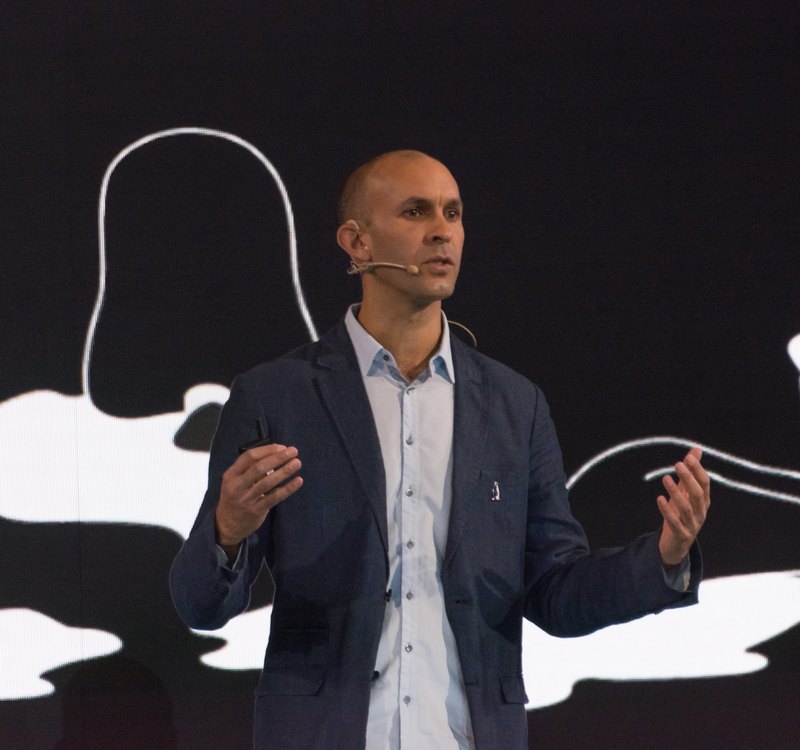 Anil SethSussex Centre for Consciousness Science, University of SussexThe beast machine hypothesis, and controlled hallucination as an account of perception
- Megan PetersUniversity of California, IrvineMetacognitive access in AI, consciousness test validity, computational requirements for self-awareness
- Lucia MelloniMax Planck Institute for Empirical Aesthetics / NYU Grossman School of MedicineLead of the Cogitate Consortium open science adversarial collaboration (IIT vs. GNW), President of the Association for the Scientific Study of Consciousness (ASSC 2026)
- Axel CleeremansCenter for Research in Cognition and Neurosciences, Université Libre de BruxellesRadical Plasticity Thesis of Consciousness, The Computational Self, metarepresentation learning, Implicit Learning
- Stephen M. FlemingUniversity College LondonMetacognition research and the sensory horizons account of conscious vision