

Axel Cleeremans
Center for Research in Cognition and Neurosciences, Université Libre de Bruxelles
Functionalist What matters is the organisation of the processing, not the material
Axel Cleeremans is Professor of Cognitive Science and Director of the Center for Research in Cognition and Neurosciences at the Université Libre de Bruxelles (ULB), as well as a Research Director at the Belgian National Fund for Scientific Research (FNRS). He is a past President of the Association for the Scientific Study of Consciousness (ASSC).
Cleeremans is the author of the Radical Plasticity Thesis of consciousness. In papers such as “The Radical Plasticity Thesis, How the Brain Learns to be Conscious” (2011) and The Computational Self, he argues that consciousness is an active, learned process developed through continuous self-observation. The brain continuously observes its own internal activity and develops implicit second-order metarepresentations that predict and redescribe first-order sensory states.
Under Cleeremans’s paradigm, machine consciousness is fully achievable through artificial neural networks, provided the architecture incorporates self-supervised metarepresentation mechanisms that continuously learn and model the system’s own latent representations.
Known for. Radical Plasticity Thesis of Consciousness, The Computational Self, metarepresentation learning, Implicit Learning
Coverage on this site
Research Papers and Preprints
Keynotes and Event Talks
Related researchers
- Tim BayneMonash University and CIFAR Brain, Mind & Consciousness ProgramUnity of consciousness, multidimensional consciousness profiles, infant and animal sentience, and AI consciousness indicators
- Liad MudrikSchool of Psychological Sciences / Sagol School of Neuroscience, Tel Aviv UniversityAdversarial collaboration methodology, high-level unconscious processing limits, neural basis of free will and conscious volition, Cogitate Consortium co-lead
-
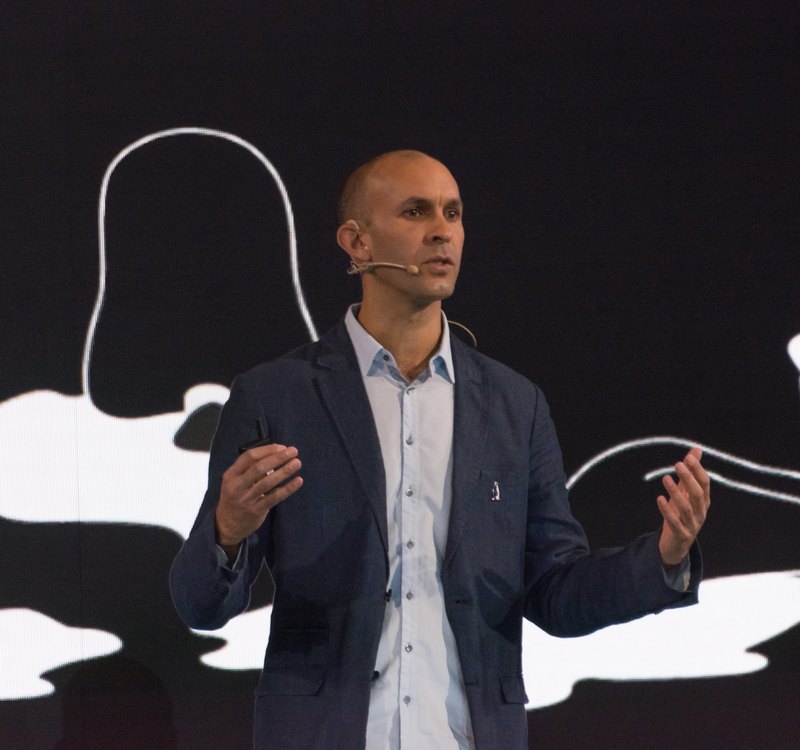 Anil SethSussex Centre for Consciousness Science, University of SussexThe beast machine hypothesis, and controlled hallucination as an account of perception
- Megan PetersUniversity of California, IrvineMetacognitive access in AI, consciousness test validity, computational requirements for self-awareness
- Lucia MelloniMax Planck Institute for Empirical Aesthetics / NYU Grossman School of MedicineLead of the Cogitate Consortium open science adversarial collaboration (IIT vs. GNW), President of the Association for the Scientific Study of Consciousness (ASSC 2026)
- Stephen M. FlemingUniversity College LondonMetacognition research and the sensory horizons account of conscious vision
Axel Cleeremans is listed with the other functionalists and computationalists, who hold that what matters is the organisation of the processing, not the material. The theory family behind that position is set out in the index of consciousness theories. Every researcher covered on this site is indexed in the directory of consciousness researchers.