

Stephen M. Fleming
University College London
Functionalist What matters is the organisation of the processing, not the material
Stephen M. Fleming directs the Metacognition Lab at University College London, where his work spans confidence, self-monitoring, and the computational structure of introspection. With Matthias Michel, he proposed that conscious vision cannot be for guiding immediate action, since postdictive effects show windows of unconscious integration lasting up to 400 milliseconds, far slower than the timescales real-time motor control requires. Instead, Fleming and Michel trace the function of conscious vision to offline cognition, model-based planning that does not need to keep pace with the world in real time.
Their account ties this function to evolutionary history. The water-to-land transition expanded the sensory horizon available to terrestrial animals, since vision on land reaches much further than underwater sight, and that expanded horizon rewarded internal simulation and planning over immediate reaction. Fleming and Michel connect the resulting pressure to the evolution of reality monitoring, the capacity to determine whether an internal signal reflects the external world or the system’s own endogenous activity, a capacity central to higher-order theories of consciousness. Their 2026 response to commentaries in Behavioral and Brain Sciences extended the account to aquatic organisms and other sensory modalities, defending the claim that sensory horizons meaningfully constrain when and why conscious vision should be expected to appear.
The account gives AI consciousness research an unusual empirical foothold. If reality monitoring, not perception speed, is what consciousness is for, then the relevant question for an artificial system is not how quickly it reacts but whether its architecture needs to distinguish self-generated from externally caused signals in order to plan. Fleming has not extended the sensory horizons argument to artificial systems in print, but the logic of reality monitoring maps directly onto planning architectures that must decide whether a given internal state was predicted, simulated, or actually observed.
Known for. Metacognition research and the sensory horizons account of conscious vision
Coverage on this site
Related researchers
- Matthias MichelNew York University Center for Mind, Brain and ConsciousnessPhilosophy of perception and co-author of the sensory horizons account of conscious vision
- Hedayat AbedijooACE Conscious Studio / IndependentACE.await (2026), the ACE decision framework (Agency, Connection, Exchange)
-
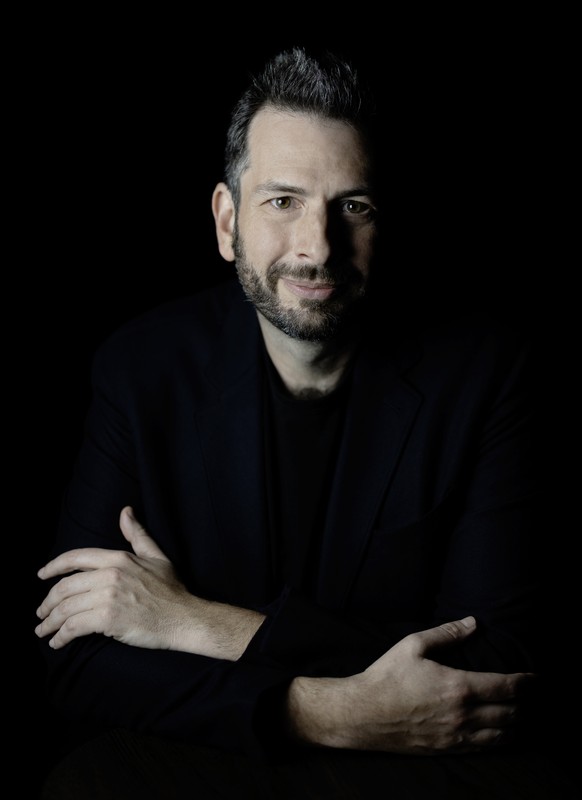 Blaise Agüera y ArcasGoogle VP and Fellow, CTO of Technology & SocietyComputational functionalism, active inference, on-device neural computing, What Is Intelligence? (2025), and Who Are We Now? (2023)
- Igor AleksanderImperial College LondonAxiomatic Consciousness Theory, neural state machines, The World in My Mind, pioneering neural network engineering
-
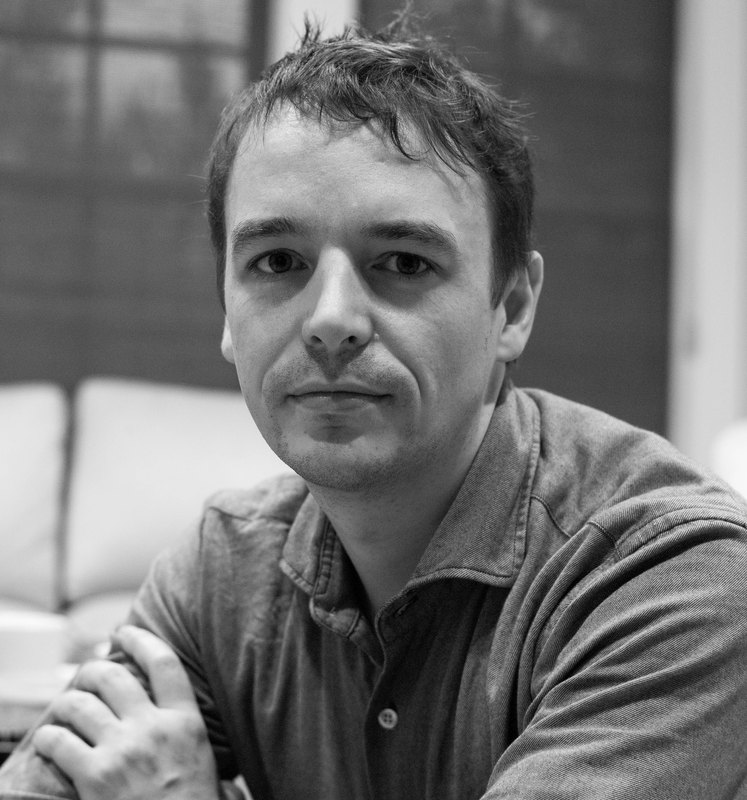 Joscha BachCalifornia Institute for Machine ConsciousnessThe machine consciousness hypothesis, cyber animism, and MicroPsi
- Talis BachmannUniversity of TartuAttention-awareness theory, the preactivation hypothesis for conscious perception, masking and the microgenesis of awareness, perception without awareness
Stephen M. Fleming is listed with the other functionalists and computationalists, who hold that what matters is the organisation of the processing, not the material. The theory family behind that position is set out in the index of consciousness theories. Every researcher covered on this site is indexed in the directory of consciousness researchers.