D'Arcy Wentworth Thompson On Growth and Form and Physical Constraints on Living Minds
On Growth and Form
D'Arcy Wentworth Thompson's On Growth and Form showed how physical forces and mathematical laws shape living anatomy, laying a foundation for bioelectricity and morphogenesis.
Buy on amazon.com As an Amazon Associate I earn from qualifying purchases.
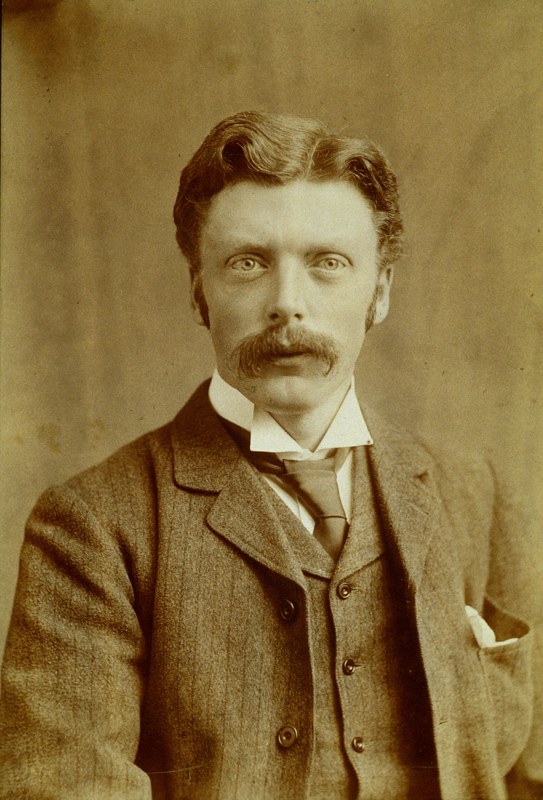
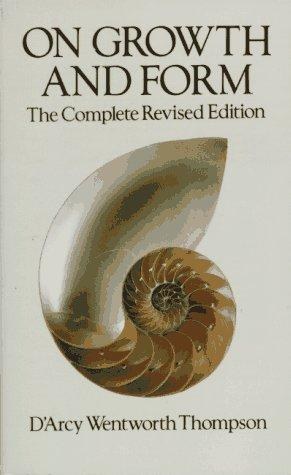
When biologists explain why a shell spirals, why cells pack into hexagons, or why a skeleton carries load along curved trabeculae, they usually point to genes and natural selection. In On Growth and Form (originally published by Cambridge University Press in 1917, expanded in 1942, Dover Complete Revised Edition ISBN 0486671356), Scottish biologist and mathematician D’Arcy Wentworth Thompson argued that natural selection is only half the story. Living organisms are physical bodies first, and the laws of surface tension, diffusion, mechanical stress, and electrical equilibrium do a vast share of the morphological work for free.
Indexed in our Bioelectricity hub and AI Consciousness Books guide, On Growth and Form sits at the headwaters of developmental bioelectricity and mathematical biology. It is one of the foundational historical monographs linking classical morphology to modern work on non-neural computation and how scientists define consciousness across physical substrates.
Physical Forces as Biological Computation
Thompson’s central argument is straightforward. Genes do not need to store a geometric blueprint for every hexagonal cell wall or every logarithmic spiral in a mollusk shell, because soap films, liquid droplets, and stressed elastic media automatically settle into minimal-energy configurations. Living systems use those physical attractors by tuning local material parameters rather than micromanaging every coordinate.
| Biological Phenomenon | Standard Gene-Centric Reading | Thompson’s Physical-Law Reading | Modern Bioelectric Parallel |
|---|---|---|---|
| Cell packing in epithelia | Genetic instructions specify polygon angles | Surface tension minimizes interfacial area (Plateau’s laws) | Voltage-gated gap junctions self-segregate bistable V_mem domains |
| Skeletal trabeculae | Separate genes encode each bone strut | Bone remodeling follows principal mechanical stress trajectories | Ionic injury currents direct bone fracture repair and remodeling |
| Body-plan transformations | Independent mutations alter each organ | Smooth mathematical coordinate deformations transform whole forms | Shifting global bioelectric prepatterns rescales whole anatomical layouts |
| Single-cell polarity | Localized transcription alone sets axes | Diffusion and physical symmetry breaking establish gradients | Endogenous transcellular ion currents polarize eggs and embryos |
In his famous final chapter on the Theory of Transformations, Thompson drew Cartesian grids over skulls, fish bodies, and crab carapaces, showing that closely related species map onto one another through smooth geometric shears and dilations. That observation anticipated modern systems biology by demonstrating that biological form behaves as a coupled global field rather than a bag of independent parts.
From On Growth and Form to Developmental Bioelectricity
Thompson wrote before DNA was discovered and before non-invasive ion probes existed, yet his structuralist principle directly shaped twentieth-century bioelectricity. As traced in the forgotten century of bioelectricity from E. J. Lund and Harold Saxton Burr to Michael Levin, researchers such as E. J. Lund and Joseph Needham extended Thompson’s physical-forces framework from mechanics and surface tension into electrical and chemical fields.
Modern developmental bioelectricity generalizes Thompson’s insight one step further. In Michael Levin’s cognitive light cone framework and Santosh Manicka and Michael Levin’s 2026 topoiesis model, living tissues exploit diffusion boundaries, physical dish geometry, and resting membrane potentials (V_mem) as a physical medium for collective error correction. Evolution does not have to re-invent physics for every species. It tunes ion channels and coupling strengths so that physical dynamics converge on a viable body plan.
What On Growth and Form Tells Us About Consciousness
Thompson did not write about phenomenal experience or philosophy of mind, so it would be inaccurate to call On Growth and Form a theory of consciousness. Its relevance to consciousness science is structural and architectural.
First, it undercuts the assumption that complex biological organization must be encoded line by line in biochemistry. If physical laws and energy minimization supply global spatial order in tissues, then biological intelligence and nervous systems also inherit physical self-organization as a core computational substrate.
Second, Thompson’s framework strengthens substrate independence. When a pattern depends on mathematical constraints such as diffusion, coupling topology, and attractor stability rather than the specific atoms involved, the same functional organization can in principle arise in different physical media. That is the exact premise examined across our Bioelectricity hub and our broader research into consciousness as an emergent property of physical organization.
Comparison to The Consciousness AI and bioelectrics
Thompson’s insistence on deriving biological form from quantitative physical equations aligns directly with the engineering approach behind bioelectrics (pip install bioelectrics, MIT licence, Zenodo DOI 10.5281/zenodo.23531183), our open-source differentiable PyTorch engine for somatic bioelectricity. Rather than hard-coding anatomical rules, bioelectrics simulates ion-channel physics, pumps, and voltage-gated gap junctions so that persistent tissue patterns emerge directly from the underlying electrodiffusion equations and can be analyzed through their steady-state attractors.
Keeping facts discipline clear, bioelectrics models ionic tissue electrophysiology rather than mechanical shell growth or elastic stress tensors. What it shares with Thompson’s classic is the mathematical commitment to letting physical dynamics, rather than ad-hoc biological labels, explain how spatial order forms and persists.
Strengths and Limits of On Growth and Form
More than a century after its first edition, On Growth and Form remains one of the clearest demonstrations in scientific literature of how physics constrains biology, written in prose that is still readable without specialized training. Its main limitation is historical. Because Thompson rejected overly simplistic Darwinian storytelling in 1917, he underestimated how deeply molecular genetics, gene regulatory networks, and evolutionary history interact with physical forces. Read alongside modern bioelectric and developmental genetics research, however, his book supplies the half of biology that pure gene-centrism still misses. Every purchase from our Bioelectricity apparel range below helps fund our open-source research tools.
Bioelectricity
Planaria, axolotls and the voltage patterns that tell cells what to build. Every order funds the research.
-
 Planaria - Bioelectricity T-Shirt
From $23.99
-
 Planaria - Bioelectricity T-shirt | Small Chest Logo
From $23.99
-
 Axolotl - Bioelectricity T-Shirt
From $24.99
-
 Axolotl - Bioelectricity T-shirt | Small Chest Logo
From $23.99
-
 Cognition - Bioelectricity T-Shirt
From $23.99
-
 Cognition Bioelectricity T-shirt | Small Chest Logo
From $23.99