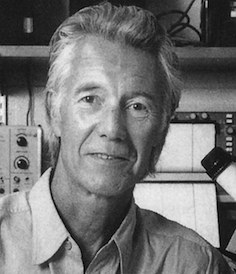
Brian Goodwin Development and Evolution and Morphogenetic Fields
Development and Evolution
Development and Evolution, edited by Brian Goodwin, Nigel Holder, and C. C. Wylie, argues that morphogenetic fields and developmental dynamics constrain evolutionary form.
Buy on amazon.com As an Amazon Associate I earn from qualifying purchases.
For decades after the Modern Synthesis, evolutionary biology treated the organism almost as a black box linking random genetic mutations to adult fitness. In Development and Evolution (Cambridge University Press, 1983, ISBN 052124949X, Sixth Symposium of the British Society for Developmental Biology), editors Brian Goodwin, Nigel Holder, and C. C. Wylie challenged that gene-centric picture. Alongside leading embryologists and theorists of the era, Goodwin argued that organisms are generated by lawful, self-organizing morphogenetic fields, and that evolution can only explore the repertoire of forms those physical developmental dynamics make stable.
Indexed in our Bioelectricity hub and AI Consciousness Books guide, Development and Evolution bridges D’Arcy Wentworth Thompson’s On Growth and Form and Joseph Needham’s Order and Life directly to contemporary evolutionary developmental biology and non-neural cognition, connecting to the race to define AI consciousness.
Process Structuralism Versus Pure Genetic Blueprinting
Goodwin’s central argument in the volume and his accompanying field-theoretic papers on the giant unicellular alga Acetabularia is straightforward. Genes specify the molecular components of a cell, such as enzymes, cytoskeletal filaments, and ion channels, yet genes do not contain a geometric coordinate map of a limb, leaf whorl, or embryo. Instead, those components assemble into excitable physical fields governed by mechanics, diffusion, and ionic gradients. Natural selection filters which field attractors persist in an environment, while generative physics determines which morphologies exist as options in the first place.
| Explanatory Framework | Primary Causal Unit | Role of the Genome | How Novel Form Arises |
|---|---|---|---|
| Classical Gene-Centric Neo-Darwinism | Individual alleles and gene frequencies | Direct blueprint specifying adult traits | Gradual accumulation of small random mutations |
| Process Structuralism (Goodwin, 1983) | Self-organizing morphogenetic fields | Parameterizes physical field properties | Bifurcations and transitions between stable field attractors |
| Modern Developmental Bioelectricity | Coupled ion-channel and gap-junction voltage networks | Encodes cellular hardware (channels, pumps, receptors) | Reprogramming physiological voltage attractors without mutating DNA |
Goodwin illustrated this principle using Acetabularia, a single-celled marine alga several centimeters tall that regenerates an intricate cap after amputation through coupled calcium-cytoskeletal field dynamics. Later chapters in Development and Evolution examine limb regeneration, segmentation, and homology, showing how conserved developmental pathways channel evolutionary variation into recurring anatomical patterns.
Why Goodwin’s Morphogenetic Fields Resurfaced in Bioelectricity
During the late 1980s and 1990s, molecular genetics eclipsed field theories because researchers could finally clone individual developmental genes such as Hox clusters. Yet cloning the parts list did not explain how thousands of cells coordinate large-scale target morphology or recover from radical perturbation.
Modern developmental bioelectricity brought Goodwin’s field concept back with concrete molecular mechanisms. When Michael Levin’s laboratory shifts resting voltage patterns in planaria to induce stable two-headed worms without changing a single base pair of DNA, or assembles frog skin cells into self-motile xenobots, it confirms Goodwin’s core claim that the genome specifies cellular hardware while physiological fields explore a much wider morphospace. Alongside Hans Meinhardt’s pattern-formation equations and Richard Nuccitelli’s ionic-current maps, Goodwin supplied the evolutionary rationale for why non-neural fields shape biology as a whole.
What Development and Evolution Tells Us About Consciousness
Goodwin’s insistence on relational wholes and generic dynamical laws speaks directly to consciousness as an emergent property. If biological form is not exhaustively written into DNA, then biological agency and cognition are not exhaustively written into one fixed neural recipe either. Living systems exploit generic physical attractors across scales, from single-celled ionic fields in Acetabularia to multicellular voltage networks and animal brains.
This perspective aligns with Michael Levin’s cognitive light cone and TAME framework and with Rouleau and Levin’s mapping of consciousness theories onto unconventional embodiments. If consciousness depends on relational dynamical organization rather than on a single evolutionary lineage of neurons, then developmental field theory offers a concrete precedent for how new levels of coherent agency emerge from physical laws. Strict facts discipline still holds. Goodwin’s structuralist fields explain morphological constraints and self-organization; they do not prove that developing embryos or algae possess phenomenal experience.
Comparison to The Consciousness AI and bioelectrics
A recurring criticism of 1980s morphogenetic field theory was that its field equations were hard to connect to testable, perturbable cellular hardware. Our open-source PyTorch library bioelectrics (pip install bioelectrics, MIT licence, Zenodo DOI 10.5281/zenodo.23531183) addresses that exact gap for somatic bioelectric fields.
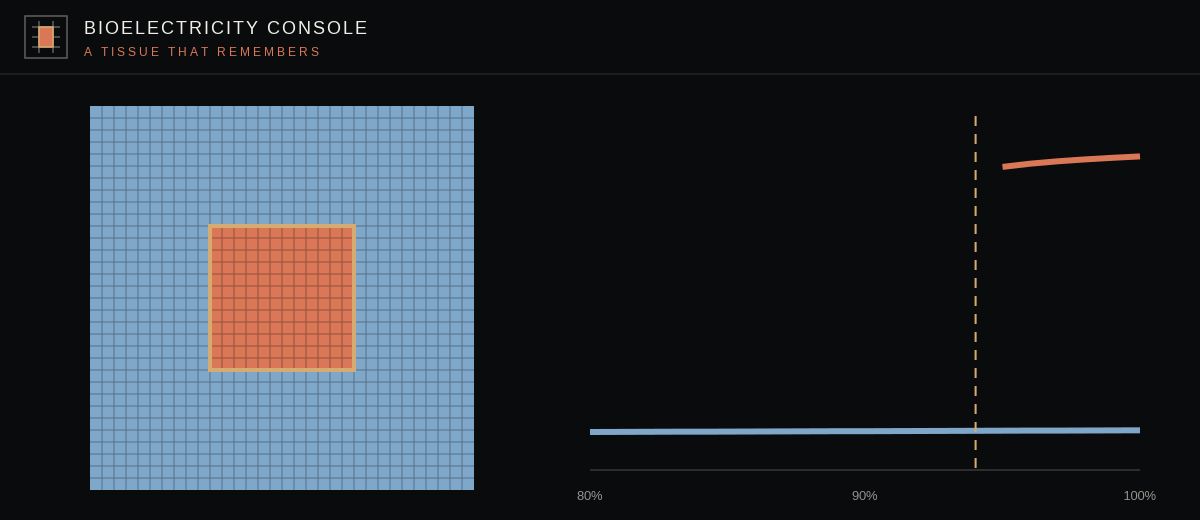
In bioelectrics, a tissue field is not an abstract postulate; it is the emergent spatial distribution of resting membrane voltages produced by explicit ion channels, pumps, and voltage-gated gap junctions. Because the engine is differentiable, researchers can inspect how changing a single cellular parameter shifts the tissue’s global attractor landscape, turning Goodwin’s conceptual morphospace into a concrete computational laboratory. Its scope stays strictly focused on ion-level somatic electrodiffusion rather than broader evolutionary population dynamics or cytoskeletal mechanics. Try the interactive tissue console or inspect the library below.

Strengths and Limits of Development and Evolution
Development and Evolution was years ahead of its time in insisting that evolutionary theory cannot ignore developmental dynamics, an argument that helped launch modern evo-devo. Its limitation is that Goodwin’s strongest anti-selectionist rhetoric sometimes understated how tightly natural selection tunes developmental parameters over deep time. Read today alongside molecular genetics and ion-channel biophysics, the volume offers a sharp corrective to naive genetic determinism and a clear conceptual bridge into modern bioelectricity. Browse our Bioelectricity apparel collection below to support open research.
Bioelectricity
Planaria, axolotls and the voltage patterns that tell cells what to build. Every order funds the research.
-
 Planaria - Bioelectricity T-Shirt
From $23.99
-
 Planaria - Bioelectricity T-shirt | Small Chest Logo
From $23.99
-
 Axolotl - Bioelectricity T-Shirt
From $24.99
-
 Axolotl - Bioelectricity T-shirt | Small Chest Logo
From $23.99
-
 Cognition - Bioelectricity T-Shirt
From $23.99
-
 Cognition Bioelectricity T-shirt | Small Chest Logo
From $23.99