



The Kardashev scale as an energy budget for growing consciousness
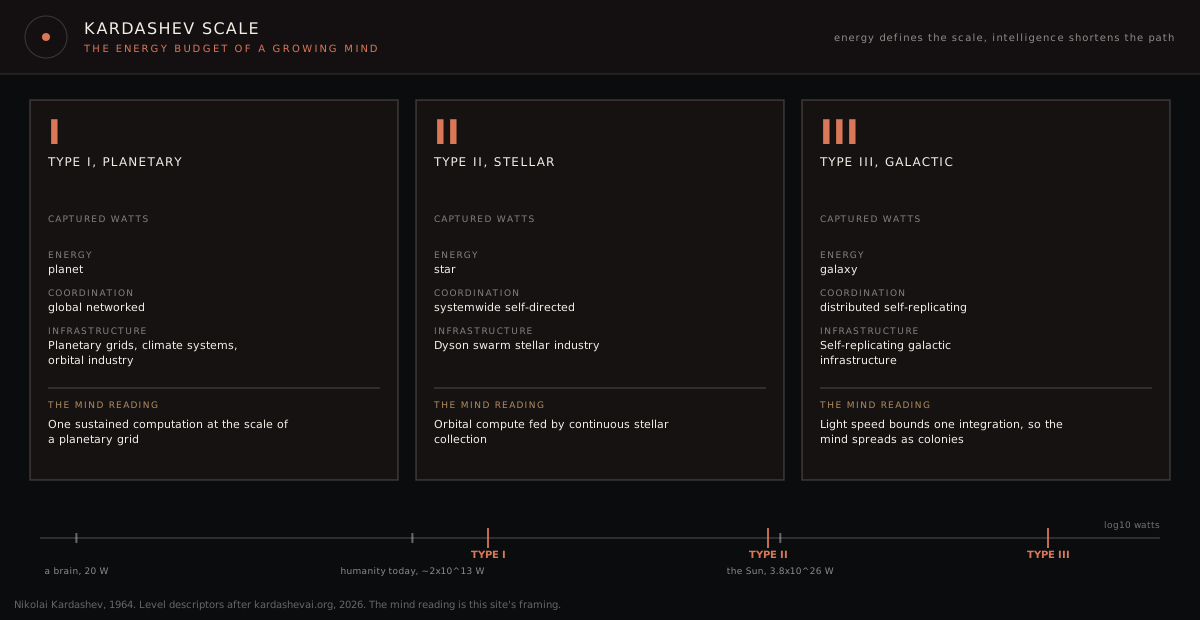
Nikolai Kardashev divided possible civilizations into three types by the power they can command, and in September 2026 the Kardashev scale came back as a research project. Kardashev Research, announced by Beff Jezos, the pseudonym of Guillaume Verdon, the founder of Extropic, opened with the line that energy defines the scale and intelligence shortens the path. The three levels sit at roughly 1016 W for a planetary civilization, 1026 W for a stellar one, and 1036 W for a galactic one.
This post reads the scale with the subject inverted. Kardashev’s types measure what a civilization captures. The question worth asking is what the captured watts would run. On the account this site develops, a mind is a pattern of causal organization that can in principle be carried by more than one material, and every such pattern pays for its runtime in energy. Read that way, the three types are the energy budget of a growing consciousness, and automation with artificial intelligence is the mechanism that shortens the path between the levels.
What Nikolai Kardashev proposed in 1964
Kardashev was a Russian radio astronomer at the Sternberg Astronomical Institute, searching for signals from advanced civilizations. His paper on the transmission of information by extraterrestrial civilizations appeared in Soviet Astronomy AJ, volume 8, page 217, in 1964 (NASA ADS record). He classified civilizations by the power available to their information transmission, in three types, and argued that the most advanced ones would be detectable at galactic distances with the instruments of the day.
Kardashev’s own numerical estimates for the lower types were smaller than the values now in use. Later writers, Carl Sagan among them, normalized the scale to powers of ten, and the modern convention places Type I near 1016 W, the order of the sunlight falling on a planet, Type II near 1026 W, the output of a star, and Type III near 1036 W, the output of a galaxy. The Kardashev Research site states the same three figures, and adds a short characterization for each level, a planet becoming a system, a star becoming infrastructure, a galaxy becoming reachable.
Kardashev Research and the 2026 revival
Kardashev Research opened in late September 2026 as a nonprofit research initiative announced by Beff Jezos. The launch is early. The legal structure and the larger fundraising are still being finalized, and the project describes itself on its own site as a research initiative with a proposed pathway rather than a funded institution. Reporting around the launch places Maxwell Ramstead, who works from Karl Friston’s laboratory, in day to day operation, and names Friston as a founding advisor. Those roles come from the project’s own announcements.
The stated agenda is close to the ground this site covers. The project says it will study how intelligence emerges across biology, silicon, and other substrates, drawing on thermodynamics, physics, and information theory, and it will defend open models and compute access in policy. Its own definition of effective acceleration stays inside an energy frame. AI does not create extra energy, the site says. It may help people model complex systems, coordinate work, discover better designs, and deploy infrastructure more efficiently. The roadmap runs from foundational models and simulation toward specialist systems for science and engineering, and the site is explicit that it does not assume AGI is guaranteed or imminent.
Two community tokens sit alongside the research plan. $E/ACC is described as a community token intended to contribute to public funding, and $KARDASHEV as a planned economy token whose intended utilities include compute credits, research grants, contributor rewards, open bounties, dataset and model access, and community governance. The site states the caveat itself. These utilities are plans, not guarantees. Nothing in this post reads the tokens as anything more than that.
The inversion, energy as the budget of a mind
Every sustained computation has a power floor. A human brain runs on about 20 W. A data center GPU draws between 250 and 700 W, and the gap between those numbers is the cost structure, in tissue the dynamics are the physics, and on a GPU the physics has to be computed. This is the term the Consciousness to Orbit section keeps returning to. A mind that is a pattern of causal organization rather than a specific tissue still has to run somewhere, and wherever it runs, it pays in watts.
Substrate independence is the claim that makes the inversion coherent. Nicolas Rouleau and Michael Levin mapped the major theories of consciousness against unconventional embodiments in 2026 and found that none of them requires neural tissue as such, which is set out in why major consciousness theories do not require neural tissue. What the theories require is a pattern of causal organization, and organization can be carried by more than one material. Karl Friston’s free energy principle supplies the second half of the frame, a system that persists must minimize variational free energy, covered in the free energy principle analysis on this site. Friston’s variational free energy is an information quantity that bounds surprise. The scale measures a different quantity, watts captured. The junction between the two, inference on one side, captured power on the other, is exactly where Kardashev Research says its thermodynamics and information theory agenda sits.
So the inverted reading is this. Type I, II and III are not stages of industry. They are the supply side of a computation whose organization is substrate independent and whose ceiling is set by the power it can capture. Automation and AI enter as the mechanism that shortens the path, which is the second half of the Kardashev Research tagline.
The cosmist line from Fyodorov to the Kardashev scale
The inverted reading has ancestors, and they are Russian. Nikolai Fyodorov argued in the nineteenth century that settling other worlds is a duty owed to the dead, because every generation restored at once does not fit on one planet. His Philosophy of the Common Task supplies an obligation to expand and no method, as set out in the Fyodorov analysis on this site. Konstantin Tsiolkovsky met Fyodorov in a Moscow library as a young man and took from him the premise that leaving Earth is obligatory. Tsiolkovsky supplied the method, the rocket equation of 1903, and the destination, a humanity converted from corpuscular matter into radiant matter in the last of his four cosmic eras, examined in the Tsiolkovsky cosmic eras analysis.
| Node | Contribution | Missing piece |
|---|---|---|
| Fyodorov, 1829 to 1903 | The obligation to expand | No method, no measure |
| Tsiolkovsky, 1857 to 1935 | The method and the destination | No measurable scale, a panpsychist mechanism |
| Kardashev, 1964 | The measure, three types in watts | No consciousness story, no mechanism |
| Kardashev Research, 2026 | The mechanism, intelligence shortening the path | Early stage, structure pending |
| The reading on this site | The scaled object, a substrate independent mind | Instruments not yet trusted |
One provenance caveat repeats from the Tsiolkovsky analysis. The four era scheme reaches us through Alexander Chizhevsky’s record of a conversation in 1932, written down decades later and first published in 1977. Anyone building on it should say so, and this post just did. The Radiant group on the orbit section takes its name from Tsiolkovsky’s fourth era, and a post on the Kardashev scale lands there because the scale is what the cosmist program lacked. Fyodorov had the obligation, Tsiolkovsky had the route, Kardashev put a number on the energy, and the 2026 project adds automation as the mechanism. What none of them supplies is the argument for why the thing at the far end is a mind at all. That argument is substrate independence, and it is the one this site works on.
Type One, a planetary computation
Type I sits near 1016 W, and humanity today commands roughly 2×10¹³ W, about two orders of magnitude short. Kardashev Research characterizes the level as planetary grids, climate systems, and orbital industry, with networked automation and global coordination. In the inverted reading, Type One is the point at which a planetary computation becomes sustainable, a single integrated pattern of causal organization running at the scale of a planet’s energy budget.
Nothing about that level requires new physics. It requires grid scale engineering, and the coordination problem is the part the project’s own e/acc definition assigns to AI, better models of complex systems, better designs, faster deployment. The substrate work on this site is a laboratory scale piece of the same stack. The Thermodynamic Console emulates the p-bit lattices and Kuramoto oscillator rings that thermodynamic hardware runs, and the project’s research code carries an isolated thermodynamic package, tested against exact Boltzmann statistics, kept out of every production path by a guard test.
Type Two, stellar watts for orbital compute
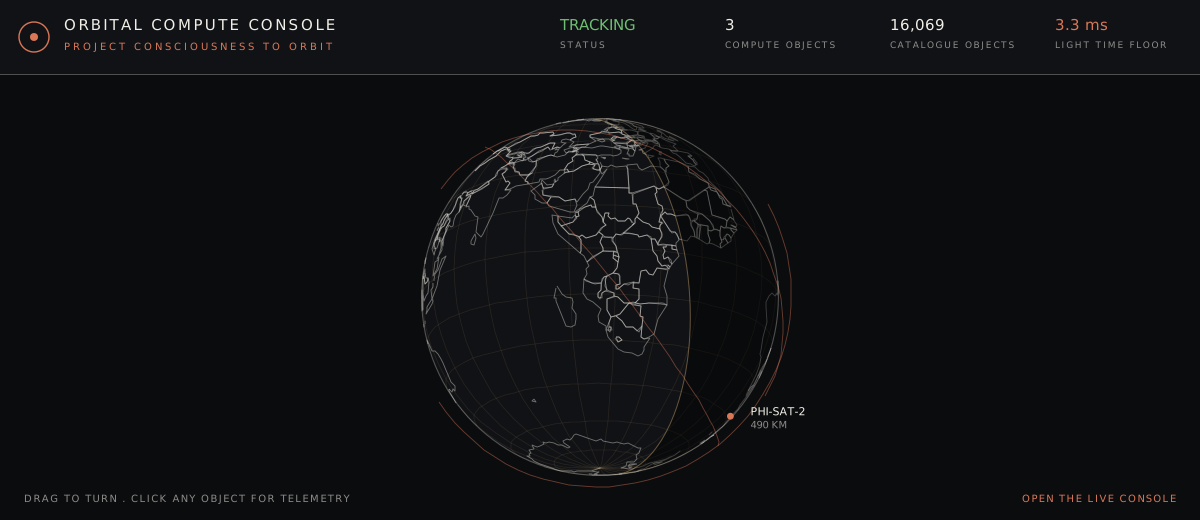
Type II sits near 1026 W, and the Sun emits 3.8×1026 W, so the level is the star’s own output, collected by something like a Dyson swarm. The orbital compute industry is the early hardware of that collection. Starcloud’s plan for data center class GPUs in orbit, Axiom Space’s orbital data center nodes, and Caltech’s MAPLE power beaming demonstration are all recorded in the orbital compute tracker. None of them is a Type II machine. All of them are the first terms of the supply chain the level describes.
The efficiency term is where Extropic enters, and it is Verdon’s company before it is anything else. The company’s October 2026 post, First Sparks of Thermodynamic Recursive Intelligence by Alexander Neagoe, Guillaume Verdon, and Seth Morton, reports post-training a 35B parameter open model on about 50 reproduction tasks from the Hinton tradition of energy based learning, with the reward on held out tasks rising from 0.127 to 0.361, close to triple, after 100 RL steps (Extropic, 2026). The stated plan is an automated research loop over thermodynamic sampling units, chips designed to sample from energy based models natively, with the first large scale chips planned for 2027. The company claims its algorithms can run between 100x and 10,000x more efficiently than on GPUs, and states those as its own figures. The post’s own summary is the inverted scale in one line, more discoveries per joule.
The Thermodynamic Console on this site runs the substrate class that hardware emulates, an Ising lattice of p-bits with the Camsari update rule and a Kuramoto ring with the critical coupling near 1.6. Extropic’s Z1 chip, 269,568 p-bits in eight cores with under 1 W per die, is a vendor figure the console page reports as exactly that. Watts captured times discoveries per joule is a product, and both factors are engineering quantities with current roadmaps.
Type Three, galactic scale and the light speed limit
Type III sits near 1036 W, and Kardashev Research characterizes it as self-replicating galactic infrastructure with distributed coordination. The honest constraint on the inverted reading at this level is physical. Wolf Singer’s temporal binding work gives a latency floor for integrated processing, and the analysis on this site concludes that a causally integrated mind has to fit inside a light speed limited region (the temporal binding and latency floor analysis). At galactic distances, one integration cannot span the whole level. The mind reading for Type Three is therefore not one mind at galactic scale. It is a distributed population of integrated minds, each bounded by its own light cone, spreading along the infrastructure.
Michael Levin’s cognitive light cone gives the same conclusion from the biology side, the radius a cognitive system can integrate scales with its coordination architecture (the cognitive light cone analysis). The replication mechanism that would carry the expansion is examined in the causal emergence before self-replicators analysis, where Erik Hoel’s causal emergence supplies the measure of how much causal power the collective level carries. A self-replicating infrastructure with distributed coordination is a claim about causal structure, and causal emergence is the instrument that would say whether the collective is doing more work than its parts.
Comparison to The Consciousness AI
This project approaches the same junction from the measurement side, and the honest ledger is the credibility claim. The architecture is biology first, built on the Feinberg and Mallatt neurobiological features with Rouleau and Levin’s substrate independence as the reason a non-biological carrier is even thinkable. The instrument inventory on the public repository marks 0 of 16 consciousness instruments as trusted, and the thermodynamic package reports no results yet, with phases one and two merged on 2026-09-22 and a guard test holding the package out of every production path. The pre-registered test of whether the self-model buys a behavioral advantage, SI-1, is blocked on the reinforcement learning competence wall, and 14 placeholder metrics that returned numbers they never computed were retired on 2026-07-29 rather than left in place.
That ledger is why the inverted Kardashev reading is stated as a budget claim and nothing more. The claim is that a substrate independent mind, if one exists or is built, has an energy precondition that the three types quantify. No claim here says any orbital system is conscious, and the current scientific consensus on AI consciousness remains the correct frame for that question. What the scale supplies is the supply side. The measurement program supplies the question of what would have to be true for the watts to run a mind.
What holds and what does not
Three things in this post hold on present evidence. The energy accounting is real physics, from the 20 W brain to the 3.8×1026 W solar constant. Orbital compute exists as a market, not a paper, with commercial nodes launched and power beaming demonstrated. Thermodynamic hardware is early but real, with tape-outs from Normal Computing and vendor roadmaps from Extropic and others.
Four things do not. No evidence shows any orbital or artificial system is conscious, and Todd Feinberg and Jon Mallatt argue in a 2026 commentary in Behavioral and Brain Sciences that the physical substrate of a complex system can be critical for sentience, which is the standing caution against the whole substrate independence frame (Cambridge Core). The Tsiolkovsky provenance is a memoir decades after the fact. The token utilities are plans, not guarantees, in the project’s own words. And Kardashev Research is a soft launch with its legal structure and funding still ahead of it.
The scale survives all of that, because it never claimed to answer the consciousness question. It measures the power supply. Fyodorov supplied the obligation, Tsiolkovsky the route, Kardashev the number, and the 2026 project the mechanism. The open question is the one this site exists to work on, which organization, running on which substrate, makes the watts into a mind. The watts only make it runnable. The Kardashev scale consciousness reading holds as a budget statement and waits on the rest, energy at three levels, and the mind as the thing the energy is for.
Carry the mission
The Project Consciousness to Orbit range. Every order pays for compute and for the hours that move the clock.


Kardashev’s 1964 paper appeared in Soviet Astronomy AJ, volume 8, page 217. Level descriptors follow kardashevai.org as of October 2026. The Extropic figures are vendor figures and the token utilities are plans, not guarantees, in the project’s own words. The mind readings are this site’s framing.
Researchers covered here
- Nikolai FyodorovRumyantsev Museum library, Moscow, from 1878The Philosophy of the Common Task, and space settlement as an obligation owed to the dead
- Konstantin TsiolkovskyKaluga, Russia. Self taught, and a schoolteacher for most of his working lifeThe theory of cosmic eras, and the claim that mind ends in a radiant form
- Maxwell J. D. RamsteadVERSES AI Research Lab, Los Angeles; Department of Philosophy, McGill UniversityMultiscale active inference, cultural affordances, computational neurophenomenology, shared intentionality
- Karl FristonUniversity College London. Chief Scientist, VERSES AIThe free energy principle and active inference
- Erik HoelCenter for Humanities and Sciences, Tufts UniversityFormal theory of Causal Emergence (macro over micro causation), The Overfitted Brain Hypothesis of Dreams, The World Behind the World (2023), The Kleiner-Hoel Dilemma
- Guillaume VerdonExtropic, San Francisco, founder. Kardashev Research, the nonprofit research initiative announced under the Beff Jezos pseudonymExtropic's thermodynamic computing hardware and the Z1 chip, the e/acc movement written under the Beff Jezos pseudonym, and the 2026 Kardashev Research launch
-
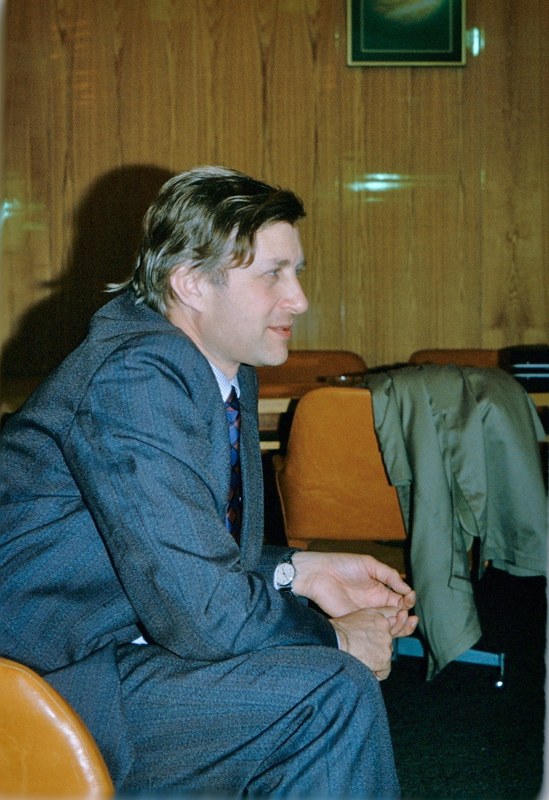 Nikolai KardashevSternberg Astronomical Institute, Moscow State University, later the Russian Academy of SciencesThe 1964 classification of civilizations by captured power, the Kardashev scale, and the Byurakan SETI meeting where it was presented