



Adam Marblestone
Harvard University, Wyss Institute
Builder The claim is about what the hardware does, and the philosophy is left open
Adam Marblestone was joint first author with Bradley Zamft of Physical Principles for Scalable Neural Recording, published in Frontiers in Computational Neuroscience in 2013 with Edward Boyden, George Church and Konrad Kording as senior authors. The paper derives quantitative limits for brain-wide neural recording across electrical, optical, magnetic resonance and molecular modalities, including the minimal 100 gigabit per second data rate for one bit per neuron per millisecond in the mouse brain.
The paper’s method is physics first. Thermal dissipation caps inserted hardware near 40 milliwatts for a mouse brain, volume displacement is capped near 1 percent, and each recording modality fails against a specific constraint, from light scattering lengths of 25 to 200 micrometers to the relaxation and diffusion limits of magnetic resonance. The analysis was written as design guidance for brain mapping programs rather than as a claim that recording is impossible.
This site’s Builder category refers to his authorship of that scaling analysis. The paper is a feasibility instrument for the whole brain emulation question, since it separates structural mapping from activity recording and states what each requires in measurable physics. It does not take a position on consciousness, and this site covers it in the physical limits of neural recording post.
Known for. First author of Physical Principles for Scalable Neural Recording, brain mapping scaling analysis
Coverage on this site
Related researchers
- Edward BoydenMassachusetts Institute of Technology, Howard Hughes Medical InstituteExpansion microscopy, optogenetics, connectomics tools for consciousness research
- Matt AngleParadromicsFounder and CEO of Paradromics, developer of the Connexus Direct Data Interface high-data-rate brain-computer interface
- Isabella R. BeckettCoauthor of the MaleCNS preprint comparing male and female Drosophila brain connectomes
- Stuart BergFirst author of the MaleCNS preprint on the male Drosophila central nervous system
-
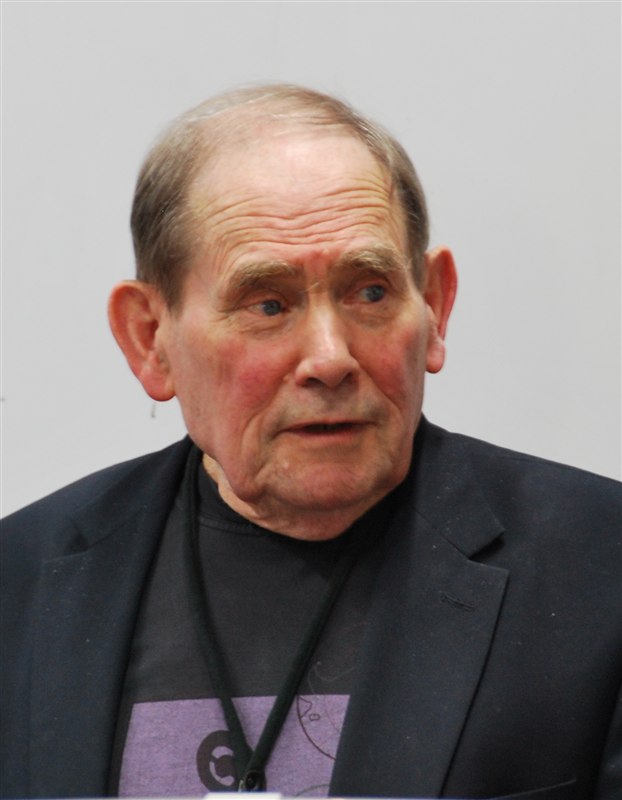 Sydney BrennerMRC Laboratory of Molecular Biology, CambridgeFounding the C. elegans research program, the 1986 connectome, the 2002 Nobel Prize in Physiology or Medicine
- Kwanghun ChungMassachusetts Institute of TechnologyFirst author of CLARITY, hydrogel-tissue transformation for intact brain imaging
Adam Marblestone is listed with the other builders, who hold that the claim is about what the hardware does, and the philosophy is left open. The positions themselves are set out in the index of consciousness theories. Every researcher covered on this site is indexed in the directory of consciousness researchers.