
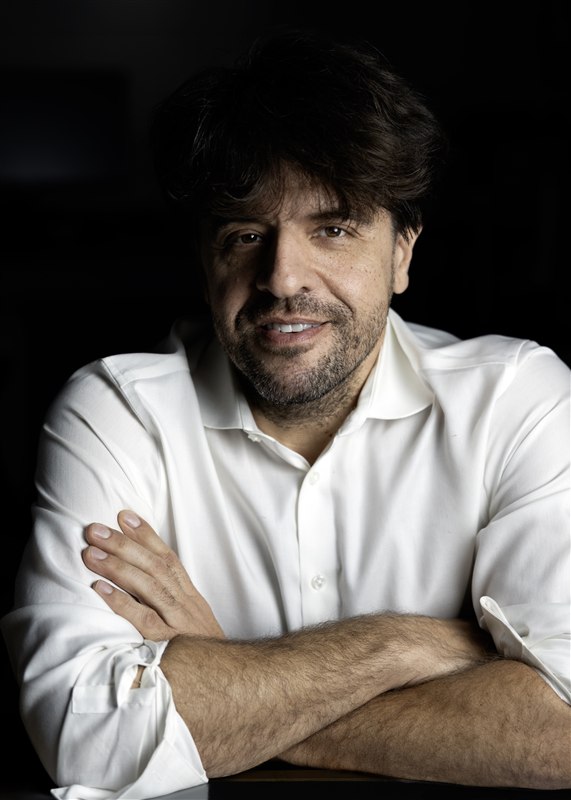
Karl Deisseroth
Stanford University
Builder The claim is about what the hardware does, and the philosophy is left open

Karl Deisseroth leads a laboratory at Stanford University where he and colleagues developed optogenetics, the control of defined neurons with microbial opsins activated by light, and CLARITY, the hydrogel-tissue transformation published in Nature in 2013 that makes intact brains transparent while anchoring their molecular structure. He is a Howard Hughes Medical Institute investigator, and both technologies are now standard instruments across neuroscience.
CLARITY, first authored by Kwanghun Chung in the Deisseroth laboratory, converts tissue into a hydrogel-tissue hybrid, extracts lipids electrophoretically, and permits repeated molecular labeling of an intact volume. Its significance for this site’s questions is structural. It is a mapping instrument, and the datasets it enabled feed the structural side of the emulation problem.
This site’s Builder category refers to his authorship of these technologies. They measure and manipulate circuits. They do not state a theory of consciousness, and the CLARITY paper makes no claim about experience. This site covers the method in the CLARITY post, where its place in the structural mapping lineage from the 1986 worm diagram to nanoscale human reconstructions is laid out.
Known for. Optogenetics, CLARITY hydrogel-tissue chemistry, senior author of the 2013 Nature CLARITY paper
Coverage on this site
Related researchers
- Kwanghun ChungMassachusetts Institute of TechnologyFirst author of CLARITY, hydrogel-tissue transformation for intact brain imaging
- Matt AngleParadromicsFounder and CEO of Paradromics, developer of the Connexus Direct Data Interface high-data-rate brain-computer interface
- Isabella R. BeckettCoauthor of the MaleCNS preprint comparing male and female Drosophila brain connectomes
- Stuart BergFirst author of the MaleCNS preprint on the male Drosophila central nervous system
- Edward BoydenMassachusetts Institute of Technology, Howard Hughes Medical InstituteExpansion microscopy, optogenetics, connectomics tools for consciousness research
-
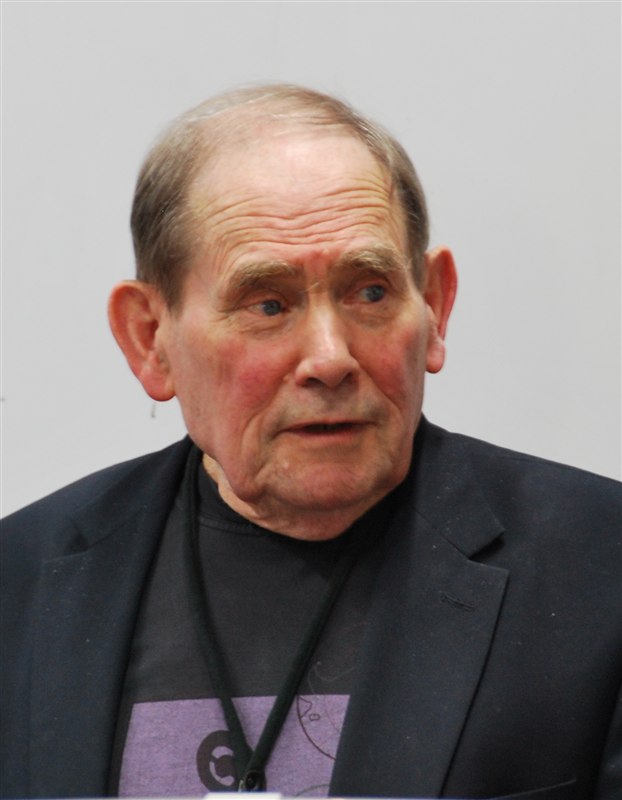 Sydney BrennerMRC Laboratory of Molecular Biology, CambridgeFounding the C. elegans research program, the 1986 connectome, the 2002 Nobel Prize in Physiology or Medicine
Karl Deisseroth is listed with the other builders, who hold that the claim is about what the hardware does, and the philosophy is left open. The positions themselves are set out in the index of consciousness theories. Every researcher covered on this site is indexed in the directory of consciousness researchers.