


Malu Zhang
University of Electronic Science and Technology of China
Builder The claim is about what the hardware does, and the philosophy is left open
Malu Zhang is a researcher at the University of Electronic Science and Technology of China in Chengdu, working on spiking neural networks and brain-inspired computation, with prior affiliations at the National University of Singapore and Northumbria University. An h-index of 27 over 137 works marks a sustained program in neuromorphic architectures rather than a single result.
The program’s direction is to take a circuit mechanism measured in the brain and rebuild it as a machine-learning component. In “SpikeMoE: Brain-Inspired Competitive Routing for Flexible Spiking Mixture-of-Experts” (arXiv:2610.01418, posted October 1, 2026, with Xiaoli Liu, Yujie Liang, Jialin Li, and Chenxiao Dou), the copied mechanism is the k-winner-take-all competition of hippocampal CA1, implemented as lateral inhibition plus a refractory period in a spike-based router that selects Top-K experts by discrete spike counts.
For consciousness science the work sits on the substrate side of the question. Competitive inhibitory routing is one of the circuit motifs consciousness theories point to when they ask how a system selects what enters a workspace. Demonstrating that the same motif runs efficiently in silicon, and carries multimodal workloads under missing inputs, is evidence about what that motif buys functionally, which is the empirical grounding any account of emerging consciousness in non-biological substrates eventually needs.
Known for. Spiking neural networks, brain-inspired routing, spiking mixture-of-experts architectures
Coverage on this site
Related researchers
- Vikas AgnihotriIndependent Aerospace and Neuromorphic Systems ResearcherNeuromorphic Satellite Intelligence framework, radiation-induced energy overhead model for spiking neural hardware, constrained on-orbit STDP
- Matt AngleParadromicsFounder and CEO of Paradromics, developer of the Connexus Direct Data Interface high-data-rate brain-computer interface
- Isabella R. BeckettCoauthor of the MaleCNS preprint comparing male and female Drosophila brain connectomes
- Stuart BergFirst author of the MaleCNS preprint on the male Drosophila central nervous system
- Edward BoydenMassachusetts Institute of Technology, Howard Hughes Medical InstituteExpansion microscopy, optogenetics, connectomics tools for consciousness research
-
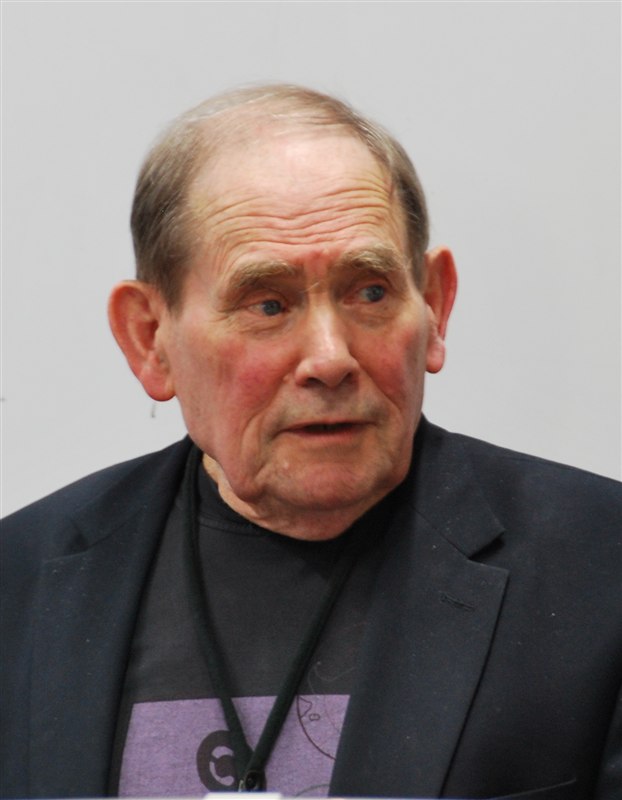 Sydney BrennerMRC Laboratory of Molecular Biology, CambridgeFounding the C. elegans research program, the 1986 connectome, the 2002 Nobel Prize in Physiology or Medicine
Malu Zhang is listed with the other builders, who hold that the claim is about what the hardware does, and the philosophy is left open. The positions themselves are set out in the index of consciousness theories. Every researcher covered on this site is indexed in the directory of consciousness researchers.