


Stefano Nichele
Oslo Metropolitan University (OsloMet)
Builder The claim is about what the hardware does, and the philosophy is left open
Stefano Nichele is a professor at Oslo Metropolitan University whose work sits between complex systems and machine learning, with a long line of papers using biological neural structures as computational substrates. The recurring method is to take real anatomical data, worm connectomes, human structural brain networks, and run them through the reservoir-computing framework, where the biological graph serves as an untrained recurrent reservoir and only the readout learns.
The September 2026 arXiv preprint “Benchmarking the Connectomes of Caenorhabditis elegans within the Reservoir Computing Framework” (arXiv:2609.30508, with Felix S. Reimers, Ola Huse Ramstad, and Aliaksandr Hubin) is the sharpest statement of his program’s central finding. Connectomes derived at different worm ages, under three different ways of measuring intercellular connections, were run as echo state networks on neuro-inspired tasks against equal-size randomized null models. The biological wiring and bio-informed input-output placement did not reliably win. Randomized reservoirs often outperformed the real connectomes.
That result matters for brain emulation and for any claim that structure alone carries function. If a wiring diagram’s computational value depends heavily on reservoir configuration and derivation method, then the connectome-to-function step needs explicit dynamics and validation, which is exactly the boundary the emulation field works against. The companion framework “Connectome-to-Function” (arXiv:2609.06093) supplies the generative latent machinery for that step, learning a structural space in which connectome graphs and their reservoir-computing behavior can be analyzed together.
Known for. Reservoir computing on biological connectomes, C. elegans nervous-system emulation, morphogenesis in cellular automata
Coverage on this site
- C Elegans Connectome Reservoir Benchmarks Show Randomized Wiring Often Beats the Biological Brain October 2026
Related researchers
- Vikas AgnihotriIndependent Aerospace and Neuromorphic Systems ResearcherNeuromorphic Satellite Intelligence framework, radiation-induced energy overhead model for spiking neural hardware, constrained on-orbit STDP
- Matt AngleParadromicsFounder and CEO of Paradromics, developer of the Connexus Direct Data Interface high-data-rate brain-computer interface
- Isabella R. BeckettCoauthor of the MaleCNS preprint comparing male and female Drosophila brain connectomes
- Stuart BergFirst author of the MaleCNS preprint on the male Drosophila central nervous system
- Edward BoydenMassachusetts Institute of Technology, Howard Hughes Medical InstituteExpansion microscopy, optogenetics, connectomics tools for consciousness research
-
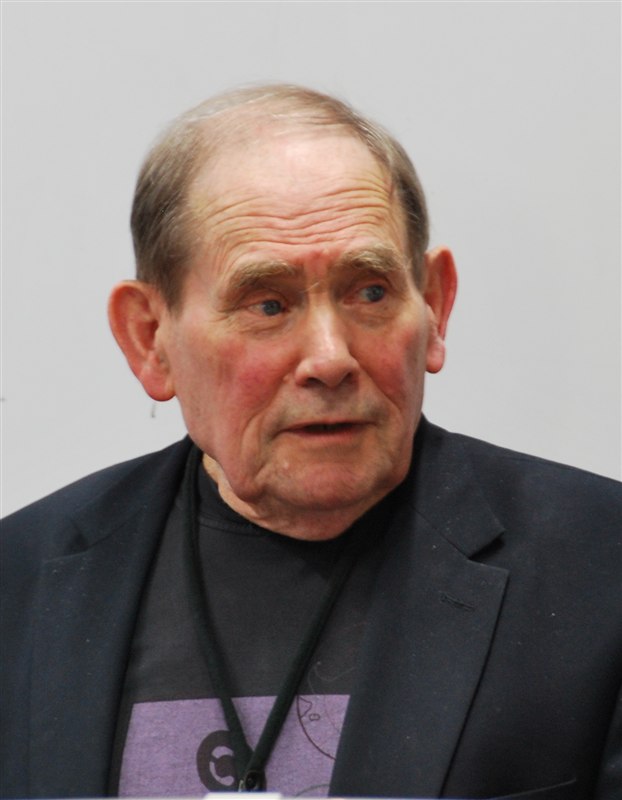 Sydney BrennerMRC Laboratory of Molecular Biology, CambridgeFounding the C. elegans research program, the 1986 connectome, the 2002 Nobel Prize in Physiology or Medicine
Stefano Nichele is listed with the other builders, who hold that the claim is about what the hardware does, and the philosophy is left open. The positions themselves are set out in the index of consciousness theories. Every researcher covered on this site is indexed in the directory of consciousness researchers.