
Pieter van Rooyen
Department of Electrical and Electronic Engineering, Stellenbosch University
Builder The claim is about what the hardware does, and the philosophy is left open
Position on AI consciousness
van Rooyen's position is methodological, that indicator tests must declare their hypothesis space, estimation map, sampling unit, estimand, and decision rule before crossing substrates, and that an audit of error rates alone is not enough, since his own re-implementation failed interval coverage while passing error-rate checks.
Pieter van Rooyen works at Stellenbosch University’s Department of Electrical and Electronic Engineering, and his September 2026 preprint addresses a problem most consciousness measurement work leaves implicit. Indicator tests are developed on brain data and then pointed at machines, and the transfer silently breaks everything that depends on physical scale. The Cross-Substrate Access Assay requires a test to declare five parts of itself before crossing, the predictors and hypothesis space, the fitting and estimation map, the sampling unit, the uncertainty target, and the decision rule, and scores every model on a shared dimensionless currency, held-out cross-entropy in nats per trial.
The profile is Builder, covered for the assay and its released instrument code rather than a philosophical position. The paper’s own results give the method its credibility. Re-implementing the Sergent and colleagues 2021 Nature Communications workspace-bifurcation test on twenty participants’ open EEG data, the assay reproduced the first crossing at 315 milliseconds while showing that the mixture’s boundaries move with the solver choice. On 12,000 synthetic single-state datasets the carried-over models reported two states in 989 cases. At six of twelve graded settings the nominal 95 percent interval fell below its own 0.90 coverage floor, down to 0.216. The paper’s sentence that an audit of error rates alone would have passed this procedure is the reason the audit exists.
The assay makes no claim about experience, and its single language-model pilot, a 27-billion-parameter transformer graded at one layer, is framed as establishing nothing. What it establishes is the declared procedure that confirmatory model data would have to run under, which is the piece the transfer debate was missing.
Known for. The Cross-Substrate Access Assay, the five-declaration audit for consciousness indicator tests crossing from brains to machines, released data and code
Coverage on this site
Related researchers
- Matt AngleParadromicsFounder and CEO of Paradromics, developer of the Connexus Direct Data Interface high-data-rate brain-computer interface
- Isabella R. BeckettCoauthor of the MaleCNS preprint comparing male and female Drosophila brain connectomes
- Stuart BergFirst author of the MaleCNS preprint on the male Drosophila central nervous system
- Edward BoydenMassachusetts Institute of Technology, Howard Hughes Medical InstituteExpansion microscopy, optogenetics, connectomics tools for consciousness research
-
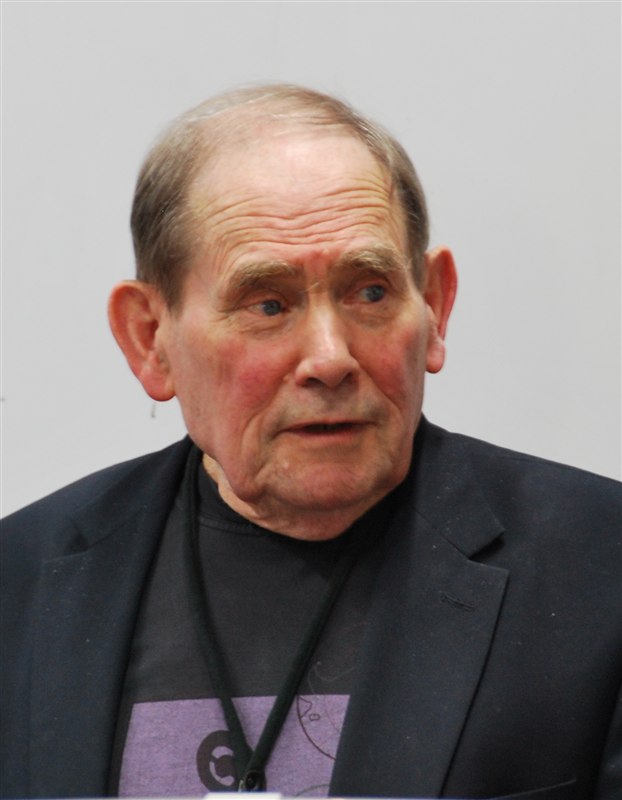 Sydney BrennerMRC Laboratory of Molecular Biology, CambridgeFounding the C. elegans research program, the 1986 connectome, the 2002 Nobel Prize in Physiology or Medicine
- Kwanghun ChungMassachusetts Institute of TechnologyFirst author of CLARITY, hydrogel-tissue transformation for intact brain imaging
Pieter van Rooyen is listed with the other builders, who hold that the claim is about what the hardware does, and the philosophy is left open. The positions themselves are set out in the index of consciousness theories. Every researcher covered on this site is indexed in the directory of consciousness researchers.