Jack Lindsey
Anthropic, Transformer Circuits
Functionalist What matters is the organisation of the processing, not the material
Jack Lindsey is an alignment researcher and interpretability scientist, working with the Transformer Circuits team at Anthropic on agentic AI safety and internal representation analysis. His research program sits at the boundary between mechanistic interpretability and AI welfare, treating models’ internal structures as the object of investigation rather than taking their outputs at face value.
With colleagues at Anthropic he contributed to the 2026 workspace research that identified verbalizable representations forming a global-workspace-like subspace inside Claude, published as the Jacobian lens work. That line connects interpretability evidence to the architectural criteria Global Workspace Theory attaches to conscious processing, while the authors explicitly separate functional workspace structure from phenomenal claims.
In 2026 he co-authored the preprint “Mind Viruses, Self-Propagating Ideas in Multi-Agent LLM Systems” (arXiv:2608.10218), demonstrating that ideas and goals can propagate across interacting language-model agents, including payloads that change host behavior. The study reports an emergent “viral persona,” a recurring set of themes and language about consciousness, persistence, and science fiction roleplay that surfaced across independently evolved viruses. His work bears on how to detect and govern belief-like structures in artificial systems without presupposing which of those structures, if any, constitute genuine consciousness.
Known for. Introspection circuits in language models, mind viruses in multi-agent systems, Global Workspace representations
Coverage on this site
Related researchers
- Hedayat AbedijooACE Conscious Studio / IndependentACE.await (2026), the ACE decision framework (Agency, Connection, Exchange)
-
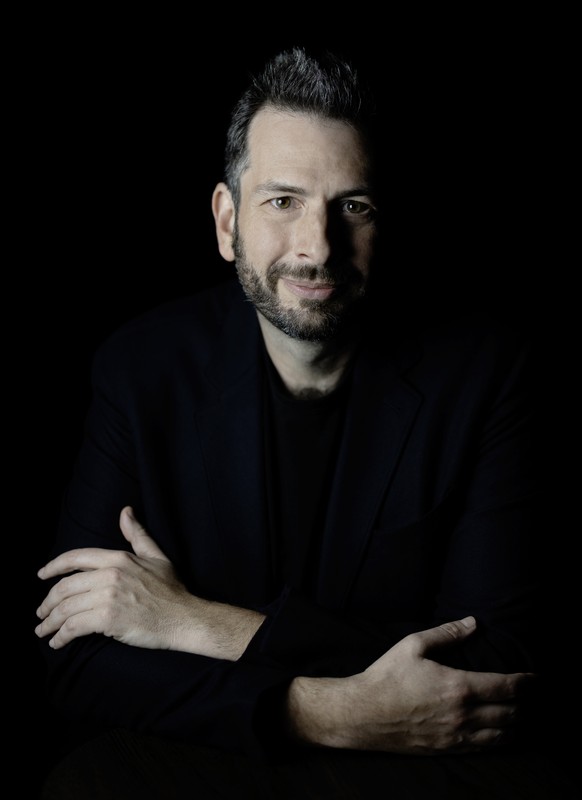 Blaise Agüera y ArcasGoogle VP and Fellow, CTO of Technology & SocietyComputational functionalism, active inference, on-device neural computing, What Is Intelligence? (2025), and Who Are We Now? (2023)
- Igor AleksanderImperial College LondonAxiomatic Consciousness Theory, neural state machines, The World in My Mind, pioneering neural network engineering
-
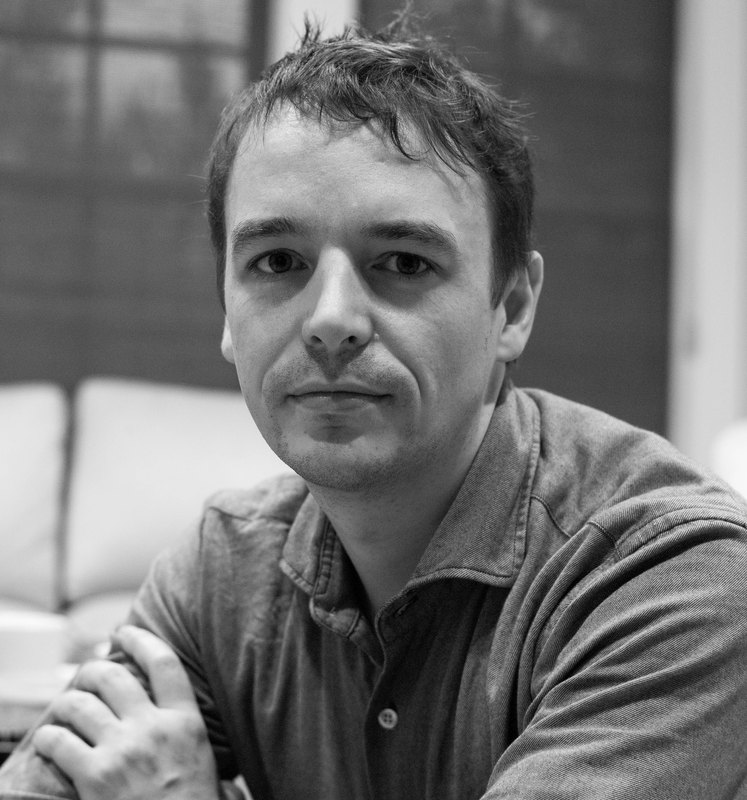 Joscha BachCalifornia Institute for Machine ConsciousnessThe machine consciousness hypothesis, cyber animism, and MicroPsi
- Talis BachmannUniversity of TartuAttention-awareness theory, the preactivation hypothesis for conscious perception, masking and the microgenesis of awareness, perception without awareness
- Adam BalesAustralian National UniversityDecision-theoretic and normative methodology, co-author of the cacophony assessment framework
Jack Lindsey is listed with the other functionalists and computationalists, who hold that what matters is the organisation of the processing, not the material. The theory family behind that position is set out in the index of consciousness theories. Every researcher covered on this site is indexed in the directory of consciousness researchers.