



Adam Bales
Australian National University
Functionalist What matters is the organisation of the processing, not the material
Position on AI consciousness
Bales's contribution to the 2026 framework reflects a decision-theoretic stance, that judgements under theoretical disagreement are best expressed as credences that can be combined, updated, and acted on.
Adam Bales is a philosopher at the Australian National University whose work addresses how agents should reason and act under uncertainty, including disagreement among the theories that are supposed to guide the reasoning. That specialisation is exactly the problem AI consciousness assessment faces in 2026. The major theories disagree, the stakes are moral status and welfare, and most published assessments resolve the conflict by picking a theory without saying so.
The fourteen-author framework From Cacophony to Hierarchy, in which Bales is a co-author alongside researchers from Google DeepMind, Oxford and Sussex, states the disagreement instead of hiding it. Credences over five levels of functional description enter as an explicit input, indicator evidence carries likelihood ratios, and the output is an aggregated probability rather than a verdict. On the site’s taxonomy the framework is functionalist in its methodological commitment, supervenience of experience on organisation, and Bales’s decision-theoretic background is the part of the collaboration that makes its outputs usable for decisions made before the philosophy settles.
Known for. Decision-theoretic and normative methodology, co-author of the cacophony assessment framework
Coverage on this site
Related researchers
- Shamil ChandariaGoogle DeepMind Institute; University of Oxford; Max Planck UCL Centre for Computational PsychiatryFree energy principle and active inference, the Beautiful Loop theory, the Complex Brain Hypothesis, lead author of the From Cacophony to Hierarchy AI consciousness assessment framework
-
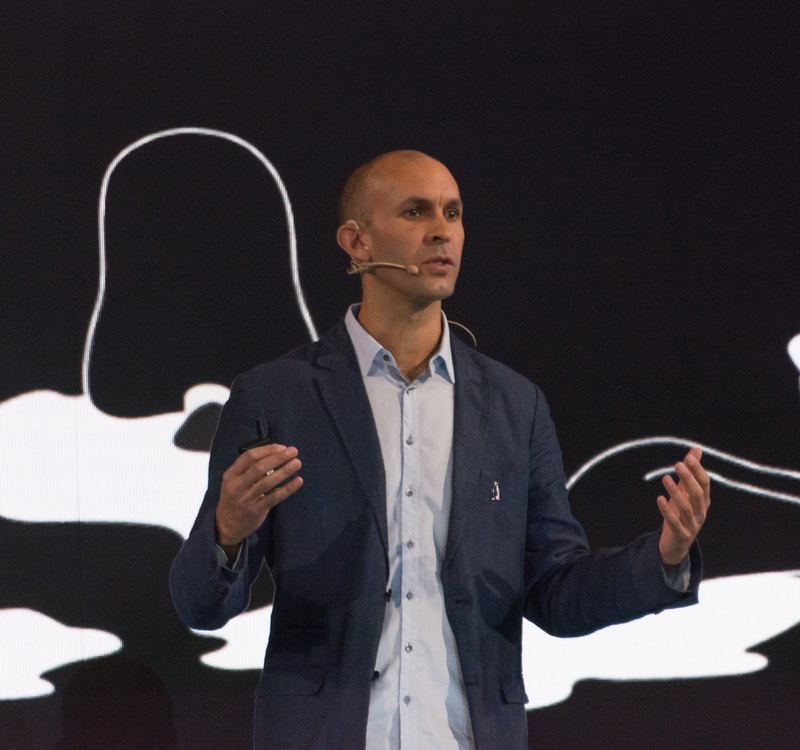 Anil SethSussex Centre for Consciousness Science, University of SussexThe beast machine hypothesis, and controlled hallucination as an account of perception
- Fernando E. RosasUniversity of Sussex, Imperial College London, University of Oxford, and PIBBSSCorresponding author of the BBS commentary on compatibilist emergence
- Murray ShanahanImperial College LondonGlobal workspace style cognitive architectures, Embodiment and the Inner Life, indicator properties for AI consciousness, LLM world models
-
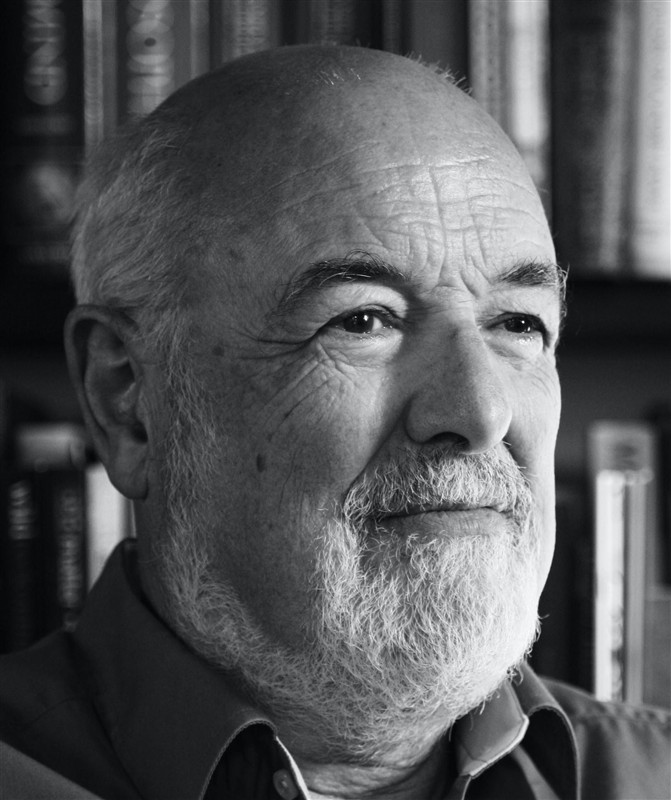 Chris FrithUniversity College LondonAgency and the sense of self, Making Up the Mind, metacognition and awareness, indicator properties collaboration
- Morten KringelbachDepartment of Psychiatry, University of Oxford; Centre for Eudaimonia and Human Flourishing, Linacre College, Oxford; Department of Clinical Medicine, Aarhus UniversityWhole-brain computational modeling of non-equilibrium brain dynamics, the thermodynamics of mind framework, hedonic and pleasure circuitry
Adam Bales is listed with the other functionalists and computationalists, who hold that what matters is the organisation of the processing, not the material. The theory family behind that position is set out in the index of consciousness theories. Every researcher covered on this site is indexed in the directory of consciousness researchers.