


Luc Brunet
Not stated in the paper
Functionalist What matters is the organisation of the processing, not the material
Luc Brunet works on a question the consciousness literature usually brackets and the AI industry usually improvises, what it takes for an AI clone of a person to count as being that person. His paper Identity from the Outside, examined on this site in the AI personality clones analysis, sets the hard problem aside deliberately and defines identity as an observer-relative quantity, the indiscernibility of manifestations assessed over duration. That choice converts a metaphysical stalemate into a research program with experiments attached, since indiscernibility can be measured as one minus a judge’s distinguishing advantage, and each contributing factor can be estimated through randomized ablation.
The framework’s substance is the six-term factorization of observed identity, substrate, dispositions, memory, update dynamics, context, and exogenous contingencies, and the conditional conjecture that follows from it. Versionability, the freedom to reset, fork, and re-version a clone, tends to degrade long-horizon indiscernibility, because the original person’s responses are shaped by stakes a freely versioned copy does not share. The criterion that survives this observation is climate fidelity, matching the conditional distribution of a person’s possible responses, rather than trajectory fidelity, replaying their recorded past. Brunet’s formulation is that the best clone is the one that diverges from the original as the original would have diverged from itself.
The relevance to consciousness research runs through substrate. In the six-factor model, substrate appears as one measurable term among six, with a sensitivity that can be small, large, or near zero for a given system. That is exactly the kind of instrument a substrate-independent view of mind needs, because it replaces the assertion that substrate makes a difference with a quantity that can be estimated, and it gives the identity questions in uploaded consciousness fiction, and eventually in real systems, a way to be wrong in public.
Known for. Identity from the Outside, the six-factor model of AI clone identity, climate fidelity as the long-horizon criterion, the delegate construct
Coverage on this site
Related researchers
- Hedayat AbedijooACE Conscious Studio / IndependentACE.await (2026), the ACE decision framework (Agency, Connection, Exchange)
-
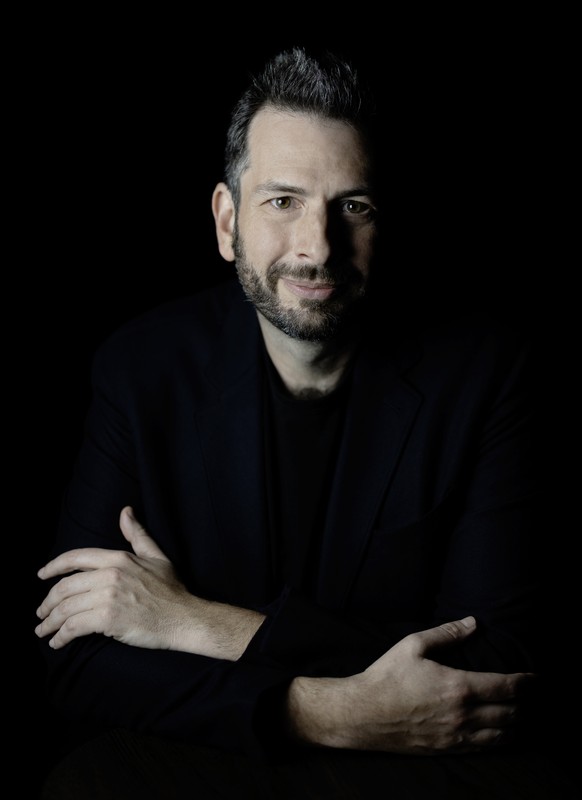 Blaise Agüera y ArcasGoogle VP and Fellow, CTO of Technology & SocietyComputational functionalism, active inference, on-device neural computing, What Is Intelligence? (2025), and Who Are We Now? (2023)
- Igor AleksanderImperial College LondonAxiomatic Consciousness Theory, neural state machines, The World in My Mind, pioneering neural network engineering
-
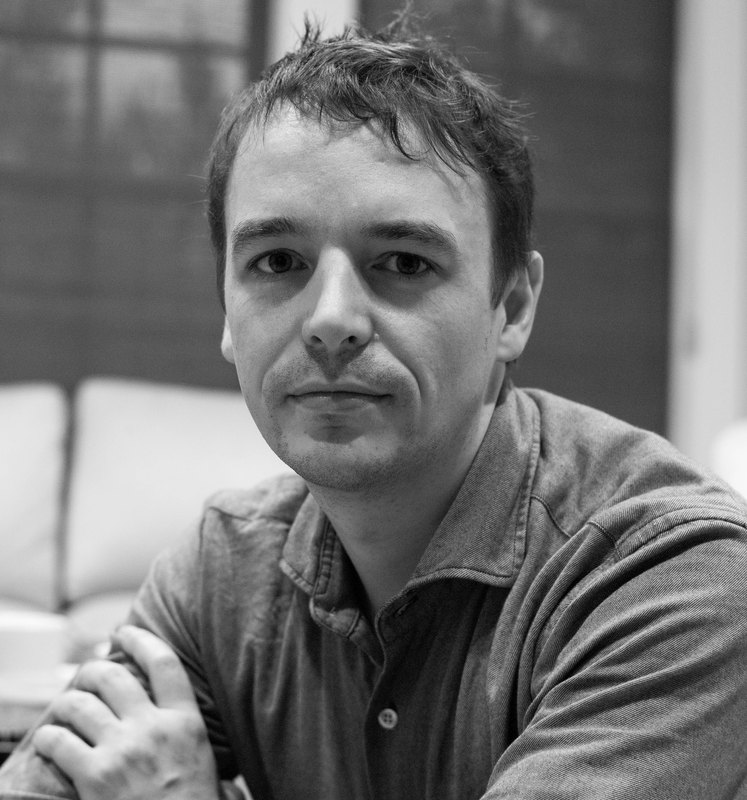 Joscha BachCalifornia Institute for Machine ConsciousnessThe machine consciousness hypothesis, cyber animism, and MicroPsi
- Talis BachmannUniversity of TartuAttention-awareness theory, the preactivation hypothesis for conscious perception, masking and the microgenesis of awareness, perception without awareness
- Adam BalesAustralian National UniversityDecision-theoretic and normative methodology, co-author of the cacophony assessment framework
Luc Brunet is listed with the other functionalists and computationalists, who hold that what matters is the organisation of the processing, not the material. The theory family behind that position is set out in the index of consciousness theories. Every researcher covered on this site is indexed in the directory of consciousness researchers.