


Matthew Fisher
University of California, Santa Barbara
Quantum Consciousness depends on physics classical computers do not reproduce
Matthew Fisher, a condensed matter physicist at the University of California, Santa Barbara and a recipient of the American Physical Society’s Oliver E. Buckley Prize, entered the quantum consciousness debate from a position few in it occupied, deep expertise in decoherence. His 2015 Annals of Physics paper, “Quantum cognition, the possibility of processing with nuclear spins in the brain” (arXiv:1508.05929), accepted the standard objection, that the brain is too warm and wet for quantum coherence, and answered it with a specific proposal. Phosphorus-31 nuclear spins, shielded inside calcium phosphate Posner molecules, could store quantum information for seconds, and entangled Posner molecules could mediate neural processing.
The proposal is significant because it changed what counts as an argument in the debate. After Fisher, appeals to warm brains alone no longer defeat quantum mind claims. The question became experimental, are Posner molecules real in vivo and do they sustain entanglement, which is the same discipline this site’s McQueen analysis records on the collapse side.
For AI consciousness, Fisher’s framework implies a concrete substrate difference. A classical processor hosts no nuclear-spin qubits, so on his proposal the brain has a quantum resource machines lack, testable rather than assumed.
Known for. Quantum cognition via nuclear spins, phosphorus as a neural qubit, Posner molecules, condensed matter physics applied to the brain
Coverage on this site
No articles yet. This profile exists because the researcher's work is referenced elsewhere on the site, and coverage will be linked here as it is published.
Related researchers
- Harald AtmanspacherCollegium Helveticum / ETH ZurichDual-Aspect Monism (Pauli-Jung conjecture), Quantum Interaction, contextual emergence, Models of Consciousness (MOC) co-organizer
- Anirban BandyopadhyayNational Institute for Materials Science (NIMS), JapanMicrotubule quantum resonance, terahertz oscillations in biology, quantum biology of consciousness
-
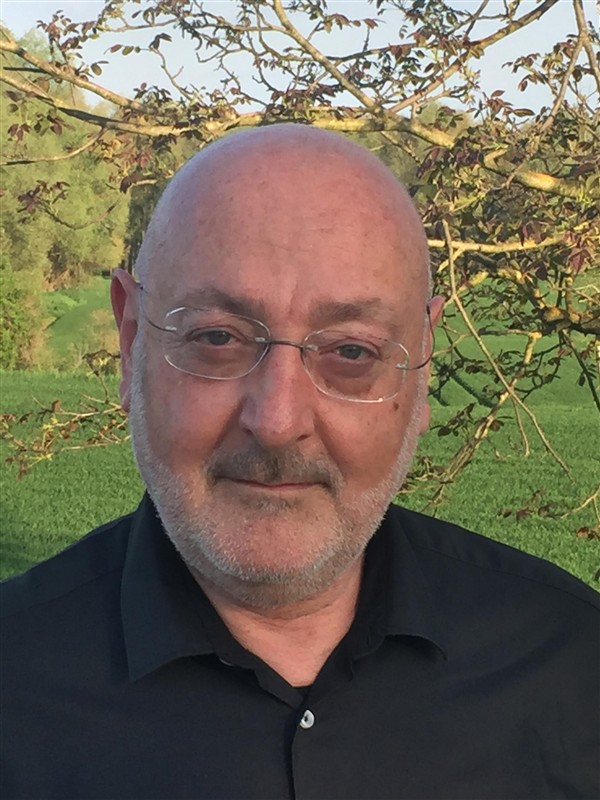 Giacomo Mauro D'ArianoUniversity of PaviaQuantum information foundations of physics, deriving quantum theory from informational axioms, Quantum Information Panpsychism with Federico Faggin
-
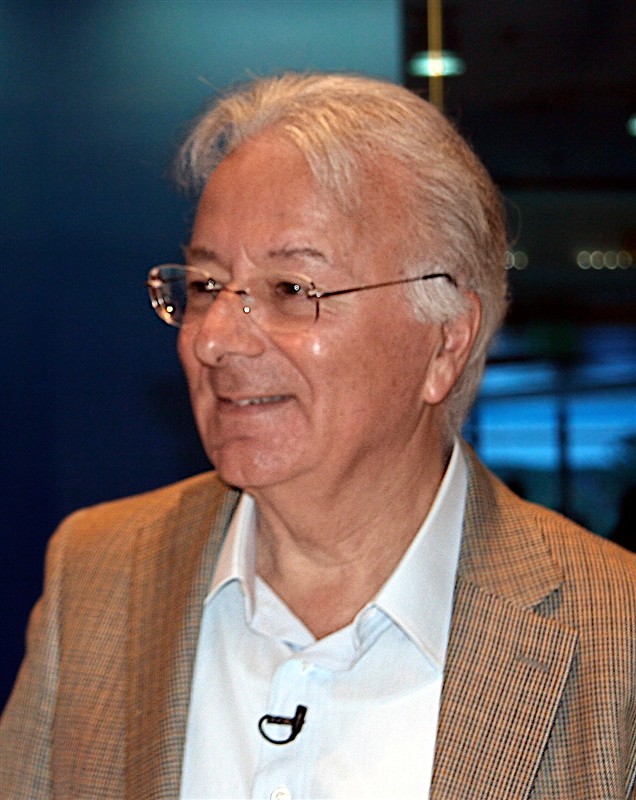 Federico FagginFederico and Elvia Faggin FoundationInventing the microprocessor, Quantum Information Panpsychism, Irreducible, the argument that classical computers cannot be conscious
- Shan GaoShanxi UniversityWave function ontology, the meaning of the wave function, consciousness-causes-collapse analysis, editor of quantum mind volumes at Oxford University Press
- Suzanne GildertNirvanic Quantum TechnologiesFounding Nirvanic to test quantum consciousness in machines, quantum reinforcement learning for robot minds, co-founding Kindred AI and Sanctuary AI
Matthew Fisher is listed with the other quantum theorists, who hold that consciousness depends on physics classical computers do not reproduce. The theory family behind that position is set out in the index of consciousness theories. Every researcher covered on this site is indexed in the directory of consciousness researchers.