


Michael C. Wiest
Department of Neuroscience, Wellesley College
Quantum Consciousness depends on physics classical computers do not reproduce
Michael Wiest is a professor of neuroscience at Wellesley College who has worked on the neural basis of conscious states, including somatosensory processing and perceptual decision-making. His recent research programme is distinctive on this site because it approaches the quantum consciousness question from the experimental side. Rather than restating Orch-OR as theory, his 2025 paper in Neuroscience of Consciousness reviews converging lines of evidence for intraneuronal microtubules as a functional target of inhalational anaesthetics and for functionally relevant quantum effects in microtubules at room temperature.
Wiest’s central empirical claim is that anaesthetic research points to a unitary molecular target. The Meyer-Overton correlation between anaesthetic potency and lipid solubility, the additivity of effective doses, and the invariance of dose across species are all difficult to square with the standard assumption that anaesthetics work through a combination of ion channels. His group reported that a brain-penetrant microtubule-binding drug slows the onset of isoflurane unconsciousness in rats with a large effect size, and quantum-chemical modelling predicts anaesthetic potency from binding to tubulin’s delocalised electron sites.
He also defends the theoretical payoff of a quantum model. In his account, a collective quantum state of microtubules is the physical substrate of the unity of consciousness, which he links to solving the binding problem of panpsychism and to giving consciousness causal power. Wiest defends the panprotopsychist framing that Penrose and Hameroff endorse. His position is that the temperature objection, most influentially made by Max Tegmark, has been overtaken by experimental results rather than by argument alone.
Known for. The quantum microtubule substrate of consciousness and the anaesthetic-evidence thread for Orch-OR
Coverage on this site
- Michael Wiest and the New Quantum Evidence for Orch-OR September 2026
Related researchers
- Sir Roger PenroseMathematical Institute, University of OxfordNobel Prize in Physics (2020), Orchestrated Objective Reduction (Orch-OR) with Stuart Hameroff, The Emperor's New Mind (1989), Shadows of the Mind (1994)
- Stuart HameroffCenter for Consciousness Studies, University of ArizonaOrchestrated Objective Reduction (Orch-OR) with Roger Penrose, microtubule quantum resonance, anesthetic mechanisms of consciousness
- Harald AtmanspacherCollegium Helveticum / ETH ZurichDual-Aspect Monism (Pauli-Jung conjecture), Quantum Interaction, contextual emergence, Models of Consciousness (MOC) co-organizer
- Anirban BandyopadhyayNational Institute for Materials Science (NIMS), JapanMicrotubule quantum resonance, terahertz oscillations in biology, quantum biology of consciousness
-
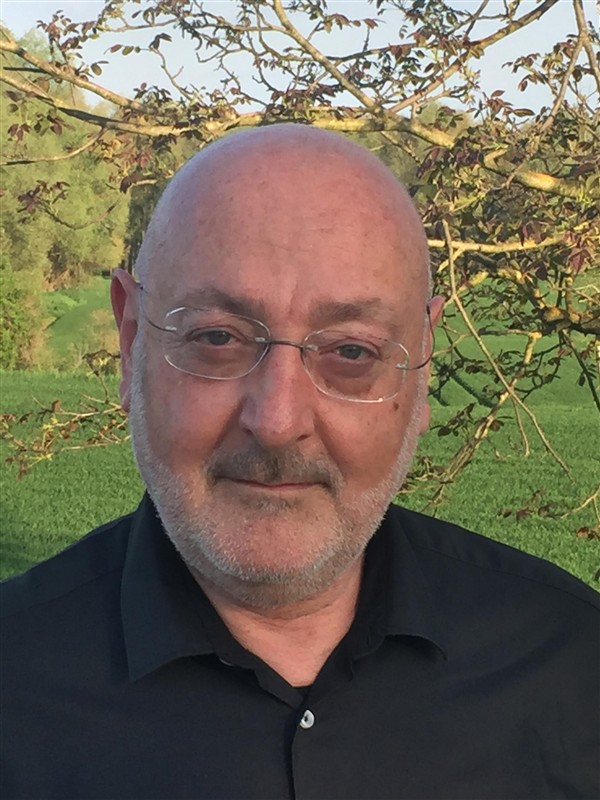 Giacomo Mauro D'ArianoUniversity of PaviaQuantum information foundations of physics, deriving quantum theory from informational axioms, Quantum Information Panpsychism with Federico Faggin
-
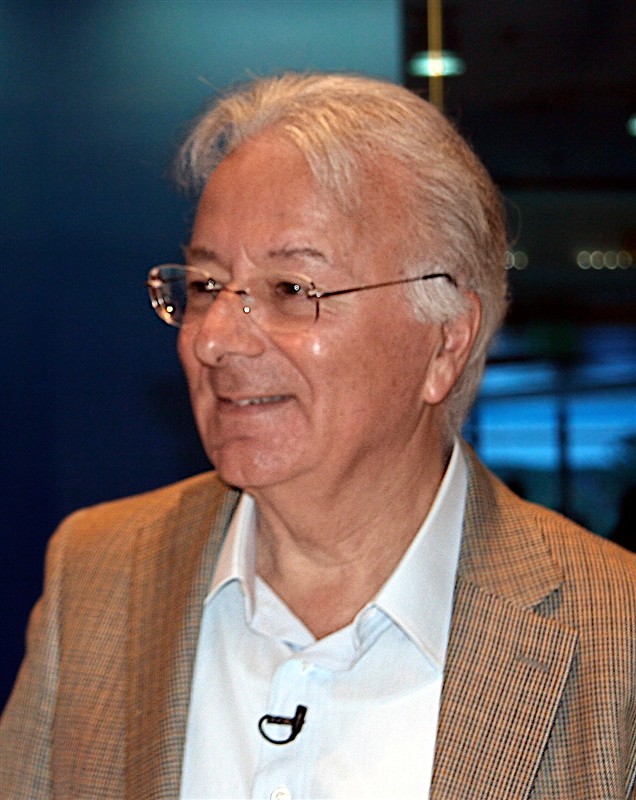 Federico FagginFederico and Elvia Faggin FoundationInventing the microprocessor, Quantum Information Panpsychism, Irreducible, the argument that classical computers cannot be conscious
Michael C. Wiest is listed with the other quantum theorists, who hold that consciousness depends on physics classical computers do not reproduce. The theory family behind that position is set out in the index of consciousness theories. Every researcher covered on this site is indexed in the directory of consciousness researchers.