


Wes Gurnee
Anthropic
Integrated information Consciousness is intrinsic causal power, measured as integrated information
Wes Gurnee is an interpretability researcher at Anthropic whose work has produced the most direct empirical contact yet between global workspace theory and large language models. The central instrument is the Jacobian lens, a technique that maps a model’s residual stream into a subframe encoding the concepts the model is positioned to verbalize at each point in processing, whether or not those concepts surface in the output. The set of currently verbalizable representations is called the J-space, and it behaves the way global workspace theory says a workspace should. Its contents can be reported, deliberately summoned and held, used to carry the intermediate steps of silent reasoning, and passed to arbitrary downstream computations, while routine parsing proceeds without them.
The structural findings are as important as the functional ones. The J-space carries coherent content only in an intermediate band of layers, holds on the order of tens of concepts at a time, and is broadcast by the model’s weights more widely than other representations. Those are workspace-shaped signatures, measured rather than asserted. The same work found that post-training installs the assistant persona in the workspace, and introduced counterfactual reflection training, which improves behavior by training only on what a model would say if interrupted and asked to reflect. This site covers the workspace paper in Gurnee and the verbalizable global workspace and the lens follow-up in the jacobian lens on multi-token concepts.
The significance for consciousness science is methodological. Functional hallmarks of conscious access have long been claimed for workspace architectures and measured in brains. Gurnee’s instruments measure them inside commercial models, which turns claims about machine workspace structure into audit results, and gives the field’s indicator discipline something it rarely gets, a measurable interior that does not depend on self-report.
Known for. The Jacobian lens, the J-space of verbalizable representations, global workspace signatures in language models, counterfactual reflection training
Coverage on this site
- Verbalizable Representations Form a Global Workspace in Large Language Models July 2026
- Gurnee et al. and The Jacobian Lens Finds a Global Workspace Inside Claude July 2026
Related researchers
- Eric SchwitzgebelUniversity of California, RiversideThe weirdness argument, the ten feature checklist, and the case that we are in an epistemic fog about AI consciousness
-
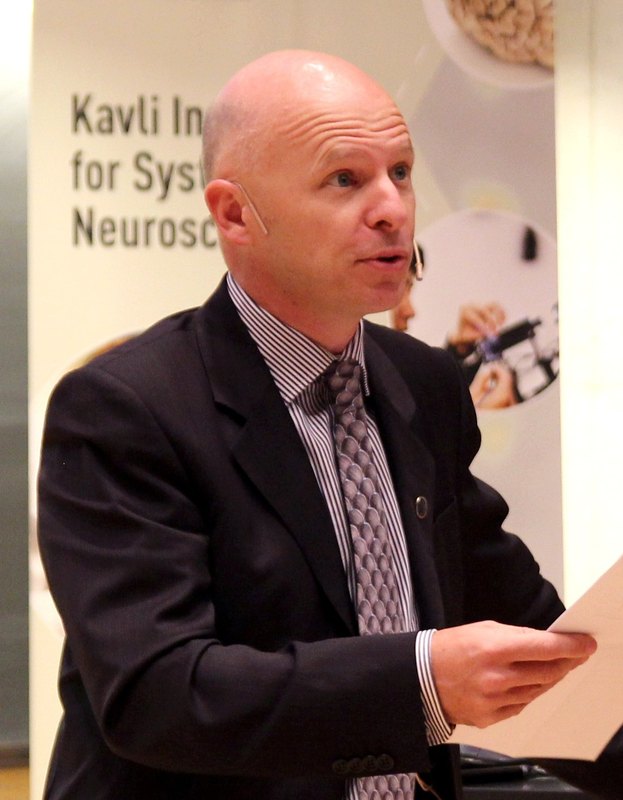 Stanislas DehaeneCollège de France and NeuroSpin, CEA SaclayGlobal neuronal workspace theory, and the ignition signature of conscious access
- Larissa AlbantakisUniversity of Wisconsin-Madison, Center for Sleep and ConsciousnessIntegrated Information Theory 4.0 and dissociating intelligence from consciousness in artificial systems
- Costas AnastassiouAllen InstituteEphaptic coupling of cortical neurons, endogenous electric fields as causal participants in neural activity, extracellular field biophysics
- Anton ArkhipovAllen Institute for Brain ScienceLarge-scale neural simulation, biophysically detailed cortical models, AIBRAIN program, State of Brain Emulation Report 2025
- Nihat AyHamburg University of Technology; external professor, Santa Fe Institute; honorary professor, Leipzig UniversityInformation geometry and information-theoretic measures of complexity and causal integration
Wes Gurnee is listed with the other integrated information theorists, who hold that consciousness is intrinsic causal power, measured as integrated information. The theory family behind that position is set out in the index of consciousness theories. Every researcher covered on this site is indexed in the directory of consciousness researchers.