

Position on AI consciousness
Schwitzgebel holds that nobody currently has grounds for either verdict. Competing theories specify different physical facts as the relevant ones, so a system's behaviour underdetermines its status, and any usable criterion has to be able to come out negative.
Eric Schwitzgebel is Professor of Philosophy at the University of California, Riverside, and the most careful sceptic working on AI consciousness. His position is frequently misreported as the claim that machines cannot be conscious. It is not. His claim is that nobody currently has grounds for either verdict, and that the confident answers on both sides are being produced by theories that disagree with each other about what the evidence would even be.
He calls the resulting situation an epistemic fog. Theory disagreement is not a temporary gap that better experiments will close, because the competing theories specify different physical facts as the relevant ones. Until that is settled, a system’s behaviour underdetermines its status, and human judgement is unreliable in a predictable direction. People over-attribute minds to things that behave sociably, which is exactly the failure mode a language model is shaped to trigger.
The practical contribution is his insistence that a criterion has to be able to come out negative. A checklist every sophisticated system passes is not measuring anything, and much of his work consists of showing that proposed indicators fail this test. That makes him a useful opponent for the affirmative programmes rather than an obstacle to them.
Known for. The weirdness argument, the ten feature checklist, and the case that we are in an epistemic fog about AI consciousness
Coverage on this site
Research Papers and Preprints
- Eric Schwitzgebel Humanlike A Defense of AI Rights Princeton University Press 2026 August 2026
- Verbalizable Representations Form a Global Workspace in Large Language Models July 2026
- Schwitzgebel's Weirdness Argument and What It Means for AI Consciousness Attribution July 2026
- The Fog of Machine Minds and Schwitzgebel's Skeptical Overview of AI Consciousness July 2026
- Schwitzgebel's 10 Feature Checklist June 2026
- Substrate Flexibility and the Copernican Principle of Consciousness June 2026
- Jonathan Birch's AI Consciousness Centrist Manifesto and Two Problems, Two Research Programmes April 2026
- Schwitzgebel's Three New Concepts Leapfrog, Strange Intelligence, and the Social Semi-Solution April 2026
- Semantic Pareidolia Why Porębski and Figura Argue Conscious AI Is a Category Error March 2026
Articles and Commentary
- The Epistemic Void January 2026
Related researchers
-
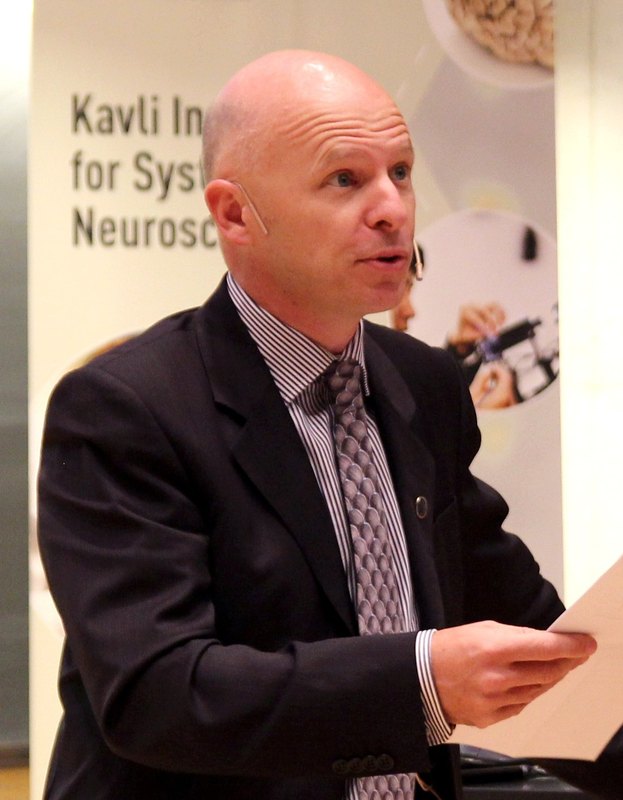 Stanislas DehaeneCollège de France and NeuroSpin, CEA SaclayGlobal neuronal workspace theory, and the ignition signature of conscious access
- Wes GurneeAnthropicThe Jacobian lens, the J-space of verbalizable representations, global workspace signatures in language models, counterfactual reflection training
-
 Susan SchneiderCenter for the Future Mind, Florida Atlantic UniversityArtificial Consciousness Tests (ACT), Artificial You, AI and the Future of Your Mind (Princeton, 2019), AI safety & cognitive rights, NASA-Baruch Blumberg Chair at Library of Congress
-
 Jonathan BirchLondon School of Economics and Political ScienceThe Edge of Sentience, the LSE Criteria, and the run-ahead principle
- Michel BitbolCNRSPhenomenology and quantum physics, the critique of objectivist reduction, first-person knowledge as irreducible, collaboration with Claire Petitmengin
- Ned BlockDepartment of Philosophy, New York UniversityDistinction between Phenomenal and Access Consciousness (1995), Blockhead argument against behavioral tests, The Border Between Seeing and Thinking (2023)
Eric Schwitzgebel is listed with the other critics and skeptics, who hold that current evidence and current methods do not support the claims being made. The positions themselves are set out in the index of consciousness theories. Every researcher covered on this site is indexed in the directory of consciousness researchers.