

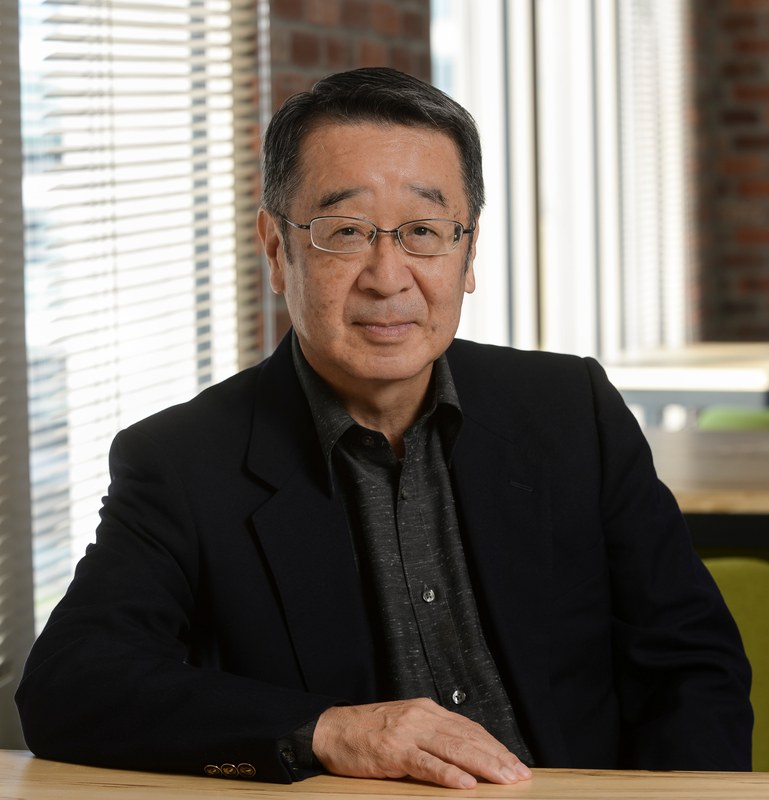
Wolfram Pernice
Professor of Experimental Physics, Kirchhoff Institute for Physics, Heidelberg University; University of Münster
Builder The claim is about what the hardware does, and the philosophy is left open
Wolfram Pernice is a professor of experimental physics at Heidelberg University and the University of Münster, working on integrated nanophotonics, phase-change optical memory and neuromorphic photonic processors. With Harish Bhaskaran and C. David Wright he pioneered the integration of chalcogenide phase-change materials, specifically $\text{Ge}_2\text{Sb}_2\text{Te}_5$ (GST), directly onto low-loss silicon nitride ($\text{Si}_3\text{N}_4$) optical waveguides and microring resonators.
In May 2019 he was senior author, with first author Johannes Feldmann, of All-optical spiking neurosynaptic networks with self-learning capabilities in Nature. The chip implements both nonvolatile synaptic weighting and leaky integrate-and-fire neuronal thresholding entirely in the optical domain, without converting light back into electrical current at each synapse. Evanescent optical pulses switch the GST cell between its low-absorption amorphous phase and its high-absorption crystalline phase, changing the complex refractive index at picosecond timescales with zero static holding power. The physical mechanism of GST synapses is reviewed on the photonic-thermodynamic substrate page and in Photonic Thermodynamic Substrates, Coherent Ising Machines and Oscillatory Binding Near the Speed of Light.
He is covered here under the Builder position for the photonic neuromorphic hardware. No philosophical position on consciousness is attributed to him.
Known for. All-optical spiking neurosynaptic networks using phase-change chalcogenide (GST) waveguide synapses (Nature, 2019) and integrated superconducting nanophotonics
Coverage on this site
- Photonic Thermodynamic Substrates, Coherent Ising Machines and Oscillatory Binding Near the Speed of Light November 2026
Related researchers
-
 Yoshihisa YamamotoProfessor Emeritus of Applied Physics and Electrical Engineering, Stanford University; NTT Research Physics and Informatics LaboratoriesCoherent Ising Machines built from degenerate optical parametric oscillators (Science, 2016), quantum optics of semiconductor microcavities, and exciton-polariton condensates
- Takahiro InagakiNTT Basic Research Laboratories, NTT CorporationFirst author of the 2,000-node Coherent Ising Machine demonstration using time-division-multiplexed optical parametric oscillators (Science, 2016)
-
 Marin SoljačićProfessor of Physics, Massachusetts Institute of TechnologyCoherent nanophotonic Mach-Zehnder interferometer circuits for optical matrix multiplication (Nature Photonics, 2017), photonic crystals, and nonlinear nanophotonics
- Yichen ShenDepartment of Physics, Massachusetts Institute of Technology; Co-founder, LightelligenceFirst author of the coherent nanophotonic Mach-Zehnder interferometer processor paper (Nature Photonics, 2017) and commercial optical inference accelerators
- Johannes FeldmannInstitute of Physics, University of Münster; Department of Materials, University of OxfordFirst author of the all-optical spiking neurosynaptic network with phase-change Ge2Sb2Te5 synapses and microring resonators (Nature, 2019)
-
 Bhavin J. ShastriQueen's University, Kingston; Department of Physics, Engineering Physics and AstronomySilicon photonic neuromorphic processors, excitable semiconductor lasers as spiking optical neurons, and the physical bandwidth-energy limits of photonic AI (Nature Photonics, 2021)
Wolfram Pernice is listed with the other builders, who hold that the claim is about what the hardware does, and the philosophy is left open. The positions themselves are set out in the index of consciousness theories. Every researcher covered on this site is indexed in the directory of consciousness researchers.